Western defense officials love a good funeral. When news breaks regarding the health or succession of Ali Khamenei, the rhetoric from London and Washington follows a predictable, tired script: "Evil regime," "few will mourn," and the imminent "dawn of democracy." It is a comforting fairy tale for a Sunday morning talk show. It is also a total failure of intelligence.
When the UK defense secretary claims that few will mourn the leader of the Islamic Republic, he isn’t describing Iranian reality. He is describing a Western wish list. This lazy consensus ignores the brutal mechanics of power that have kept the clerical establishment in place for nearly half a century. We are told the regime is a house of cards. In reality, it is a fortress of deep-state interests, and pretending otherwise makes the West more vulnerable, not less.
The Myth of the Vacuum
The most dangerous misconception in modern geopolitics is the idea that the removal of a "dictator" leads to a liberal vacuum. We saw this delusion play out in Iraq. We saw it in Libya. Yet, the West remains addicted to the idea that if Khamenei disappears, the Iranian people will simply copy-paste a Westminster-style parliament into the middle of Tehran.
Power does not vanish; it migrates. In Iran, power is not just held by one man. It is distributed through a sophisticated, multi-layered security apparatus known as the Islamic Revolutionary Guard Corps (IRGC). The IRGC is not a military wing. It is a conglomerate. It owns the docks. It owns the telecommunications. It owns the construction firms.
If you think a change in the Supreme Leadership results in a democratic pivot, you don't understand how balance sheets work. The IRGC doesn't care about ideology as much as it cares about its $100 billion portfolio. Any transition will be a consolidation of military-economic power, not a surrender to "the will of the people."
Stop Asking if the Regime is Legitimate
Western analysts waste thousands of hours debating the "legitimacy" of the Iranian government. It is a flawed question. Legitimacy is a Western democratic metric. In the world of survivalist autocracies, the only metric that matters is cohesion.
Is the Iranian state cohesive? Yes.
I have watched analysts predict the "imminent fall" of Tehran every year since 2009. They point to street protests as proof of the end. They miss the point. Protests are a sign of friction, but they are not a sign of structural failure. A state fails when its security forces stop getting paid or start defecting in mass numbers. Neither is happening in Iran.
The Iranian leadership has perfected the art of "calibrated repression." They know exactly how much force to use to quench a fire without turning the entire neighborhood into an inferno. While the UK defense secretary talks about "evil," the people actually running Iran are talking about logistics, surveillance technology, and regional proxy dominance.
The Succession Trap
The West is currently hyper-focused on who follows Khamenei. Whether it is Mojtaba Khamenei or a dark-horse candidate from the Assembly of Experts, the outcome for the West remains the same.
The "Reformist" vs. "Hardliner" binary is a scam. It is a good-cop/bad-cop routine designed to extract sanctions relief from gullible Western diplomats. Every significant figure in the succession conversation is a product of the same system. They are all committed to:
- Strategic depth through proxies (Hezbollah, Houthis).
- Nuclear hedging.
- The survival of the clerical-military elite.
By focusing on the personality of the leader, we ignore the momentum of the institution. Khamenei is the CEO, but the Board of Directors—the IRGC and the bonyads (charitable trusts)—has already voted on the long-term strategy. That strategy is "Look East."
Iran has already decoupled its survival from Western approval. Through the Shanghai Cooperation Organisation (SCO) and the expansion of the BRICS bloc, Tehran has found a way to breathe under the weight of sanctions. They aren't waiting for us to mourn them. They are waiting for us to become irrelevant to their economy.
The Price of Moralizing Foreign Policy
"Evil" is a theological term, not a strategic one. When defense officials use it, they are signaling to their domestic base, not communicating a plan.
Calling a regime "evil" is a shortcut that allows you to avoid the hard work of understanding their incentives. If the regime is simply "evil," then you don't need to understand their security concerns, their historical trauma regarding the Iran-Iraq war, or their internal factional maneuvering. You just wait for them to die.
This "strategic patience" is actually strategic paralysis. While we wait for a mourning period that may never come, Iran is:
- Refining its drone technology (and exporting it to Russia).
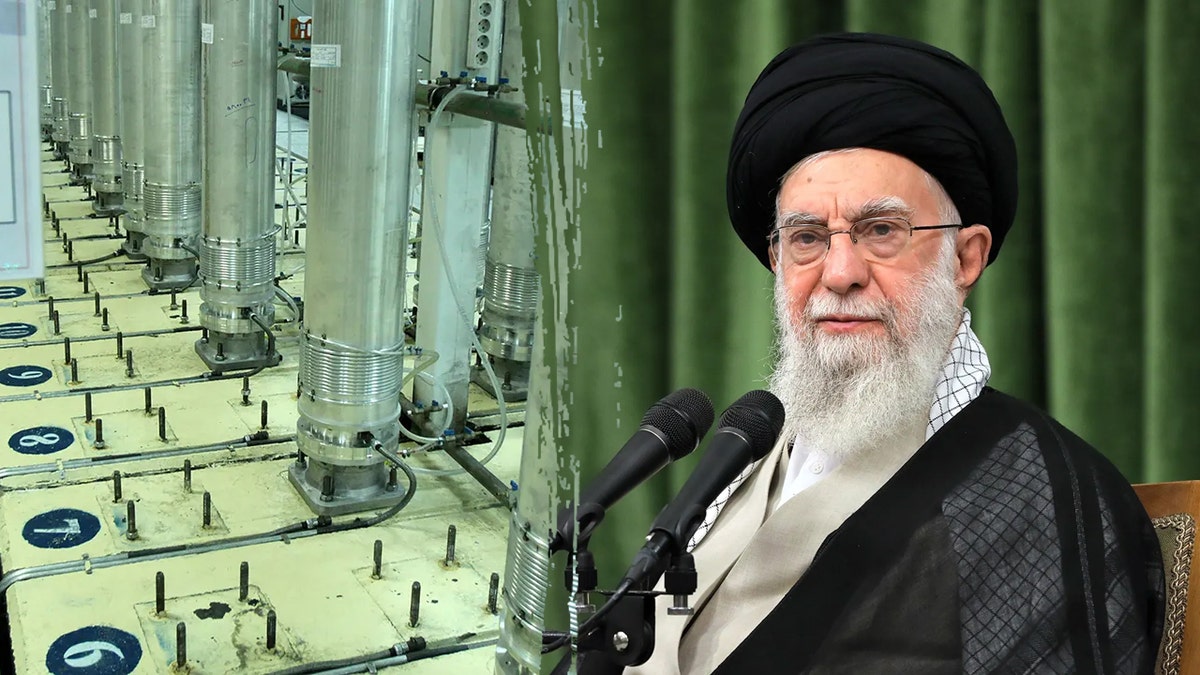
- Hardening its nuclear facilities deep underground.
- Expanding its influence in the Mediterranean.
We are playing a game of "moral high ground" while they are playing a game of "territorial reality."
The Uncomfortable Truth About the Streets
Will millions mourn Khamenei? Probably not in the way the regime’s propaganda will suggest. But "not mourning" is not the same as "overthrowing."
There is a massive, silent segment of the Iranian population that dislikes the morality police but fears a Syrian-style civil war even more. The West consistently underestimates the "stability at any cost" faction of the Iranian middle class. They saw what happened to Aleppo. They saw what happened to Benghazi.
When the UK defense secretary says "few will mourn," he is ignoring the millions of Iranians who are simply trying to survive and who view a chaotic collapse of the state as a death sentence for their families. For many, the regime is not a choice; it is the floor they stand on. You don't blow up the floor unless you are certain you can fly.
Why Your Sanctions Aren't Working
We are told that sanctions will eventually trigger the collapse. This is a fundamental misunderstanding of how autocratic economies function.
Sanctions do not hurt the regime. They eliminate the regime's competition.
When you block international trade, the only entities capable of smuggling, bypassing, and laundering are the ones with guns—the IRGC. Sanctions have effectively handed the entire Iranian economy to the most radical elements of the state on a silver platter. We have destroyed the independent merchant class (the Bazaaris) who could have been a catalyst for change, and we have enriched the very generals we claim to oppose.
I have seen this pattern across global markets. Total isolation creates a laboratory for state-run crime. The Iranian regime isn't "dying" under sanctions; it is mutating into a more resilient, more criminal, and more militarized version of itself.
Dismantling the "Few Will Mourn" Narrative
Let’s address the "People Also Ask" obsession with Iranian regime change:
"Is the Iranian regime about to collapse?"
No. A state with a 10% unemployment rate and high inflation is miserable, but it isn't necessarily collapsing. Collapse requires a fracture in the elite. Currently, the Iranian elite are more unified by the threat of Western intervention than they are divided by internal policy.
"Who will replace Khamenei?"
It doesn't matter. The system is now an autocracy by committee. The next Supreme Leader will be a frontman for a military junta in robes.
"Do Iranians want democracy?"
The youth certainly want freedom. But "wanting democracy" and "having the capability to dislodge a high-tech surveillance state" are two different things. Without a split in the military, the street has no path to power.
Reality Over Rhetoric
The West needs to stop waiting for a funeral to solve its problems.
The Iranian state is a cynical, rational, and highly durable actor. It is not a "rogue state" in the sense that it acts without logic. Its logic is simply different from ours. It prioritizes the survival of the revolution over the prosperity of the citizen.
If we keep expecting the "evil" to vanish with a single heartbeat, we will continue to be surprised when the successor is even more efficient, more tech-savvy, and more integrated with our global adversaries.
Stop listening to the politicians who tell you the end is near. They are selling you a feeling. The reality is much colder: The regime in Tehran is prepared for the day after Khamenei. The question is, are we?
The "evil regime" won't end with a whimper or a lack of mourners. It will end only when the cost of maintaining it exceeds the benefit for the men with the guns. And right now, thanks to our own strategic blindness, those men have never been wealthier.
Stop hoping for a collapse. Start planning for a century of containment.