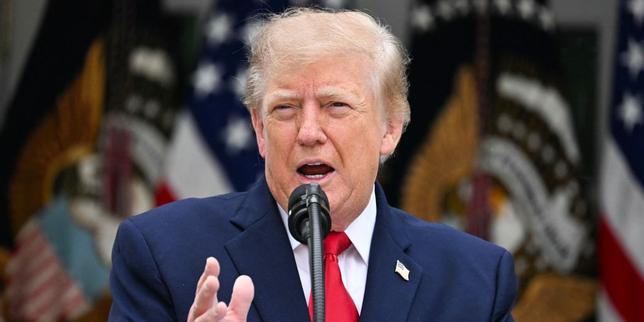
Formal recognition of María Corina Machado as opposition leader under a "grand national accord" shifts Venezuelan opposition politics from fragmented protest into a centralized coalition architecture, but formal consensus does not automatically convert into enforceable street leverage, institutional access, or state concession. A rigorous assessment of a competitor headline like "Au Venezuela, la Prix Nobel de la paix Maria Corina Machado reconnue leader de l'opposition lors d'un « grand accord national »" requires separating symbolic validation from operational power. Headlines that announce unity often treat a pact as a finished state rather than an opening move in a high-friction bargaining game.
The missing analytical link in most coverage is the gap between coalition signing and coalition enforcement. Opposition movements in authoritarian or semi-authoritarian environments routinely face a coordination dilemma: rival parties, regional networks, and civic factions gain visibility by signing unity pacts, yet each actor retains private incentives to hedge, defect, or preserve independent bargaining channels if repression rises or negotiation terms shift. Recognizing a single figure—especially one carrying international prestige as a Nobel Peace Prize laureate—lowers ambiguity over who speaks for the bloc externally, while leaving unresolved how internal disputes over strategy, candidacy, or mobilization tactics are adjudicated inside Venezuela.
What a Competitor Headline Actually Signals
A French-language headline highlighting a Nobel Peace Prize laureate recognized as opposition leader during a "grand national accord" packages three distinct political claims into one sentence:
- External legibility: International audiences, foreign ministries, and multilateral bodies get a clear focal point rather than a crowded roster of competing spokespeople.
- Symbolic legitimacy: A Nobel Peace Prize adds moral and diplomatic weight that domestic decrees cannot easily erase, raising the reputational cost for external actors that ignore the opposition.
- Coalitional signaling: Calling the arrangement a "grand national accord" implies breadth beyond a single party brand, attempting to project cross-sector alignment.
What that framing leaves out is equally important. A headline cannot verify whether all relevant factions actually signed on, what enforcement mechanisms bind signatories, or what concrete policy or electoral objective the accord is designed to achieve. Treating a pact's label as proof of durable unity is a classic analytical shortcut.
The Three Pillars of Opposition Consolidation
To evaluate whether a unity agreement changes the political balance in Venezuela rather than merely rearranging opposition press releases, examine three structural pillars.
Command Coherence and Decision Rights
Cohesion depends on clear decision rights when circumstances change rapidly. If a coalition lacks a transparent mechanism to decide between mass mobilization, diplomatic engagement, electoral participation, or boycotts, unity holds only while stakes are low or abstract. True command coherence shows up when a member party accepts an unpopular tactical line because the joint structure requires it.
Material and Organizational Reach
National accords drafted in political rooms or via coordinated announcements still have to reach local organizers, poll watchers, community networks, and diaspora channels. Without local operational capacity, national leadership risks becoming an elite consensus detached from day-to-day friction on the ground. In contested political systems, organizational depth matters more than rhetorical alignment.
Credible Bargaining Leverage
An opposition bloc gains negotiating weight only when the incumbent government faces real costs from ignoring it or real incentives to deal with it. Those costs and incentives can be electoral, economic, diplomatic, or mobilizational. Moral authority and international recognition amplify bargaining power when paired with domestic organization, but they rarely substitute for leverage on their own.
Cause-and-Effect Chains Most Coverage Misses
Standard reporting often moves straight from "unity accord announced" to "opposition strengthens." In practice, political consolidation triggers several competing cause-and-effect chains that analysts should trace separately.
How International Prestige Cuts Both Ways
International recognition as a Nobel Peace Prize laureate increases global attention and makes it harder for foreign governments to treat the opposition as marginal. At the same time, high international visibility can widen the gap between external diplomatic expectations and domestic tactical realities. Foreign partners often press for negotiated timelines or institutional steps that may look risky or slow to domestic activists facing immediate pressure.
Why Formal Pacts Can Trigger Factional Friction
Publicly crowning a single leader or signing a sweeping accord reduces internal ambiguity, yet it can also sharpen resentment among mid-tier politicians or rival factions that feel sidelined. When a coalition centralizes around one prominent figure, secondary leaders sometimes comply publicly while preserving quiet autonomy. Analysts should watch whether smaller parties gain real policy influence inside the accord or merely endorse a pre-set direction.
The State Response Loop
Incumbent authorities rarely treat an opposition accord as a neutral event. A more unified opposition can prompt targeted pressure—such as disqualifications, arrests, media restrictions, or divide-and-rule outreach to specific factions. Thus, the immediate effect of a unity pact is often a stress test of the coalition's resilience rather than an immediate breakthrough.
Facts Versus Analytical Hypotheses
Keeping verified facts separate from analytical hypotheses prevents wishful thinking in fast-moving political coverage.
Known structural facts include the general mechanics of opposition coalitions in high-control environments: unity agreements are instruments of coordination, public signaling of a single leader simplifies external communication, and state authorities in Venezuela have historically combined institutional controls, security pressure, and selective political maneuvers to manage opposition challenges. Because the exact text, signatories, date, and operational terms of the referenced accord are not supplied in the prompt's headline alone, specific clauses or real-time developments cannot be asserted as established facts without verification.
Educated hypotheses follow from those mechanics. First, formalizing Machado's leadership under a broad accord is likely intended to deter splintering and present a unified front to both domestic supporters and international observers. Second, if the accord relies primarily on symbolic alignment rather than binding conflict-resolution rules and local execution plans, its cohesion will face strain whenever tactical choices diverge. Third, state actors are likely to test whether the pact holds under legal, administrative, or political pressure.
Operational Mechanics and Strategic Limits
Think of a national opposition accord like a joint-venture governance charter built under hostile operating conditions. A charter defines roles, voting norms, and external representation, but it does not by itself supply capital, protect field staff, or force a counterparty to sign a favorable contract.
In practical terms, translating a national accord into political traction requires four operational steps:
- Map signatory scope: Identify which parties, civic groups, and regional actors are formally bound versus merely supportive in principle.
- Audit dispute-resolution rules: Check how disagreements over strategy, messaging, or leadership succession are settled before a crisis hits.
- Track local execution: Look past statements in capitals or major media to see whether local networks coordinate actions consistently.
- Assess counter-moves: Anticipate how ruling institutions can exploit seams in the coalition, such as uneven risk exposure among participants.
Every strategy in this environment carries hard limits. Centralizing authority around one charismatic or internationally celebrated figure speeds up messaging, yet it creates single-point-of-failure risk if that leader faces severe restrictions or if supporters expect rapid results that structural constraints block. Broadening a coalition to include diverse factions increases numerical reach, yet broader coalitions often move slower and struggle to maintain discipline under pressure. There is no silver bullet that eliminates state asymmetry or guarantees rapid political change through a signature alone.
Strategic Play for Analysts and Decision-Makers
Treat a "grand national accord" recognizing María Corina Machado as a governance baseline to monitor, not proof of finished consolidation, and track three concrete indicators over the next cycle: whether rival opposition figures publicly align their messaging with joint decisions during moments of tactical disagreement, whether local organizational activity shows coordinated execution rather than isolated gestures, and how ruling institutions adjust their legal and political pressure in response to the bloc's unified posture.