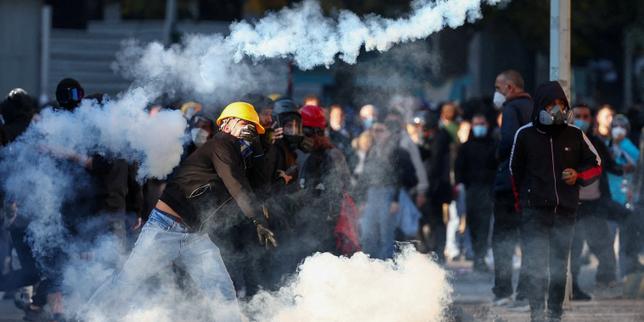
When an incumbent leader refuses to resign during multi-day violent protests, the conflict shifts from a single policy dispute to a test of institutional credibility and street endurance. Standard wire reporting on Tirana's unrest—summarized by headlines noting that Albania's prime minister ruled out resigning on the sixth day of violent demonstrations—captures the headline event while leaving the underlying mechanics unexamined. A rigorous breakdown maps how multi-month grievances converge with acute street clashes, why executives resist stepping down under pressure, and what variables determine whether unrest subsides or hardens.
This analysis provides a structured blueprint for reading political standoffs where street pressure collides with executive refusal. It separates verified facts from analytical hypotheses, examines how long-running disputes merge with immediate triggers, and outlines practical steps for evaluating escalation risk without relying on guesswork.
How Standard Coverage Frames the Standoff
Wire-style reporting typically follows a predictable sequence: it states the day count of the protests, records the leader's refusal to resign, lists visible friction such as clashes with police or property damage, and notes the official complaints driving crowds into the streets. That structure is useful for fast situational awareness, yet it treats the crisis as a linear timeline rather than a coupled system.
The first analytical gap in surface coverage is trigger conflation. Protests that span months over coastal development, environmental protection, or foreign-linked real estate projects do not operate identically to sudden spikes driven by university tuition, campus conditions, or perceived state corruption. Treating them as one undifferentiated wave hides how coalitions form and fracture.
The second gap is incentive blindness. Reporting often frames a prime minister's refusal to step down as mere stubbornness or defiance. In practice, resigning mid-crisis carries severe legal, political, and organizational costs for a long-serving leader and ruling party, especially when accusations of corruption or institutional capture are central to the opposition's case.
The third gap is missing feedback loops. Clashes between demonstrators and security forces, injury tallies, canceled diplomatic visits, and rejected offers of dialogue each alter expectations on both sides. Without tracing how each action feeds the next, coverage makes sudden shifts in intensity look arbitrary.
The Four Pillars of a High-Friction Protest Standoff
To move beyond chronological reporting, analysts can evaluate a standoff across four structural pillars: grievance stacking, coalition mechanics, executive survival calculus, and escalation feedback.
- Grievance stacking occurs when chronic frustrations—such as high living or education costs, sluggish public services, or perceived elite impunity—accumulate alongside a visible, concrete flashpoint. Each unresolved issue lowers the threshold for mobilization when a new spark appears.
- Coalition mechanics describe how distinct groups overlap in public space without sharing identical priorities. Students focused on tuition and university conditions, environmental activists opposing coastal construction, and broader anti-government demonstrators may march near one another while holding different definitions of victory.
- Executive survival calculus weighs the cost of conceding against the cost of holding firm. For a leader who has governed for over a decade, resigning under street pressure can signal collapse to party insiders, coalition partners, and state institutions, whereas staying in office preserves command over security forces, state media, and administrative levers.
- Escalation feedback governs how street tactics and state responses reinforce one another. Tear gas, water cannons, injuries, and property damage harden perceptions of illegitimacy on the street, while arson, smashed storefronts, or attacks on public buildings give officials a rationale to frame the movement as violent or externally driven.
Known Facts Versus Analytical Hypotheses
Separating confirmed developments from interpretation prevents overreach when real-time numbers are incomplete or contested.
Known facts in this type of crisis include official statements ruling out resignation, documented clashes between protesters and police, reported injury counts involving civilians and officers, damage to public or commercial property, and public rejections or acceptances of government outreach. Where exact crowd sizes, arrest totals, or independent damage assessments are not yet verified, precision requires noting the absence of audited figures rather than inventing estimates.
Analytical hypotheses are structured explanations used to connect those facts. Claiming that a leader refuses to resign to protect political leverage or avoid appearing weak mid-term is an educated hypothesis grounded in political incentives, not a directly observed mental state. Similarly, attributing street violence to either fringe agitators or heavy-handed policing is a testable interpretation that requires corroborating evidence across multiple days.
Cause-and-Effect Chains Most Reports Miss
When demonstrators demand a prime minister's resignation during sustained unrest, cause and effect rarely run in a single straight line.
Why Refusal to Resign Hardens Street Demands
When a government flatly rejects resignation while clashes continue, the demand to step down often shifts from a bargaining position to a threshold condition. If protesters believe incremental promises—such as reviewing university fees or hosting talks—will not be honored once streets quiet down, compromise looks like a trap.
This dynamic explains why symbolic gestures of dialogue can backfire during peak anger. If demonstrators view the incumbent as fundamentally unaccountable, an offer to talk may be read as an attempt to buy time rather than a genuine concession. Rejection of dialogue then reinforces the government's narrative of intransigence, locking both sides into a zero-sum posture.
How Street Violence Reshapes Legitimacy on Both Sides
Violence alters the political math in two opposing directions at once. First, prolonged clashes and injuries among protesters, bystanders, and police erode the image of normal governance and heighten public anxiety in the capital.
Second, visible vandalism, arson, or damaged institutions create a wedge inside the protest movement itself. Peaceful students, environmentalists, and citizens frustrated by corruption or economic strain may hesitate to stay associated with tactics that alienate broader public sympathy, even if their underlying anger remains intact. Meanwhile, the executive uses those same images to separate "legitimate grievances" from "destructive actors" or alleged external interference.
The External Signaling Bottleneck
Protests in a European Union candidate country carry an added layer of external scrutiny. Domestic unrest can disrupt diplomatic schedules, draw sharp commentary from foreign observers, and complicate how the government presents itself as a stable partner.
Yet foreign signals rarely resolve a domestic standoff on their own. External partners can express concern or adjust bilateral engagements, but the decisive levers—policing rules, budgetary or policy concessions, judicial accountability, and electoral or parliamentary timelines—sit inside the national system.
Step-by-Step Framework for Analyzing Escalation
Anyone tracking this conflict—whether a policy analyst, risk researcher, or informed reader—can apply a repeatable five-step diagnostic to assess where momentum stands.
- Map the grievance stack. Separate long-running structural complaints (corruption allegations, economic pressure, disputed development projects, EU accession expectations) from immediate triggers (campus conditions, tuition hikes, or specific policing incidents).
- Track daily intensity and geography. Compare whether demonstrations remain concentrated in central squares and ministries or spread to commercial corridors, transport arteries, and institutional buildings.
- Monitor casualty and arrest ratios. Look at reported injuries among protesters versus security forces alongside hospitalization figures to gauge physical intensity, while keeping in mind that official tallies may lag or omit unreported cases.
- Test credibility around outreach. Evaluate whether government offers of dialogue include concrete mechanisms, timelines, or independent oversight, or merely restate existing positions.
- Watch for institutional fractures. Check whether ruling-party cohesion, coalition backing, security force discipline, or opposition coordination shows signs of strain beyond street rhetoric.
Consider a practical example of applying these five steps. Suppose protests enter their sixth day with hundreds of cumulative injuries across demonstrators and police, ongoing clashes near government ministries, and a prime minister ruling out resignation while blaming outside forces. An analyst using this framework would not treat the leader's refusal as the end of the story; instead, they would watch whether student organizers maintain cohesion, whether property damage narrows public support, and whether any concrete policy concession emerges despite rhetorical defiance.
Limits of This Analytical Model
No analytical framework predicts street politics with certainty. Crowd behavior is non-linear: a single incident—such as a severe injury, an unexpected mass arrest, or a sudden policy reversal—can rapidly alter turnout in ways prior trends did not suggest.
Information quality is another major constraint during active unrest. Official ministries, protest organizers, and media outlets may report different figures or emphasize conflicting sequences of events, especially when clashes occur at night or across multiple points in a city. Treating every early claim as settled fact degrades analytical accuracy.
Finally, political endurance is hard to measure from the outside. A leader who has governed for over a decade may possess deep organizational resilience that outsiders underestimate, or may be closer to political exhaustion than public posture indicates.
Strategic Play for Tracking and Navigating the Crisis
For decision-makers, analysts, or organizations operating in or covering the environment, the highest-value move is to anchor assessments on verifiable institutional shifts and concrete policy concessions rather than rhetorical escalation. Leaders under intense street pressure routinely harden their public tone to project control, while protesters routinely escalate slogans to signal resolve. Neither public posture alone indicates whether the standoff will settle or widen.
Track three concrete indicators over the coming days: whether protests sustain broad participation without losing public sympathy over property damage, whether the government pairs its refusal to resign with tangible adjustments on core grievances like education costs or contested projects, and whether institutional friction emerges inside parliament or the ruling coalition. If street pressure persists without tangible concessions or institutional movement, expect prolonged friction and heightened volatility rather than a swift resolution.