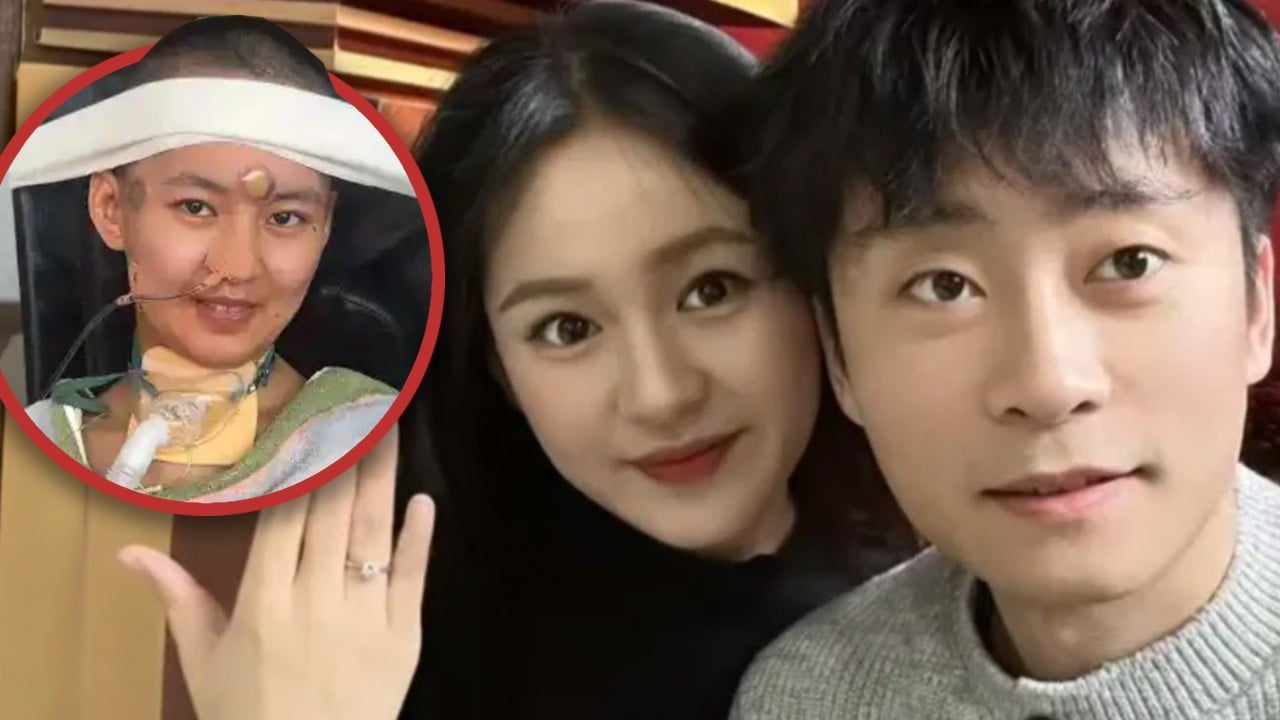
The headlines are predictable. They feed on your primal need for a "wedding miracle." A young bride in China falls into a three-month coma after a botched treatment for a common cold, only to wake up forty-eight hours before she walks down the aisle. The internet cries. The family calls it a blessing. The media calls it a triumph of the human spirit.
I call it a catastrophic failure of health literacy.
Stop looking at the white dress. Look at the IV drip. When you strip away the romantic veneer of the "coma bride," you aren't left with a Hallmark movie. You are left with a terrifying indictment of how we treat minor illnesses and our dangerous reliance on aggressive, unnecessary medical intervention for conditions the body is designed to handle on its own.
The Myth of the Harmless Cold Cure
The "botched treatment" wasn't some freak accident. It was the logical conclusion of a society that views a runny nose as a battle to be won with heavy artillery. In many regions, particularly across parts of Asia, the cultural demand for "instant" recovery leads to the over-prescription of intravenous drips—often a cocktail of antibiotics, antivirals, and steroids—for simple viral infections.
This isn't medicine. It’s theater.
Viruses do not care about your IV fluids. Antibiotics do not kill a cold. Yet, the patient demands a "fix," and the practitioner, wary of losing a customer or appearing incompetent, obliges. We’ve seen this play out in clinics globally where the placebo effect of a needle is prioritized over the actual science of recovery. When you inject powerful substances into a body already under viral stress, you aren't "boosting" the immune system. You are playing Russian roulette with anaphylaxis, electrolyte imbalances, and neurological shocks.
The coma wasn't a tragedy of fate. It was a tragedy of over-treatment.
Survival is Not a Scripted Event
The media obsesses over the timing of her awakening. "Two days before the wedding!" They want you to believe the power of love or the subconscious pull of a catering deposit brought her back.
Let’s dismantle that fantasy.
The brain does not keep a calendar. Coma recovery is a grueling, non-linear process of neurological reconnection. By framing this as a "just-in-time" miracle, we do a massive disservice to the millions of families dealing with traumatic brain injuries (TBI) and long-term comas where there is no wedding, no sudden opening of the eyes, and no Hollywood ending.
When we celebrate the "timing" of a recovery, we inadvertently suggest that those who don't wake up simply didn't have enough to live for. It’s a toxic narrative. Recovery is about neuroplasticity, the quality of intensive care, and, frankly, a massive amount of statistical luck. It isn't about the date on an invitation.
The High Cost of the Quick Fix
We live in an era of "optimization." We want to hack our sleep, our diet, and our illnesses. If a cold lasts seven days, we feel like we’ve failed.
I have watched people demand steroid shots so they can give a presentation or travel for a holiday. I have seen doctors pressured into prescribing "the strong stuff" for a low-grade fever. This bride’s three-month descent into a vegetative state is the extreme shadow of that mentality.
We have forgotten the $T_{1/2}$ (half-life) of drugs. We ignore the metabolic load of unnecessary pharmaceuticals. In our rush to never feel a moment of discomfort, we create environments where a "botched treatment" becomes inevitable.
Consider the math of a typical "miracle" cocktail:
- Dexamethasone to mask inflammation.
- Ceftriaxone for a virus (totally useless).
- Ribavirin just in case.
You are not "treating" a cold. You are carpet-bombing a forest because you saw a single weed.
The Wedding Industrial Complex vs. Human Health
Why was she even seeking such aggressive treatment? Because the wedding has become a high-stakes performance that permits no physical weakness.
The pressure to be a "perfect bride" drove her to seek a quick fix for a common cold. This is the "lifestyle" element no one wants to talk about. We have prioritized the aesthetics of a single day over the long-term integrity of our nervous systems.
If you are sick, stay in bed. Drink water. Cancel the rehearsal dinner if you have to. The fact that the narrative focuses on her "making it to the altar" instead of the terrifying reality that she almost lost her life over a cough shows exactly how skewed our collective priorities are.
The Hard Truth About Miracles
The real story here isn't the awakening. It’s the three months of wasted life. It’s the atrophy of the muscles, the potential cognitive deficits that remain unseen in a wedding photo, and the massive medical debt likely incurred because someone couldn't accept that a cold takes a week to clear.
We need to stop asking "How did she wake up?" and start asking "Why was she in a coma in the first place?"
The answer isn't a mystery. It’s the result of a medical culture that rewards intervention over observation. It’s a system that treats patients like consumers and medicine like a retail product.
If you want to avoid being the subject of the next "miracle" headline, start by respecting the biology of illness. Most of the time, the best thing a doctor can do for you is nothing at all. But "nothing" doesn't sell newspapers, and "nothing" doesn't get you to the wedding on time.
The next time you feel a scratchy throat, remember the bride who slept for ninety days because she couldn't handle a sniffle. Your body is a biological system, not a machine you can overclock with a mystery drip.
Stop looking for miracles and start looking at the labels on the vials.
The most "advanced" medical move you can make is often the one that involves the least amount of medicine. Anything else is just a gamble where the stakes are your life, and the house always wins.
Throw away the script. Fire the miracle-mongers.
Go back to bed and let your body do the job it was evolved to do.