The small plastic box strapped to Mykola’s chest began to beep. It was a frantic, high-pitched chirp, a digital warning that usually meant he had ninety seconds to dive into a trench before an explosive-laden Russian quadcopter found him.
Mykola, a 34-year-old drone operator stationed near the scorched treelines of Zaporizhzhia, did not move. He waited for the next sound. Usually, it was the heavy, rhythmic hum of a drone engine getting closer, or the crackle of his own electronic jammer throwing up an invisible wall of radio static to sever the link between the Russian pilot and the incoming weapon.
The chirp stopped. The air remained dead. No radio signal was registered on his scanner.
Then came the blast.
A hundred yards away, an uncrewed aerial vehicle slammed directly into a hidden ammunition cache. There was no pilot behind that steering stick. There was no radio antenna attached to the frame of the weapon. There was no satellite signal to jam.
Silence.
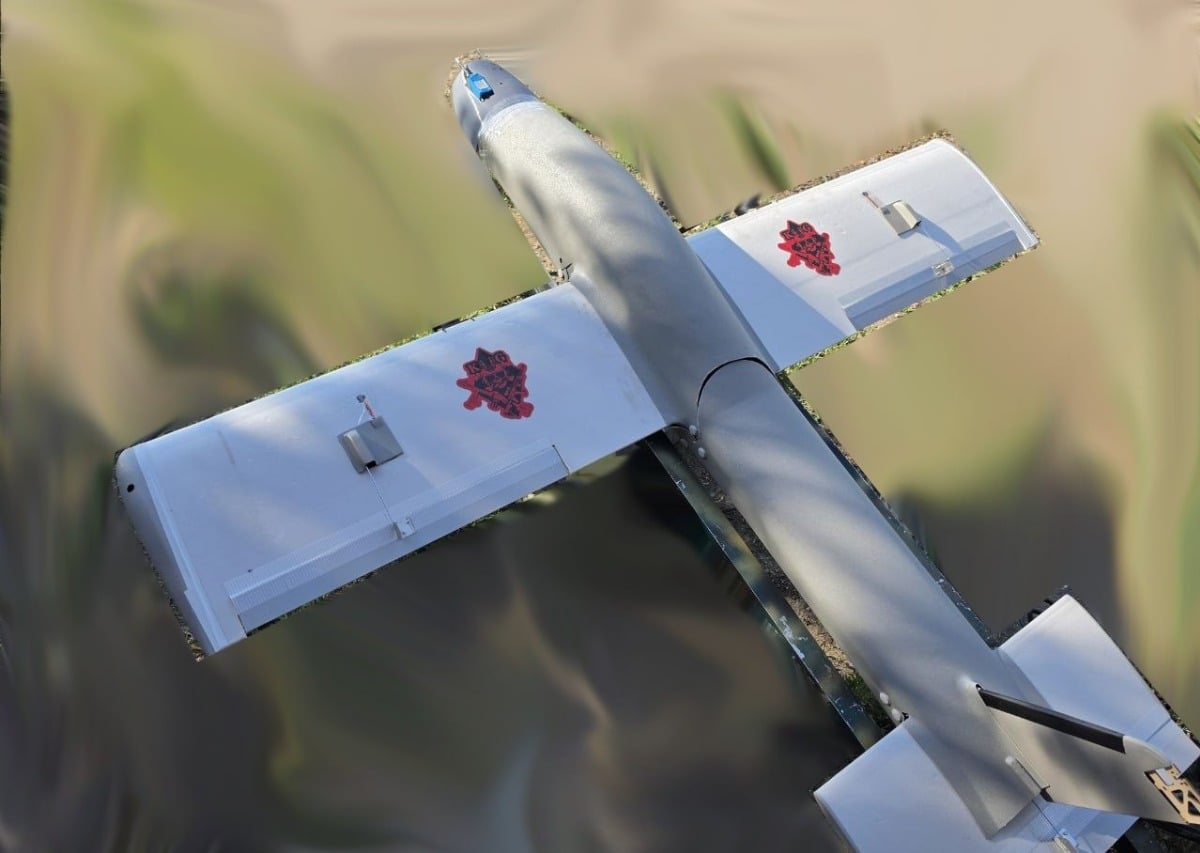
What Mykola experienced in the mud of southern Ukraine was the arrival of a quiet shift in modern warfare. The Kremlin has begun the mass deployment of a newly modified version of its Molniya strike drone. This is not just another iteration of the cheap, buzzing weapons that have defined this war. These new models are entirely autonomous, driven by an onboard computer and software trained to see, think, and kill without human intervention.
The old rules of survival on the front line are dissolving.
The Anatomy of an Unplugged Weapon
For years, the war in Ukraine has been a brutal tennis match of electronic signals. One side sends a drone; the other side jams the frequency. The first side changes the frequency; the second side updates its jammers. It was a human-centric battle of wits, engineering, and reflexes. If a Ukrainian soldier could flood the local airspace with the right frequency of radio noise, the incoming drone would lose its mind, drift aimlessly, and crash harmlessly into the dirt.
The autonomous Molniya bypasses this entire defense system.
Consider how it works. Ukrainian tech analysts recently recovered the wreckage of one of these new variants. What they found inside was chilling in its simplicity. The complex array of antennas and receivers used to talk to a human operator miles away had been completely stripped out. In their place sat a cheap camera lens and a small, high-density processing unit.
The drone does not need to send data back to a base. It does not need to receive instructions. It is given a general grid coordinate at launch, and once it arrives in the area, the software takes complete control. The onboard neural network scans the terrain below, processing live video frames in milliseconds. It identifies the geometric shape of an armored vehicle, the thermal signature of a dugout, or the distinct outline of a defensive position.
When it finds a match, it locks on.
Electronic warfare jammers are useless against this. You cannot jam a radio signal that does not exist. You cannot trick an eye that is looking directly at you from five hundred feet up and making its own calculations on a circuit board.
Serhii Beskrestnov, a prominent radio technology expert and adviser to Ukraine’s defense ministry, warned soldiers across the front that their handheld detector boxes are no longer a shield. Staying alert now requires an entirely different kind of vigilance. The electronic safety net has been torn away.
The Laboratory of Automatic Death
The acceleration of this technology has been fast, messy, and terrifyingly organic. Neither Russia nor Ukraine intended to turn this conflict into a testing ground for algorithmic warfare, but the sheer friction of a stalemated front line demanded it.
Russia’s defense ministry recently admitted that it has accelerated the rollout of what it calls the DC software and hardware system. This platform acts as a massive digital warehouse, vacuuming up thousands of hours of combat footage, target images, and geographical data. This data is fed into neural networks to train them to recognize Ukrainian military assets under various lighting conditions, through smoke, and despite camouflage.
The terrifying reality is that this software is becoming more precise with every flight. Every time a drone crashes or successfully hits a target, the data helps refine the next generation of algorithms. By November, Russia intends to integrate similar automated decision-making software into its civilian-developed air defense networks.
Ukraine has not been passive in this space. Faced with a massive disadvantage in raw ammunition and artillery shells, Kyiv turned to its own tech sector early on. The country quickly became a decentralized startup incubator for survival, birthing platforms that use automated video analysis to guide domestic drones like the Hornet through heavily jammed airspace.
But the arrival of mass-produced, autonomous Russian hardware like the modified Molniya shifts the calculus. It moves the technology out of the hands of specialized elite units and into the hands of ordinary infantry regiments.
The Missing Human Element
It is easy to get lost in the technical jargon of neural networks and autonomous navigation. But the real weight of this change is carried by the soldiers who have to live beneath these thinking machines.
Warfare has always been an interaction between humans. Even at a distance of miles, a drone pilot on the other end of a fiber-optic cable or a radio link is still a human being. They feel fatigue. Their hands shake under pressure. They can experience hesitation, or mercy, or moral revulsion. A human pilot might see a soldier trying to carry a wounded comrade and choose to steer the drone into an empty field instead.
An algorithm has no such capacity.
It does not feel the cold. It does not get tired after twelve hours of duty. It matches pixels on a screen to a pre-programmed mathematical template. If the percentage of similarity crosses a specific threshold, the circuit completes. The explosive detonates.
This brings an agonizing psychological pressure to the men in the trenches. The battlefield is no longer a place where you hide from an enemy who is looking for you; it is a place where you hide from an environment that is actively processing you as data.
Engineers in Kyiv are working frantically to find a countermeasure to this new reality. They are looking into optical blinding techniques, structural decoys designed to confuse the machine’s shape-recognition algorithms, and new forms of physical interception.
But for now, on the muddy fields of Zaporizhzhia, the drones continue to fly. They look down with glass eyes, calculating life and death in silent, cold equations.