The room smells of stale coffee and dry-erase markers. On the wall, a digital clock counts down, though nobody is quite sure to what. For decades, this specific brand of quiet belonged to the archives—a relic of a bygone century where maps were redrawn with grease pencils and borders felt fragile.
Now, the fragile feeling is back.
Imagine an engineer named Thomas. He is a hypothetical composite of the minds currently working inside MBDA, Europe’s premier missile alliance, but his daily anxiety is entirely real. Thomas does not think in terms of geopolitical chess or press release jargon. He thinks in millimeters, thermal expansion, and minutes. Specifically, the number of minutes it takes for a threat to cross a continent, and the agonizingly fewer minutes available to stop it.
For thirty years, continental Europe operated under a comfortable assumption. The shield was American. The deep-strike capability—the ability to reach out thousands of kilometers and neutralize a threat before it ever reached a NATO border—was largely a logistical chore outsourced across the Atlantic.
That assumption just evaporated.
The conflict on the eastern edge of the continent changed the math. It proved that modern industrial warfare consumes munitions at a terrifying rate, and that relying on a single, distant supplier is a strategic gamble that Europe can no longer afford to make. The response is a quiet, massive pivot toward military self-reliance, crystallized by the development of a new European deep-strike weapon.
It is a turning point born of necessity.
The Geography of Vulnerability
Warfare is fundamentally an argument about distance. If an adversary can hit you from a thousand kilometers away, and your longest reach is only three hundred, you are not in a standoff. You are a target.
Historically, European nations relied heavily on air-launched cruise missiles like the Storm Shadow and Taurus. They are masterworks of engineering. But they have a glaring vulnerability: they require aircraft to fly them into range. In a modern conflict defined by dense, lethal air defense networks, sending a multi-million-dollar fighter jet into the teeth of an enemy missile battery just to launch a weapon is a recipe for exhaustion.
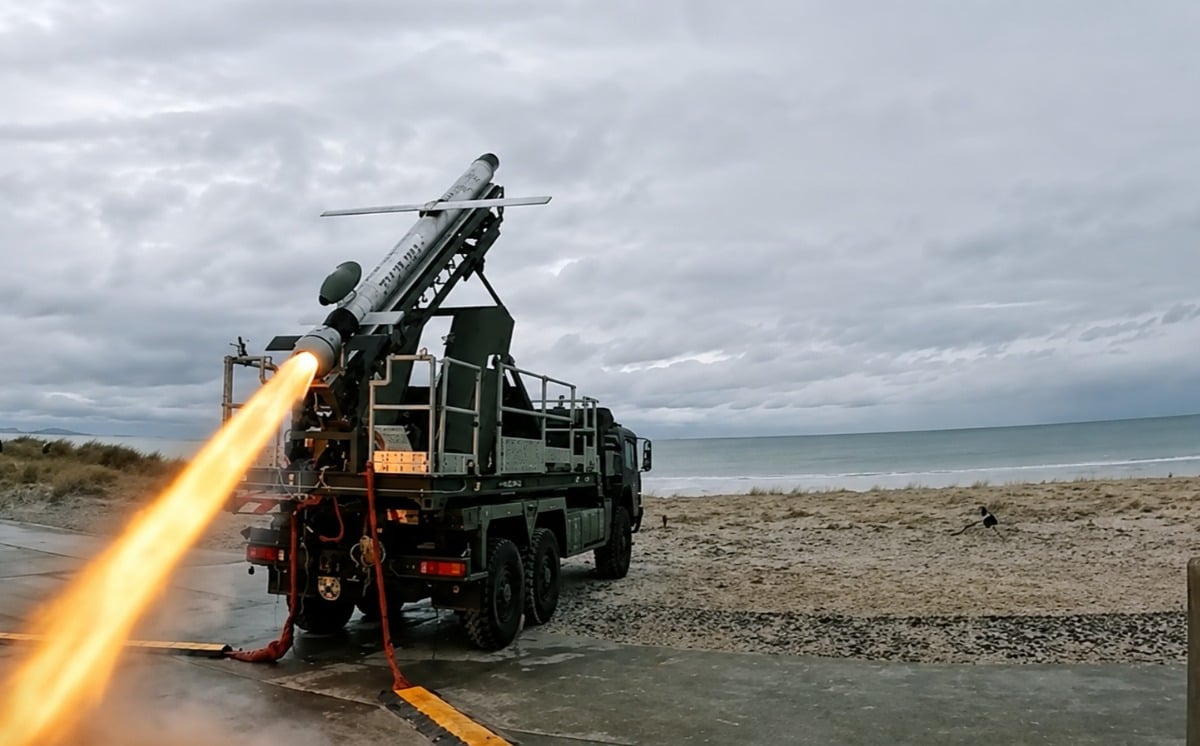
The new initiative aims to change the equation entirely. By developing a ground-launched land cruise missile, the goal is to shift the burden from the air to the dirt.
Consider the tactical shift. A mobile truck launcher can hide in a pine forest in Poland, completely invisible to satellite surveillance under a canopy of branches. It requires no runway. It needs no aerial refueling tankers. It just sits, waiting, holding a conventional strike capability that can reach deep into an aggressor's rear infrastructure, disrupting command centers and supply lines before they can influence the front line.
This is not about aggression. It is about the cold, mathematical certainty of deterrence.
True safety means making the cost of an attack calculation so prohibitively high that the calculation is never made in the first place. For a long time, Europe’s deterrent was loud but shallow. The new weapon system is designed to be quiet, deep, and terrifyingly persistent.
The Invisible Grid
To understand how a modern deep-strike weapon works, you have to look past the fire and the smoke of the launch pad. The real magic—and the real horror—happens in the silence of the guidance software.
A missile traveling at high subsonic speeds across uneven terrain cannot rely on GPS alone. GPS can be jammed. It can be spoofed, tricked into believing it is miles away from its actual position. Thomas and his team must build a brain that navigates by sight, memory, and instinct.
The weapon uses a combination of inertial guidance, terrain contour matching, and optical scene correlation.
Think of it as a traveler navigating a dark forest by feeling the shapes of the trees and matching them to an internal map. The missile scans the earth beneath it, comparing the ridges, rivers, and hills against a pre-loaded three-dimensional matrix. It knows exactly where it is because it knows what the world looks like.
But the technical hurdles are immense. Traveling at that velocity close to the ground means the onboard computer must process terabytes of environmental data in milliseconds. A single miscalculation, a failure to account for a sudden shift in barometric pressure or a new row of wind turbines, means failure.
The stakes are higher than just losing a piece of hardware. In the calculus of modern defense, a weapon that misses its mark is worse than useless; it reveals your capability while failing to neutralize the threat.
The Sovereign Dilemma
Beyond the engineering labs, a different kind of battle is being waged in the ministries of defense in Paris, Berlin, and Rome. It is a political struggle over sovereignty.
For decades, buying American hardware was the easy choice. It was proven, it was available, and it cemented the trans-Atlantic alliance. But that dependence came with invisible strings. International Traffic in Arms Regulations (ITAR) mean that the United States often retains a veto over how and when its technology is used. If a European nation wants to deploy an American-made system in a crisis, it frequently needs Washington’s sign-off.
In a fast-moving crisis, waiting for a diplomatic cable to clear a committee in Washington is a luxury European commanders no longer believe they have.
The new deep-strike program is explicitly designed to be ITAR-free. Every bolt, every chip, every line of code is being sourced within the continent. It is an assertion of strategic autonomy.
It is also an admission of fear.
The fear is that a future American administration might look away. If the geopolitical focus shifts entirely to the Pacific, or if political isolationism takes root across the ocean, Europe could find itself holding an empty shield. Building this weapon is a way of buying insurance against the unpredictability of traditional allies.
It is expensive. It is politically fraught. It requires nations that have historically competed for defense contracts to open their laboratories to one another. But the alternative is worse.
The Human Cost of Peace
It is easy to get lost in the specifications. We talk about payloads, range, radar cross-sections, and Mach numbers as if we are discussing the performance of sports cars.
We forget what these machines are actually for.
They are built to destroy. They are designed to carry high explosives across vast distances to shatter concrete, steel, and human lives. Acknowledging this reality is difficult, but avoiding it is dishonest. The engineers designing these systems do not celebrate the destruction; they view it as a grim, necessary firewall protecting their own homes.
The paradox of deterrence is that you must build a weapon so terrible, and demonstrate a willingness to use it so convincingly, that you never actually have to turn the key.
Thomas goes home at night to a quiet suburb. He watches his children play in a yard that is safe because of a fragile, unspoken agreement between nations. He knows that the work he did during the day—refining the tracking algorithm for a weapon meant to obliterate a command bunker a thousand miles away—is the only reason that yard remains quiet.
It is a heavy burden to carry. It requires a specific kind of mental compartmentalization, a belief that peace is not a natural state of affairs but an artificial construct that must be defended with steel and calculation.
The Long Flight Path
The development cycle of a weapon like this is measured in years, sometimes decades. It requires billions of euros in sustained funding, survival through changing political administrations, and the navigation of complex multinational partnerships.
The work continues in quiet labs scattered across Europe. The prototypes are being refined. The software is being tested in virtual environments that simulate every square meter of the European continent.
The true test of the system will not be a successful impact on a test range in the desert. The true test will be decades of silence. If the weapon sits in its climate-controlled storage canister, unseen and unused, until it eventually becomes obsolete and is disassembled by a future generation of technicians, it will have done its job perfectly.
Until then, the engineers will keep refining the math. The trucks will practice dispersing into the forests. And the continent will continue its slow, determined march toward standing on its own two feet, holding a weapon long enough to reach any threat, and strong enough to make any enemy hesitate.
The clock on the wall keeps ticking, but for now, the quiet holds.