The hum of a transformer is the heartbeat of a city. It is a low, persistent vibration that nobody notices until it stops. In the control rooms of Tehran’s thermal power plants, that hum represents more than just industrial output. It represents the refrigeration of insulin in a clinic in Karaj. It represents the ventilation systems in a crowded maternity ward. It represents the basic, fragile connectivity of twenty-first-century life.
A few years ago, that heartbeat almost skipped.
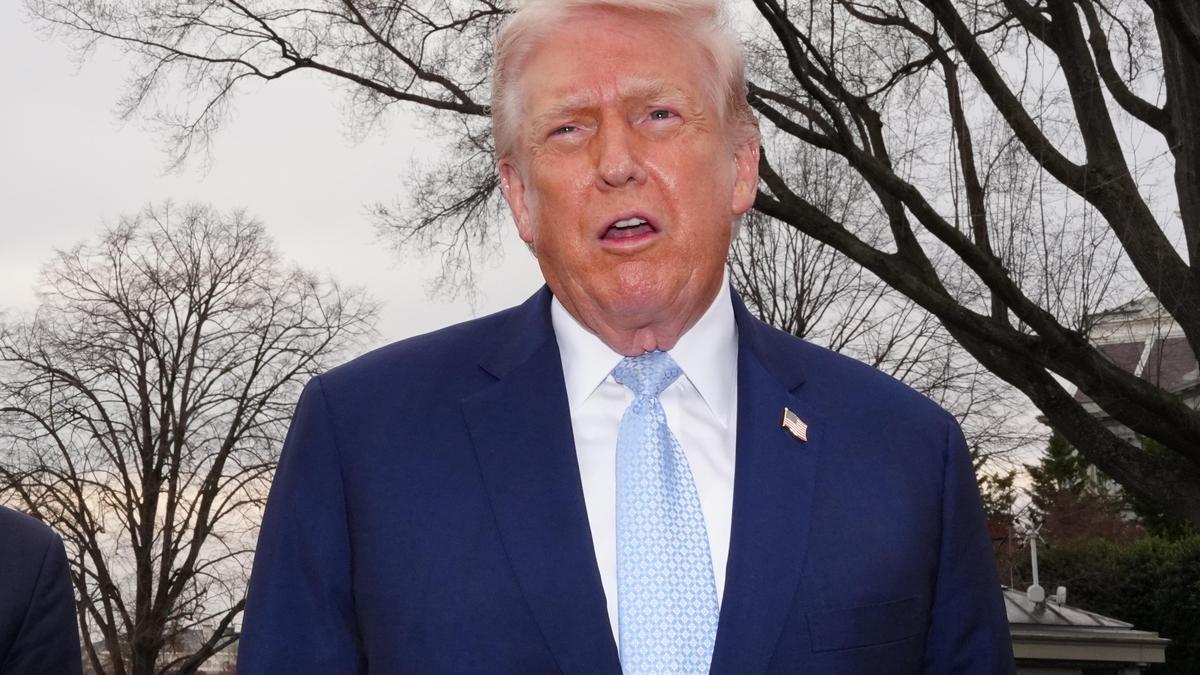
The decision-making process in the Oval Office is often depicted as a clinical weighing of geopolitical chess pieces. We talk about "strategic assets," "deterrence," and "proportional response." These are cold words. They strip away the reality of what happens when a precision-guided munition meets a turbine hall. When the news broke that President Trump had considered, and then postponed, military strikes on Iranian power infrastructure, the headlines focused on the diplomatic "will-he-won't-he." They missed the shadow of the human cost.
Imagine a technician named Reza. He is a hypothetical composite of the thousands of engineers who maintain the Iranian grid. Reza doesn't care about the intricacies of the JCPOA or the rhetoric flying across the Atlantic. He cares about the frequency fluctuations in the national circuit. He knows that if a strike hits the Shahid Rajaee plant, the cascading failure won't just go dark in one neighborhood. It will ripple.
The silence would be instantaneous.
Modern warfare has shifted its gaze from the trench to the toggle switch. By targeting power plants, a military isn't just hitting a government; it is hitting the very ability of a civilian population to function. The logic of the strike was centered on "maximum pressure." The idea was to cripple the regime’s backbone. But the backbone of a country is also its nervous system.
When the lights go out on a national scale, the first thing to go is the water. Pumps fail. Treatment plants stall. Within forty-eight hours, the lack of electricity becomes a crisis of thirst and sanitation. This is the invisible stake that rarely makes it into a briefing memo. The President was reportedly told that the strikes could result in significant casualties. Some of those would be the immediate victims of the blast. Most, however, would be the slow casualties of a collapsed infrastructure.
The tension in the Situation Room that night wasn't just about the risk of a wider war. It was about the realization that some bells, once rung, cannot be unrung. Once you destroy a nation's power generation capability, you aren't looking at a repair job that takes weeks. You are looking at a generational setback.
The Iranian power grid is a complex web of aging Soviet-era technology and modern Siemens turbines. It is held together by the ingenuity of people like Reza, who hunt for spare parts on a global black market. It is a system already under immense strain from sanctions. Adding high explosives to that equation creates a void that no amount of humanitarian aid can quickly fill.
Critics argued that the postponement was a sign of indecision. They saw a commander-in-chief blinking in a high-stakes game of chicken. But there is another way to view that pause. It was a moment where the sheer, terrifying scale of modern technological vulnerability became clear. We live in an era where the most powerful weapon isn't a nuclear warhead; it is the ability to turn off the sun in a corner of the world.
There is a specific kind of darkness that happens when a city loses power during a conflict. It isn't the peaceful darkness of a rural night. It is a heavy, anxious gloom. You hear the sound of distant generators—those who are lucky or wealthy enough to have them—grinding away. You see the flickers of candlelight in apartment windows. You feel the isolation.
The digital world, which we assume is infinite, vanishes. No internet. No cellular signal. No way to tell your family in the next province that you are still breathing.
The President's choice to pull back at the eleventh hour wasn't a policy shift. It was a stay of execution for a civilian infrastructure that supports eighty million people. It acknowledged, perhaps unintentionally, that the "human element" isn't a secondary concern. It is the only concern that actually matters in the long run.
We often treat energy as a commodity, something bought and sold on a ticker. We forget that energy is the baseline of modern dignity. It is what allows a student to study after dark. It is what keeps the food from rotting. It is what separates us from a pre-industrial struggle for survival.
The strikes were called off because the math didn't add up. Not the political math, but the moral arithmetic of the aftermath. How many lives are worth a tactical point? How do you justify the permanent crippling of a hospital system to send a message to a general?
The jets stayed on the tarmac. The missiles remained in their tubes.
Back in Tehran, the turbines kept spinning. The low hum continued, unnoticed and unappreciated by the millions of people sleeping beneath the glow of their streetlights. They woke up the next morning, made their coffee, and went to work, unaware of how close they had come to a different kind of morning.
The heartbeat of the city stayed steady. For one more night, the invisible threads that hold a society together remained intact.
Deep in the corridors of power, the maps are still there. The coordinates are still saved. The targets remain. But for a brief, flickering moment, the world chose to let the lights stay on. We should hope that the people making these decisions never forget what that hum sounds like when it finally stops.