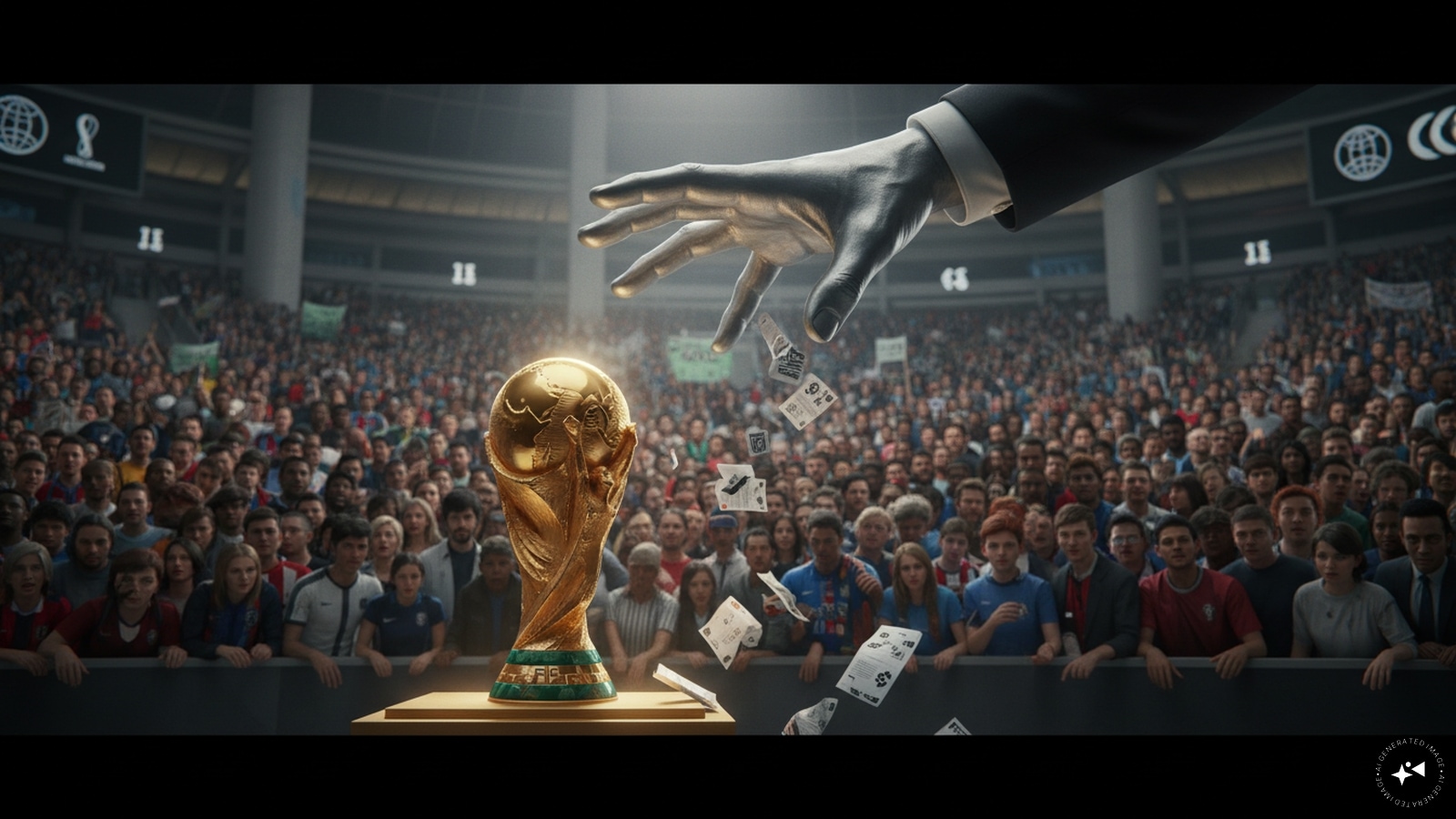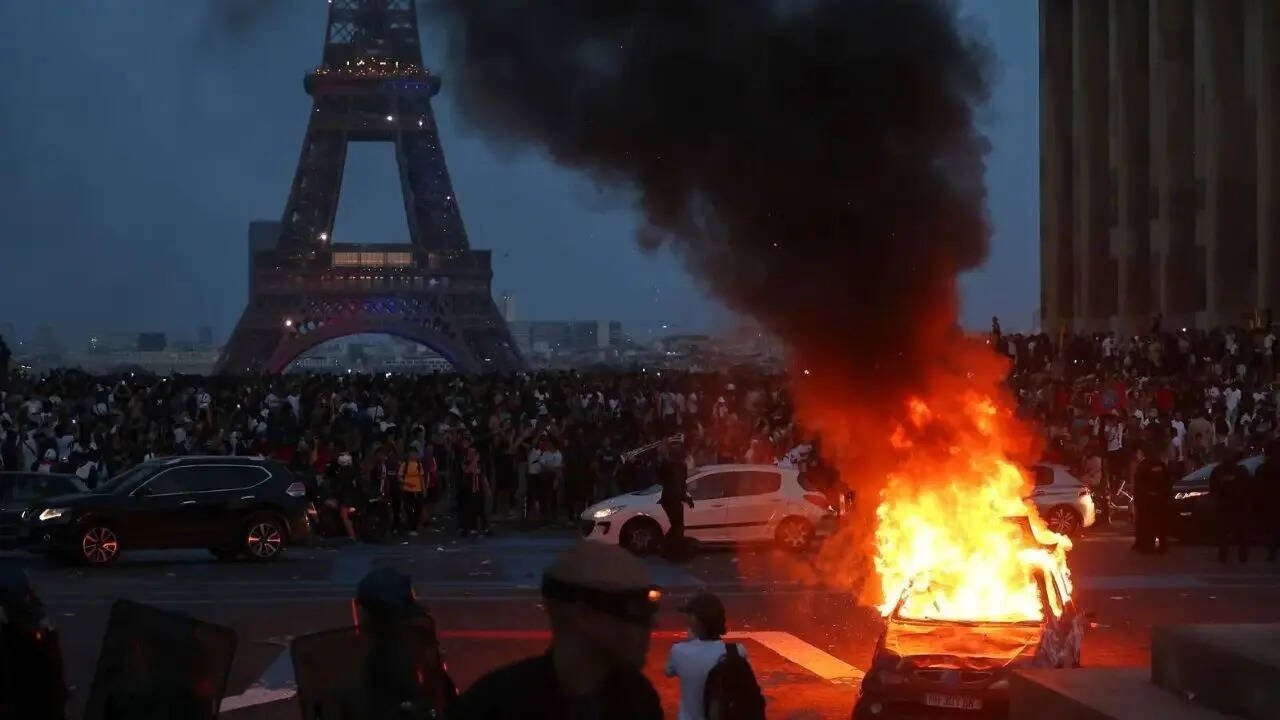
The headlines write themselves. Millions of clicks generated by images of burning cars on the Champs-Élysées, broken storefronts in Marseille, and a staggering tally of 780 arrests. The standard media narrative surrounding Paris Saint-Germain’s major European triumphs or near-misses follows a predictable, lazy script: football hooliganism is an uncontrollable plague, and sports passion inherently breeds mindless criminality.
This narrative is flat wrong. It is a surface-level diagnosis that confuses a convenient catalyst with a deep-seated structural reality.
When thousands of youth take to the streets of French cities following a massive football match, the mainstream press treats the event as an isolated sporting phenomenon. They isolate the fan culture. They blame the ultras. They act as though a tactical tactical variation on the pitch or a trophy lift somehow possesses the dark magic required to spontaneously radicalize ordinary citizens into rioters.
To understand what actually happens when a city like Paris erupts after a match, you have to look past the jerseys. The football match does not create the volatility. The match merely strips away the illusion of control in urban environments that are structurally volatile 365 days a year.
The Match is a Catalyst Not a Cause
Sociologists who study urban environments have long understood a concept that sports editors routinely ignore: structural pressure points. A championship match functions exactly like an unannounced civic stress test. It draws hundreds of thousands of people into hyper-concentrated public spaces, disrupts normal transit infrastructure, and creates a unique, temporary vacuum in civil authority.
To blame football for the subsequent property damage is like blaming the match that lit the fuse for the gunpowder hidden in the basement.
The reality of French urban geography dictates these outcomes. For decades, major metropolitan areas in France have operated under a stark geographic divide. The wealthy urban cores are separated from the marginalized outer suburbs, the banlieues, by literal and figurative ring roads. These suburbs house generations of youth facing systemic unemployment, aggressive policing, and profound social alienation.
A massive football victory offers a rare, legitimizing passport into the center of the city. It provides a collective reason to occupy spaces that these youth are normally priced out of or policed away from. When you flood a highly policed, historically tense urban center with thousands of disenfranchised young people who feel zero ownership over that city's institutions, friction is guaranteed. The football shirt is not a badge of hooliganism; it is a temporary visa into the urban core.
The Failure of the Reactive Policing Model
Every time these disturbances occur, politicians immediately demand a more aggressive police presence. This is the second great misconception of the status quo narrative. The assumption is that more riot gear, more tear gas, and faster deployment of specialized units will suppress the violence.
In reality, the heavy-handed, reactive policing model deployed in these scenarios actively escalates the chaos.
Consider the mechanics of crowd psychology. When a massive, celebratory crowd is met with pre-deployed, militarized police cordons, the psychological framing shifts instantly. The environment transforms from a space of collective celebration to a space of siege. The indiscriminate use of tear gas to disperse crowds does not separate peaceful fans from opportunistic vandals. It homogenizes them.
Once a peaceful fan inhales tear gas while trying to catch a metro home, their relationship with authority changes in real time. They are pushed into the same defensive, adversarial posture as the individuals who arrived with the intent to smash windows. The policing strategy itself creates the very monolith of the "rioting fan base" that the media later decries.
The Economic Opportunism of the Flash Mob
Let's dismantle the idea that the 780 arrests represent 780 hardcore football fanatics driven mad by a sporting result.
Urban property damage during major public gatherings is driven by economic opportunism and anti-state sentiment, not sporting tribalism. When a storefront window is broken on a luxury shopping avenue, it is rarely done out of anger over a missed penalty or euphoria over a late winner. It is done because a high-density, chaotic environment provides perfect anonymity for property crime.
By labeling every individual arrested in these sweeps as a "PSG fan," the media protects the state from asking harder questions about why so many young people feel absolutely no stake in preserving the physical infrastructure of their country's capital. It is far easier for a municipality to blame a football club's culture than to admit that their economic integration policies have failed so thoroughly that a sporting victory can trigger a low-level civic revolt.
Dismantling the Fan Culture Scapegoat
The real casualties of this lazy narrative are the actual fan organizations—the ultras who spend thousands of hours choreographing stadium displays, organizing community initiatives, and building genuine social solidarity within stadiums.
True fan culture requires immense organization, hierarchy, and discipline. The individuals engaging in hit-and-run vandalism on the periphery of major avenues are overwhelmingly unaffiliated with the organized fan bases. They are peripheral actors capitalizing on a crowd dynamic. Yet, the subsequent crackdowns—stadium bans, travel restrictions, and the criminalization of fan expressions—solely target the organized match-goers.
The state uses the actions of peripheral opportunists to justify the expansion of surveillance and the restriction of civil liberties for peaceful sports fans. It is a classic bait-and-switch that public safety officials use to cover up their inability to manage complex urban demographics.
The Structural Blueprint for Real Management
If the goal is to actually prevent urban centers from burning after a major sporting achievement, the solutions must be structural, not sporting.
- Decentralize the Space: Stop forcing every single celebratory gathering into a single, high-stakes tourist corridor like the Champs-Élysées. Create multiple, sanctioned fan zones throughout the outer rings of the city, bringing the celebration closer to the communities where the fans actually live.
- Shift to Dialogue-Based Policing: Model crowd management after successful European examples where police forces utilize un-weaponized liaison officers to communicate directly with crowd leaders, rather than relying on armored walls and chemical deterrents.
- Stop Using Football as a Social Band-Aid: Acknowledge that a sports franchise cannot fix the socioeconomic fractures of a nation. Stop expecting a championship trophy to act as a substitute for real economic mobility and urban investment.
The next time a major sporting event ends with smoke over a European city, ignore the breathless commentary about the "dark side of football." Look instead at the architecture of the city, the history of its suburbs, and the policy failures that turned a game into a pressure valve.