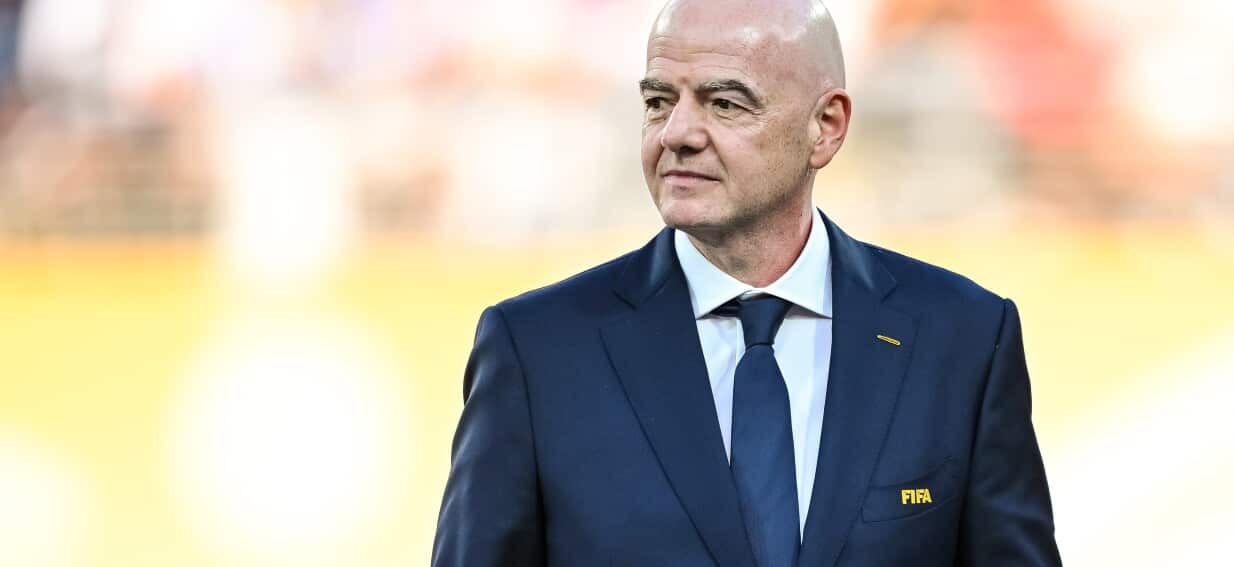
FIFA president Gianni Infantino recently abandoned plans to monetize World Cup broadcasting and commercial profits via private equity investment following severe institutional pushback. This reversal exposes the fundamental friction between traditional sports governance and modern financial engineering. When global governing bodies attempt to securitize tournament revenues, they run headlong into governance conflicts, stakeholder resistance, and asset indivisibility. The core conflict rests on a simple economic reality: private equity funds require yield and control, whereas non-profit sports federations require political consensus and statutory reinvestment.
To understand why the proposed equity sale collapsed, we must deconstruct the financial mechanics of the tournament, the governance structures of international football, and the incentive misalignment that doomed the transaction before it reached final approval. Building on this topic, you can also read: Why Gianni Infantino Had to Kill His World Cup Private Equity Plan.
The Revenue Mechanics Of The FIFA World Cup
The World Cup functions as the ultimate cash-generating asset in international sport. Its financial architecture relies on a four-year cycle dominated by broadcasting rights, marketing rights, ticketing, and hospitality.
[Broadcasting Rights (50%+)] \
[Marketing Rights (25%+)]     ---> [Four-Year Cycle Revenue] ---> [Statutory Reinvestment / Reserves]
[Ticketing & Hospitality]    /
Broadcasting rights consistently capture the largest share of tournament income, often exceeding fifty percent of total revenues. Marketing rights from tier-one global sponsors constitute the second major pillar, followed by hospitality and ticketing operations. Observers at FOX Sports have also weighed in on this matter.
In a standard commercial enterprise, predictable cash flows of this magnitude serve as pristine collateral for debt issuance or equity securitization. Private equity firms evaluate these revenue streams through a discounted cash flow model, factoring in historical growth rates, expanding tournament formats, and geographical market penetration, particularly in North America following the expanded 2026 competition.
However, FIFA is not a standard enterprise. It is registered as a Swiss association under Article 60 and following of the Swiss Civil Code, operating legally as a non-profit organization with a public-interest mandate. This classification restricts how capital can be extracted, distributed, or pledged. When financial sponsors attempt to apply corporate valuation models to a Swiss association, the mismatch between private return expectations and public statutory obligations creates an immediate structural bottleneck.
The Anatomy Of Institutional Pushback
The collapse of the private equity proposal was not merely a reaction to bad PR; it was driven by systemic resistance from continental confederations, member associations, and European clubs.
The Confederation Power Dynamic
FIFA distributes the vast majority of its revenues back to its 211 member associations through development programs, operational grants, and tournament participation bonuses. Regional bodies like UEFA and CONMEBOL hold significant voting power and institutional leverage. Introducing a private equity partner creates a residual claim on future cash flows. Member associations immediately recognized that any dividend stream paid to external investors represents a direct subtraction from the funds available for grassroots development and regional distribution.
The European Club Friction
European elite clubs, represented through organizations like the European Club Association, maintain an adversarial relationship with FIFA regarding international match calendars and revenue sharing. The prospect of external capital commercializing the World Cup further aggravated fears that tournament expansion is driven purely by short-profit motives rather than player welfare or sporting integrity. When key stakeholders calculate that the cost of capital from private equity exceeds the organic cost of debt financing or retained earnings, political opposition hardens.
The Governance Hazard
Private equity investment typically demands governance rights, board seats, or operational oversight to protect invested capital and ensure target internal rates of return are met. For a global regulator like FIFA, ceding commercial oversight to a private fund creates a severe conflict of interest. A regulator cannot simultaneously police the global game and maximize returns for private equity limited partners. The regulatory capture risk alone was enough to trigger alarm bells among sports integrity watchdogs and governance reformers.
The Valuation Dilemma And Risk Allocation
Valuing a single sporting tournament for private equity acquisition involves complex risk adjustments that markets struggled to price accurately.
Private equity funds operate on finite fund lifecycles, typically lasting ten years with a five-year investment horizon. They require predictable liquidity events, such as an initial public offering or a secondary buyout, to return capital to investors. Applying this model to a quadrennial tournament governed by changing geopolitical landscapes introduces massive variance.
- Geopolitical Risk: Host nation stability, visa policies, and diplomatic relations directly impact tourism, ticket sales, and localized sponsorship activation.
- Macroeconomic Shocks: Global recessions depress corporate hospitality budgets and media rights valuations.
- Regulatory Scrutiny: Antitrust investigations, government inquiries into sports governance, and potential labor disputes among elite players create operational volatility.
To offset these risks, private equity demands a heavy discount on entry multiples. FIFA leadership realized that selling a stake in the sport's crown jewel at a cyclical discount would permanently impair the long-term asset value of the federation for a one-time capital injection.
Alternative Capital Structures
Faced with the failure of equity monetization, FIFA retains alternative avenues for funding its strategic initiatives without sacrificing ownership control.
The most viable alternative is asset-backed securitization using institutional debt markets rather than equity sales. By issuing corporate bonds against guaranteed multi-year broadcasting contracts, FIFA can raise capital at predictable fixed interest rates without surrendering governance rights or future profit participation to private funds. Institutional bondholders receive coupon payments, while FIFA retains 100 percent of the residual upside and operational control.
Another mechanism involves ring-fenced commercial partnerships for specific technology, digital infrastructure, or hospitality joint ventures, rather than a blanket claim on core tournament revenues. This limits exposure and insulates the primary broadcasting and marketing cash flows from external financial entanglement.
Strategic Outlook
The retreat from private equity marks a watershed moment for sports administration. It demonstrates that the financialization of global sports has a hard ceiling defined by institutional governance limits and stakeholder pushback.
Future efforts to inject institutional capital into international governing bodies will face identical obstacles unless fundamental ownership models are reformed. As long as federations retain non-profit legal structures coupled with massive commercial footprints, debt markets will remain the exclusive rational instrument for liquidity management. Equity extraction in international sports governance is structurally incompatible with the political economy of global football.