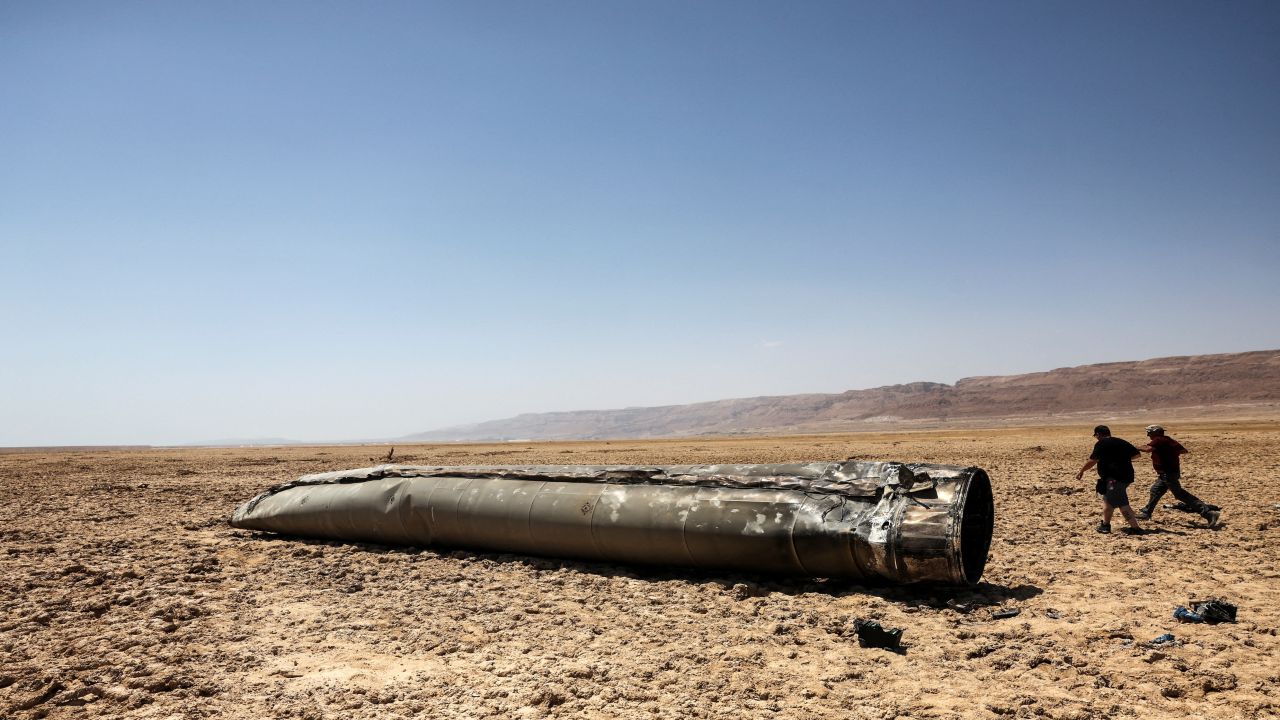
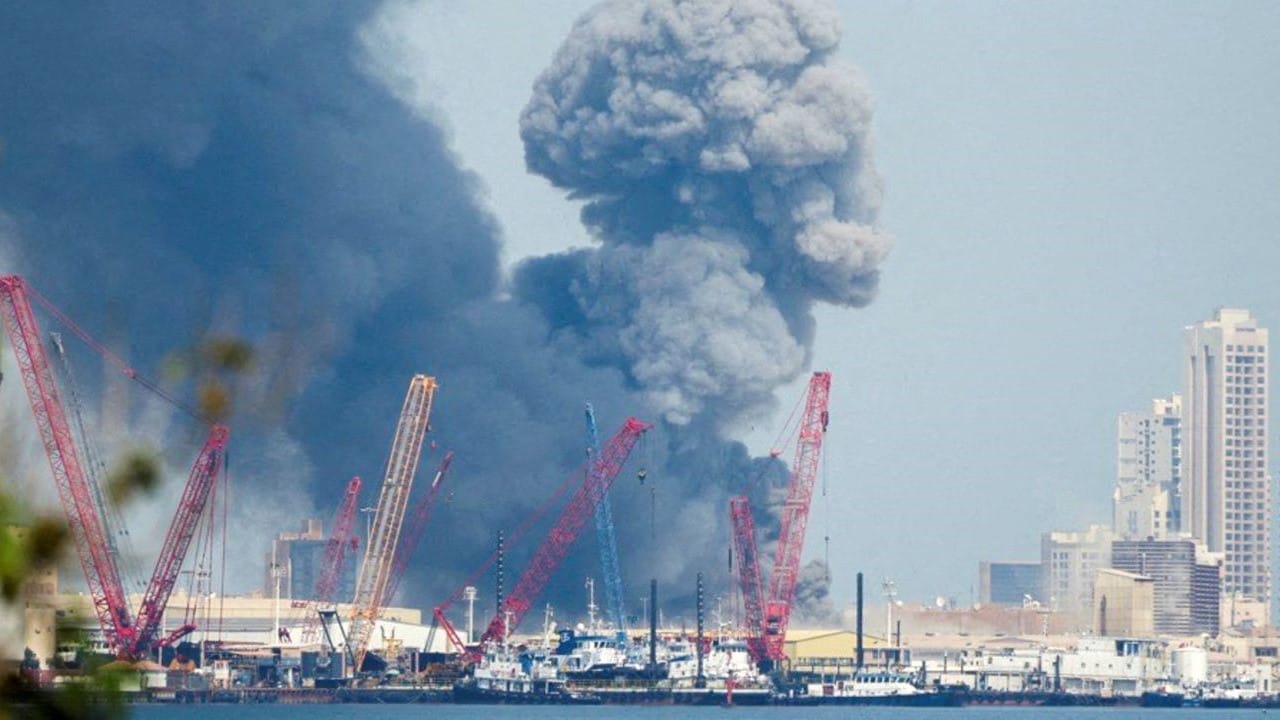
Military briefings and "expert" panel discussions are currently vibrating with the same tired consensus: that the surgical precision of US-Israeli air power has finally "restored deterrence" and dismantled the Iranian threat. They point to the scorched earth at the Khojir missile complex and the hollowed-out husks of S-300 batteries as proof of a decisive shift.
They are looking at the scorecard while ignoring the game.
The recent escalation—Operation Epic Fury and the subsequent Israeli "Roaring Lion" campaign—is being sold as a masterclass in regional stabilization. In reality, it is the most expensive way to buy a temporary pause while ensuring the next explosion is nuclear. By stripping away Iran’s conventional shield (its air defenses and missile production), we haven't forced a surrender. We have backed a cornered animal into the only room left: the one containing a centrifuge.
The Air Superiority Trap
The "lazy consensus" argues that by destroying 120 Iranian Transporter Erector Launchers (TELs) and neutralizing the S-300 units, Israel and the US have established "full aerial superiority." On paper, this is true. I’ve seen enough combat flight data to tell you that the F-35s and F-15Is owned the Iranian sky.
But air superiority in 2026 is a phantom victory.
Iran’s military doctrine has never been about winning a dogfight. It is about "missile city" survivability. While Western analysts celebrate the destruction of visible silos, they ignore the hardening of sites like Pickaxe Mountain. We are playing a game of Whac-A-Mole where the moles are increasingly deep underground and the hammer costs $100 million per swing.
Worse, the destruction of Iran’s conventional air defense removes the regime’s incentive to keep the fight "gray." When a nation realizes its borders are porous to conventional jets, it stops investing in better SAMs and starts investing in the only weapon that makes those jets irrelevant. If the skies over Tehran are "completely safe for the enemy," as former President Rouhani lamented, the regime’s only logical move is to make the cost of entering those skies an existential one for the entire region.
The Proxy Paradox: Dead Leaders, Living Networks
The headlines are obsessed with "decapitation strikes." They list the names of fallen IRGC commanders like trophies. This assumes the "Axis of Resistance" is a corporate hierarchy that collapses when the CEO is removed.
It isn’t. It’s a distributed network.
Killing Hossein Salami or targeting Kataib Hezbollah headquarters in Jurf al Sakhr doesn't end the threat; it merely decentralizes it. We have seen this movie before in Iraq and Afghanistan. "Precision" strikes on leadership create power vacuums filled by younger, more radicalized field commanders who don't care about the diplomatic "red lines" their predecessors occasionally respected.
The recent drone strikes on high-rises in Bahrain and the targeting of the Fairmont Hotel in Dubai aren't signs of an organized military response—they are signs of a proxy network that has gone rogue and is lashing out with low-cost, high-impact "countervalue" targeting.
The Economic Mirage of Surgical Strikes
"Surgical" is the most deceptive word in the military lexicon. It implies a clean removal of a tumor without affecting the patient.
Imagine a scenario where a series of "precise" strikes on Iranian naval assets in the Strait of Hormuz leads to a 20% spike in global insurance premiums for oil tankers. That isn't a theory; it’s the current reality of early 2026. The GCC states aren't "walking a tightrope" out of indecision; they are doing it because they know their desalination plants and glass towers are the ultimate soft targets for a regime that no longer has a formal air force to lose.
The US and Israel have spent billions on interceptors—Arrow 3, David’s Sling, and the new Arrow 4—to catch $50,000 drones and $200,000 missiles. The math is catastrophically lopsided. We are exhausting the West's industrial capacity to produce high-end interceptors while Iran's "reconstitution" of its missile program focuses on solid-fuel systems that are faster to manufacture and harder to track.
The Wrong Question
The world is asking: "How much did we hit?"
The right question is: "What did we leave them with?"
By destroying the conventional "middle" of Iran’s military, we have left them with two extremes:
- Low-end chaos: Proliferation of cheap suicide drones and small-unit sabotage that can't be "deterred" by an F-35.
- High-end apocalypse: A desperate, accelerated push for a nuclear deterrent to prevent the next "Epic Fury."
We haven't dismantled the "Axis of Resistance." We have just stripped away its brakes. The status quo wasn't "fixed" by these strikes; it was shattered into a thousand jagged pieces that are much harder to manage than a centralized regime.
Stop looking at the satellite photos of smoking craters and start looking at the 2035 DIA assessments on ICBM development. We didn't end the war; we just made the next one inevitable and far more dangerous.
Would you like me to analyze the specific technical failure of the S-300 systems against the F-35's electronic warfare suite?