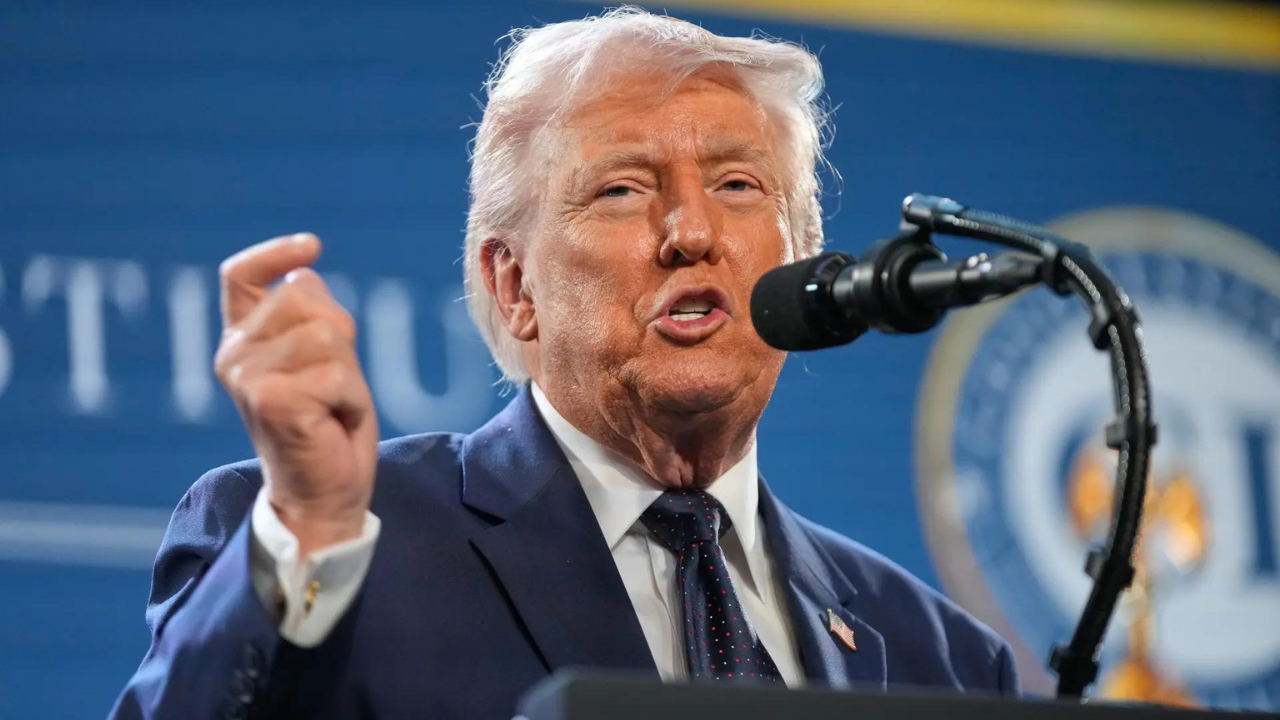
The intersection of American executive rhetoric and Iranian state behavior is frequently analyzed through a psychological lens rather than a structural one. Media coverage routinely characterizes diplomatic friction and unconventional statements as mere erratic behavior. This represents a fundamental misreading of international relations. The strategic tension between Washington and Tehran operates on a calculable matrix of deterrence theory, credible commitment problems, and asymmetric escalation management. By examining these interactions through established geopolitical frameworks, the underlying logic of both state actors becomes clear.
The Strategic Utility of Irregular Rhetoric in Deterrence Theory
Standard diplomatic protocol relies on predictable, codified communication to prevent miscalculation. However, game theory introduces the "madman theory" or the strategy of deliberate unpredictability. When a state executive explicitly labels a foreign adversary as irrational yet expresses a transactional affinity, it alters the adversary's risk-assessment model.
                  [ US Rhetorical Shock ]
                             │
            ┌────────────────┴────────────────┐
            ▼                                 ▼
   [ Disruption of Adversary ]       [ Elimination of Known ]
    [ Escalation Thresholds ]         [ Redlines & Boundaries ]
            │                                 │
            └────────────────┬────────────────┘
                             ▼
              [ Strategic Information Asymmetry ]
This rhetorical framework serves three distinct operational functions:
- Disruption of Escalation Thresholds: Adversaries calculate their proxy actions based on perceived American redlines. When the executive signals a departure from conventional rulebooks, the adversary can no longer accurately predict the exact threshold that will trigger a kinetic response.
- Elimination of Assured Outcomes: Standard deterrence relies on a stable if-then proposition. Unconventional rhetoric introduces a probabilistic variable where the cost of an adversarial action becomes highly variable and potentially catastrophic.
- Asymmetric Leverage: For a state operating under severe economic sanctions, like Iran, predictability is an asset that allows them to navigate around restrictions. Forcing them to operate under conditions of strategic ambiguity diminishes their ability to plan long-term regional maneuvers.
This approach carries a severe systemic vulnerability: the breakdown of signaling. If an adversary genuinely believes an actor is entirely erratic, the utility of deterrence drops. The adversary may conclude that a preemptive strike or maximum escalation is their only survival mechanism, as peaceful compliance no longer guarantees security.
The Iranian Cost Function: Asymmetric Warfare and Sanctions Adaptation
To understand Tehran's reaction to shifting American posture, one must analyze the economic and military constraints dictating Iranian policy. Iran's grand strategy is not born out of ideological fervor alone; it is a rational response to severe conventional military inferiority and geographic vulnerabilities.
The Iranian defensive model is built upon two structural pillars:
1. The Proxy Network Strategy
Unable to match the conventional air power or technological superiority of the United States and its regional allies, Tehran developed a doctrine of forward defense. By funding, training, and arming non-state actors across Iraq, Syria, Lebanon, and Yemen, the Islamic Revolutionary Guard Corps (IRGC) externalizes its battlespace. This creates a multi-layered buffer zone. Any conventional attack on Iranian soil risks triggering a synchronized, multi-theater response from these proxies, effectively shifting the cost of conflict onto regional partners of the United States.
2. Anti-Access/Area-Denial (A2/AD) Capabilites
Within the Persian Gulf and the Strait of Hormuz, Iran utilizes asymmetric naval and missile capabilities. Rather than deploying large surface combatants, the Iranian navy relies on fast-attack craft, naval mines, and shore-based anti-ship cruise missiles. The structural objective is simple: maintain the capability to choke the global energy supply at a moment's notice. Because roughly a fifth of the world's petroleum passes through the Strait of Hormuz, the economic cost of a disruption functions as a powerful deterrent against direct external intervention.
The interaction of these two pillars with US sanctions creates a specific economic cycle. Sanctions restrict Iran's crude oil monetization, forcing the regime to develop a highly sophisticated informal financial network. This "sanctions-evasion infrastructure" relies on front companies, illicit ship-to-ship oil transfers, and alternative clearing systems outside the SWIFT network.
Consequently, the Iranian regime's survival depends on maintaining these networks while simultaneously leveraging its regional proxies to force sanctions relief. When Washington introduces rhetorical volatility into this equation, it threatens the stability of these informal economic channels by increasing the risk premium for international entities willing to engage with Tehran.
The Credible Commitment Dilemma in Sanctions Architecture
A primary structural bottleneck in US-Iran relations is the credible commitment problem, an issue inherent to the American constitutional system. When the executive branch negotiates an international agreement, such as the 2015 Joint Comprehensive Plan of Action (JCPOA), without formal Senate ratification as a treaty, the agreement functions merely as an executive arrangement.
This structural reality introduces a fatal flaw into long-term deterrence and diplomacy:
- Temporal Inconsistency: An Iranian administration cannot verify that a future US president will honor agreements made by their predecessor. The unilateral withdrawal from the JCPOA in 2018 demonstrated this systemic vulnerability to Tehran.
- The Sunk Cost of Compliance: For Iran, dismantling nuclear infrastructure requires immediate, tangible domestic political costs. If the corresponding benefit—permanent sanctions relief—can be revoked arbitrarily by a change in US administration, the net present value of compliance becomes negative.
- Hardliner Reinforcement: American policy reversals provide definitive internal leverage to conservative factions within Iran. The failure of diplomatic normalization validates the hardline thesis that Washington's ultimate objective is regime change, not behavioral modification.
This structural disconnect explains why Iranian leadership demands ironclad legal and economic guarantees in any negotiation—guarantees that the US executive branch is constitutionally incapable of providing without a supermajority in Congress.
Escalation Dominance and the Risk of Kinetic Miscalculation
The primary objective of both US containment and Iranian resistance is the attainment of escalation dominance—a condition where one party can escalate a conflict to a specific level of intensity where the adversary cannot match them without incurring unacceptable costs.
The operational reality of the US-Iran dynamic is an asymmetric escalation ladder. The United States possesses absolute dominance in conventional kinetic operations, cyber-warfare capabilities, and global financial coercion. Iran possesses localized escalation dominance through its proxy network and its ability to disrupt shipping lanes rapidly.
[ GLOBAL LEVEL: US DOMINANCE ]
  ├── Unmatched Conventional Kinetic Power
  ├── Comprehensive Cyber-Warfare Capabilities
  └── Global Financial System Coercion (SWIFT/Sanctions)
        │
        ▼ (Asymmetric Friction Point)
        ▲
[ REGIONAL LEVEL: IRANIAN LOCAL DOMINANCE ]
  ├── Distributed Proxy Network (Multi-Theater Response)
  └── Strait of Hormuz Chokepoint (A2/AD Capabilities)
When an American administration uses highly volatile language, it attempts to leverage global dominance to flatten Iran's regional advantages. The risk arises when the messaging obscures the actual redlines. If Tehran miscalculates an ambiguous statement as an imminent threat to regime survival, their doctrine dictates an immediate, maximum asymmetric deployment. This includes targeting regional energy infrastructure or initiating high-volume rocket barrages via proxies to alter the US calculus before a conventional campaign can materialize.
Structural Realignment and Strategic Restraint
Managing this geopolitical friction requires shifting away from personality-driven analysis toward structural risk mitigation. Unpredictability can yield short-term tactical concessions, but it cannot produce a stable regional equilibrium.
The optimal strategic path for Western policy requires stabilizing the escalation ladder through explicit, verifiable communication channels. This does not necessitate grand diplomatic bargains or the immediate lifting of primary sanctions. Instead, it demands the establishment of clear, lower-level deconfliction mechanisms designed to prevent tactical encounters in the Persian Gulf or Syria from triggering unintended strategic responses.
The United States must couple its deterrence posture with clear, predictable off-ramps. Deterrence fails completely if the target believes that punishment is inevitable regardless of their behavior. Washington must define precise, achievable behavioral modifications—such as specific limits on uranium enrichment levels or regional missile transfers—that are directly tied to incremental, legally insulated sanctions waivers. Only by replacing rhetorical volatility with structural predictability can the cycle of escalatory miscalculation be contained.