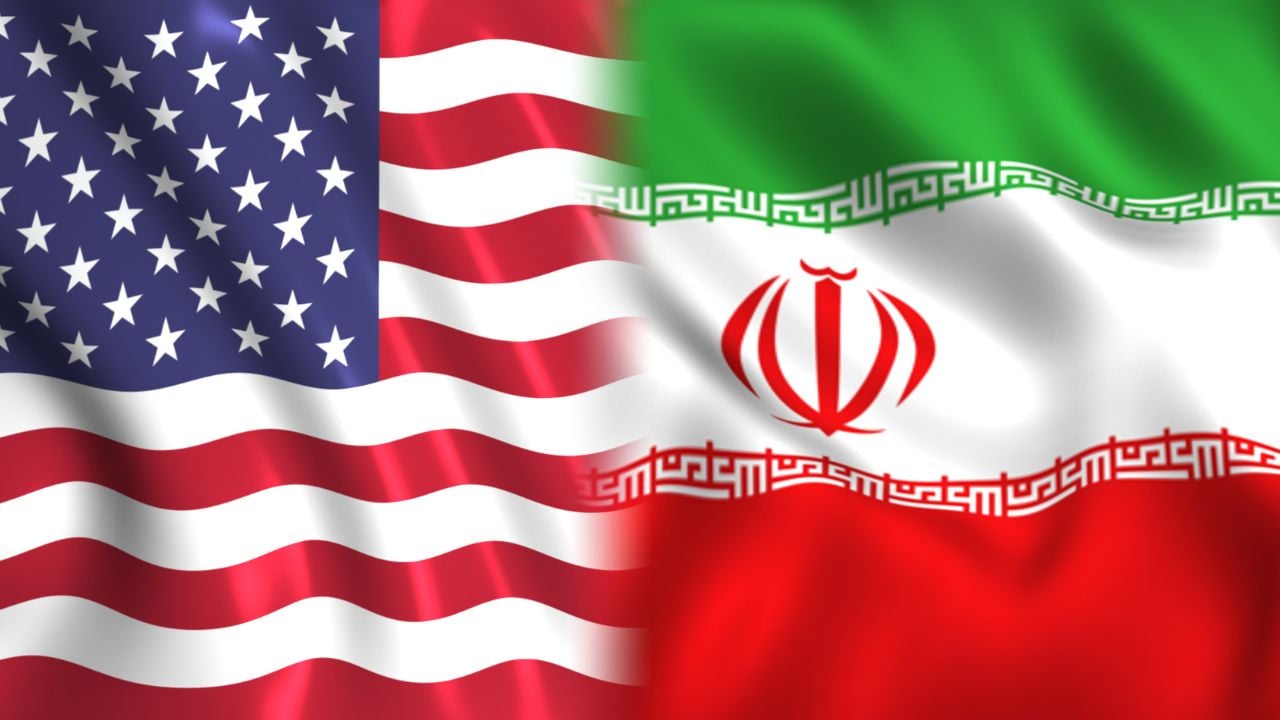
Tehran’s current signaling regarding "nuclear concessions" is not a shift in ideological direction but a calculated recalibration of its geopolitical balance sheet. As high-level meetings approach, the Iranian leadership is attempting to trade temporary, reversible technical decelerations for permanent, structural economic relief. This strategy operates on a logic of asymmetric value: Iran offers "transparency" and "limitations"—commodities it can manufacture or retract at will—in exchange for the removal of secondary sanctions, which are systemic and difficult for the West to re-impose once global markets reintegrate.
Understanding this negotiation requires moving past the binary of "deal or no deal" and focusing on the three specific levers Tehran uses to manipulate its bargaining position: breakout capacity, regional kinetic leverage, and internal economic thresholds.
The Architecture of Iranian Nuclear Leverage
The Iranian nuclear program serves as a high-stakes hedging instrument. By advancing its enrichment levels, Tehran creates a "time-decay" pressure on Western negotiators. The closer the program gets to weapons-grade material (90% U-235), the higher the "risk premium" the United States and its allies must pay to halt progress.
The Technical Escalation Ladder
Iran’s current position is defined by three technical milestones that dictate the pace of diplomacy:
- Enrichment Purity (The Qualitative Threat): Moving from 20% to 60% enrichment reduces the total work required to reach 90% by a significant margin. The separation work units (SWU) needed to jump from 60% to 90% are minimal compared to the initial stages.
- Advanced Centrifuge Deployment (The Quantitative Threat): The transition from the IR-1 models to IR-6 and IR-9 machines allows for faster enrichment in smaller, more easily hardened facilities. This decreases the physical footprint required for a breakout, complicating military "bunker-buster" calculus.
- Accumulated Stockpiles: Large quantities of 60% enriched uranium function as a store of value. Even if Iran stops enriching today, the existing inventory represents a "latent capability" that remains a permanent fixture of the negotiation.
The Cost Function of Sanctions and Economic Survivability
Tehran’s willingness to concede is inversely proportional to its economic "pain tolerance." The Iranian economy has transitioned from a state of shock to a state of managed stagnation. The "Resistance Economy" framework aims to decouple Iranian trade from the SWIFT system and Western-led financial architectures by pivoting toward the BRICS+ bloc and the Shanghai Cooperation Organization (SCO).
However, the "Pain Threshold" is not a single number; it is a function of three variables:
- Currency Volatility: The Rial’s depreciation directly impacts the cost of imported intermediate goods, fueling domestic inflation.
- Oil Export Elasticity: Iran’s ability to sell crude to China through "dark fleet" tankers creates a floor for government revenue.
- Fiscal Deficits: The gap between social subsidy obligations and actual tax/oil revenue determines the regime's internal stability.
If the US meets Tehran’s demands for "guarantees," it is essentially asking for a hedge against future American policy shifts. Iran views the 2018 withdrawal from the JCPOA as a failure of "contractual durability." Their demand for "verification" of sanctions lifting—ensuring that companies can actually transact without fear of future penalties—is an attempt to solve the "Compliance Vacuum" that exists even when sanctions are legally removed.
The Three Pillars of the Iranian Negotiation Strategy
Tehran’s approach to the upcoming meetings is structured around a specific sequence of "Give-and-Get" maneuvers designed to maximize their strategic depth.
Pillar I: Technical Reversibility for Structural Relief
Iran’s primary objective is to offer concessions that are "soft-coded." Removing a few centrifuges or diluting a portion of the 60% stockpile can be undone in months. In contrast, they demand the removal of banking and energy sanctions, which are "hard-coded" into global trade. Once European and Asian firms re-enter the Iranian energy market, the political and economic cost for the US to re-impose those sanctions increases exponentially.
Pillar II: The Regional Security Linkage
The nuclear issue does not exist in a vacuum. Tehran uses its "Axis of Resistance" (proxies in Lebanon, Yemen, Iraq, and Syria) as an externalized defense layer. By maintaining the threat of regional escalation, Iran forces Western negotiators to view the nuclear file as a component of a larger stability package. This allows Tehran to demand concessions on the nuclear front in exchange for simply not escalating in the Red Sea or the Levant.
Pillar III: Strategic Ambiguity on Intent
By maintaining a "Fatwa" against nuclear weapons while simultaneously building the infrastructure to produce them, the leadership preserves "Strategic Ambiguity." This allows them to claim moral high ground while extracting the "deterrence value" of a nuclear state without the "pariah cost" of an actual test.
Obstacles to a Sustainable Agreement
The primary bottleneck in any upcoming negotiation is the "Verification Gap." For the US, verification means intrusive, "anywhere, anytime" inspections by the IAEA. For Iran, this is viewed as legalized espionage that compromises their conventional military secrets.
Furthermore, the "Sunset Clauses" of previous agreements remain a point of contention. The West views these as temporary pauses; Iran views them as the expiration date of all restrictions. This creates a fundamental misalignment in the expected lifespan of any concession.
- The Domestic Constraint (Iran): Hardliners in the Majlis view any engagement with the US as a tactical weakness, limiting the President's room for maneuver.
- The Domestic Constraint (US): The political cost of unfreezing Iranian assets is high, especially when tied to regional proxy activities.
- The External Spoiler Effect: Regional actors, specifically Israel and Saudi Arabia, maintain their own security redlines that may not align with a US-Iran bilateral compromise.
Mapping the Causality of a Potential Breakthrough
If a deal is reached, it will likely follow a "Step-for-Step" logic rather than a "Big Bang" resolution.
Step 1: The Freeze-for-Freeze. Iran halts enrichment at 60% in exchange for the unfreezing of specific humanitarian funds or limited oil export waivers. This lowers the immediate temperature but solves nothing long-term.
Step 2: The Monitoring Expansion. Iran allows IAEA inspectors back into key sites in exchange for the removal of certain "Designated Terrorist" labels or secondary sanctions on non-energy sectors.
Step 3: The Long-Term Framework. This is the most difficult stage, requiring a legal mechanism that outlasts a single US administration. Without a treaty ratified by the US Senate—an unlikely prospect—Iran will always price in a "Risk Discount," meaning they will never fully dismantle the infrastructure they view as their ultimate insurance policy.
The current signals from Tehran suggest a desire to return to "Step 1" to alleviate immediate fiscal pressure. However, the underlying "Threat Vector"—the IR-6 centrifuges and the 60% stockpile—remains the primary source of their bargaining power.
Strategic Assessment of the "Guarantees" Demand
Iran’s insistence on "guarantees" is a rational response to the "Inconsistent Player" problem in game theory. When a counterparty can change its mind every four years, the value of a long-term contract drops to zero. To circumvent this, Tehran is looking for "Economic Intertwining." They want the US to allow enough investment from major global players that the cost of pulling out would be too high for a future US administration to ignore.
The Geopolitical Cost Function
The "Cost of Failure" in these negotiations is not a return to the status quo, but an acceleration toward a new, more dangerous equilibrium.
- Proliferation Cascades: If Iran achieves a "threshold" status (the ability to produce a weapon in 7-14 days), regional rivals will likely seek their own nuclear deterrents, ending the NPT (Non-Proliferation Treaty) era in the Middle East.
- The Preemptive Strike Variable: As the "Breakout Clock" ticks down, the probability of a kinetic intervention by regional actors increases, regardless of US diplomatic preference.
The strategic play for Western observers is to monitor the specific types of centrifuges being spun and the exact wording of the "sanctions verification" demands. If Tehran shifts its focus from "total removal" to "operational guarantees," it signals a high degree of internal economic distress. If it remains focused on "legal guarantees," the talks are likely performative, aimed at buying time for further technical advancement.
The most effective strategy for the West is to decouple the "Nuclear File" from "Regional Behavior" in the short term to achieve a technical freeze, while simultaneously building a "Snapback Coalition" with E3 (UK, France, Germany) partners to ensure that any Iranian "reversible" concession is met with a "reversible" sanctions relief package. This maintains a balanced "Penalty-Reward" ratio that accounts for the inherent volatility of the relationship.