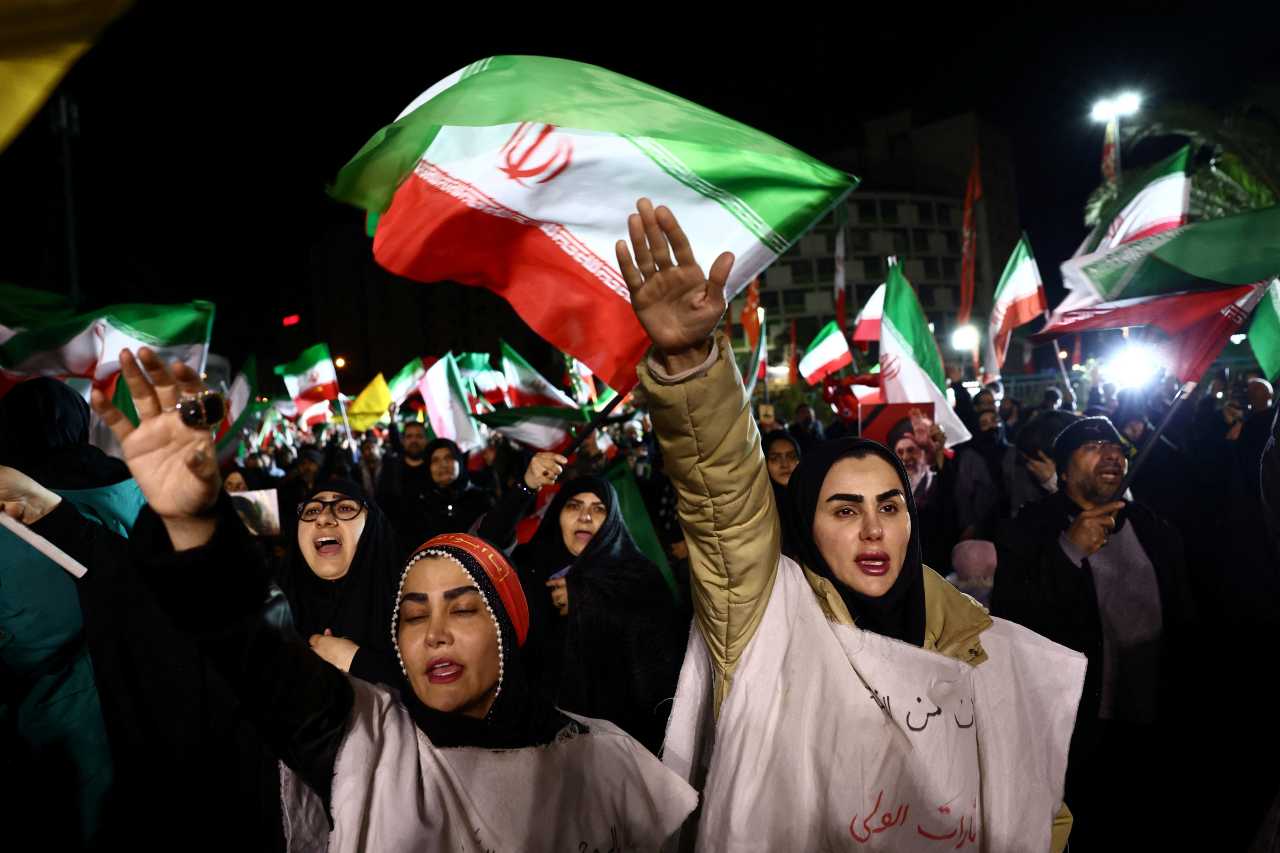
The stability of the Persian Gulf currently hinges on a fundamental mismatch between transactional diplomacy and ideological entrenchment. While the Trump administration’s proposed peace plan operates on a logic of maximum economic leverage to force a behavior shift, Tehran’s counter-demands are built on a framework of "strategic depth" and "sovereign immunity." To understand the viability of any ceasefire, one must move beyond the headlines of "peace talks" and analyze the structural cost functions that both Washington and Tehran are attempting to optimize.
The Triple-Lock Framework of Tehran’s Demands
Tehran’s negotiating position is not a singular request for sanctions relief; it is a triple-lock system designed to ensure the survival of the Islamic Republic’s political and military architecture. This system is composed of three distinct but interdependent pillars:
- Economic Irreversibility: Tehran views previous agreements, specifically the 2015 JCPOA, as failures not because of their technical content, but because of their lack of "snap-back" protections for the Iranian economy. Their primary demand is now centered on legal guarantees that prevent a future administration from unilaterally exiting a signed agreement. Since the US executive branch cannot constitutionally bind a future president to a non-treaty agreement, this creates a structural deadlock.
- Regional Non-Interference (Reciprocity): While Washington demands the cessation of "malign activities" (the export of drone technology and funding of non-state actors), Tehran frames these assets as their primary deterrent. In the absence of a modern air force or conventional parity with Gulf neighbors, the "Axis of Resistance" functions as an externalized defense perimeter. Tehran’s demand is for a security architecture that recognizes their regional influence as legitimate rather than a variable to be traded away.
- The Lifting of Primary and Secondary Sanctions: A critical distinction often missed in standard reporting is the difference between primary sanctions (restricting US companies) and secondary sanctions (punishing third-party nations for trading with Iran). Tehran’s demand focuses heavily on the latter. Without the removal of secondary sanctions, the Iranian central bank remains disconnected from the SWIFT system, rendering even "legal" humanitarian trade functionally impossible.
The Cost Function of the Trump Peace Plan
The proposed peace plan from the Trump administration operates on the principle of "Pressure as Currency." The logic suggests that by increasing the cost of defiance (via the "Maximum Pressure" 2.0 campaign), the Iranian leadership will eventually reach a point where the internal cost of social unrest outweighs the external cost of strategic concession.
This model faces a significant friction point: the Resilience Economy. Over the last decade, Iran has developed sophisticated "gray market" mechanisms for oil exports, primarily through the "Ghost Fleet" and intermediaries in East Asia. This reduces the sensitivity of the Iranian regime to traditional sanctions. For the Trump plan to succeed, it must close these loopholes, which requires high-level diplomatic friction with Beijing—a variable that introduces secondary geopolitical costs for the US that may exceed the benefits of an Iranian ceasefire.
The Asymmetric Value of Time
In any high-stakes negotiation, the most undervalued variable is the "discount rate" of time. For the US administration, the political cycle dictates a need for rapid, high-impact foreign policy wins. This creates a "short-horizon" strategy where the goal is a signed document that can be marketed as a stabilization of the Middle East.
Conversely, Tehran operates on a "long-horizon" strategy. The clerical leadership views the current friction as a single chapter in a multi-decadal struggle for regional hegemony. By dragging out negotiations, Tehran achieves two objectives:
- Technological Maturation: Continued research and development in centrifuge efficiency and ballistic missile accuracy occur while talks are "ongoing."
- Political Exhaustion: They bet on the fact that the US electorate eventually tires of Middle Eastern entanglements, leading to a natural softening of the American stance.
The Kinetic Variable: Proxy Dynamics and the Ceasefire
A ceasefire in the traditional sense implies a cessation of direct hostilities. However, the US-Iran conflict is almost entirely indirect. The logic of a ceasefire is complicated by the "Principal-Agent Problem." Even if Tehran agrees to a pause in regional escalation, they do not maintain 100% operational control over every local militia in Iraq, Syria, or Yemen.
Washington views any attack by a Tehran-aligned group as a breach by the Principal (Tehran). Tehran maintains a stance of "plausible deniability," claiming these groups act autonomously based on local grievances. This creates a "hair-trigger" environment where a single localized skirmish can collapse a national-level diplomatic framework. A functional peace plan must therefore include a "De-confliction Protocol" that defines exactly what constitutes a violation by the state versus a localized incident.
Tactical Divergence in Nuclear Constraints
The technical core of the dispute remains the breakout time—the duration required to produce enough weapons-grade uranium for a single nuclear device. The Trump plan seeks to extend this breakout time to a minimum of 12 months, whereas Tehran’s current activities have reduced this window to a matter of weeks.
The math of the ceasefire requires a massive "reverse-enrichment" process. Tehran’s counter-demand is the retention of advanced IR-6 and IR-9 centrifuges. These machines are significantly more efficient than the older IR-1 models. Retaining the hardware while pausing the enrichment allows Tehran to "mothball" their capability rather than dismantle it. This creates a "latent nuclear status" that the US finds unacceptable, as the capability can be reactivated faster than the international community can react with new sanctions.
Verification and the "Anywhere, Anytime" Bottleneck
No peace plan survives without a verification regime. The International Atomic Energy Agency (IAEA) requires access to undeclared sites where historical nuclear activity may have occurred. Tehran categorizes these demands as "espionage under the guise of inspection" and demands that any ceasefire closes all "past probes" into their nuclear history.
This creates a logic gap:
- The US cannot verify a "peaceful" program without looking at the past.
- Iran cannot allow a look at the past without admitting to prior violations.
The resolution of this gap requires a "Grand Bargain" format, where both parties agree to a "strategic amnesia" regarding past activities in exchange for absolute transparency regarding future operations. However, the domestic political cost in Washington for such a concession is prohibitively high, as it would be framed as "appeasement" by hardline factions.
Strategic recommendation: The "Incremental Stabilization" Pivot
The current pursuit of a "Grand Bargain" or a "Comprehensive Peace Plan" is statistically unlikely to succeed due to the irreconcilable differences in the security frameworks of both nations. The high-authority move is to pivot toward an Incremental Stabilization Framework (ISF).
This approach stops trying to solve the "Iran Problem" and instead focuses on managing the "Iran Variable." The logic is as follows:
- Direct De-confliction Channels: Establish a permanent military-to-military "redline" between the US Central Command and the Iranian regular navy (Artesh) to prevent tactical miscalculations in the Strait of Hormuz.
- Limited Economic Corridors: Instead of broad sanctions relief, the US should authorize specific, audited trade corridors for medicine and food that bypass the Central Bank, reducing the humanitarian pressure while maintaining the "Maximum Pressure" leverage on the IRGC.
- The "Freeze-for-Freeze" Intermediate Step: Tehran halts enrichment at the 60% level and pauses the installation of advanced centrifuges in exchange for a partial release of frozen oil revenues held in third-party accounts (e.g., in South Korea or Iraq). This creates a "waiting room" for diplomacy without either side surrendering their core leverage.
The success of a ceasefire depends on recognizing that Tehran will never trade its sovereignty for "peace," only for "survival." Washington must decide if a contained, stable antagonist is more valuable than a desperate, uncontained one. The next logical step is for the US to define its "Minimal Acceptable Deterrence" and for Tehran to quantify the "Minimal Survival Subsidy" required to pause its regional expansion.
Would you like me to map out the specific legal mechanisms for the "Economic Irreversibility" pillar to see how a US President could potentially offer a multi-year guarantee without Senate treaty ratification?