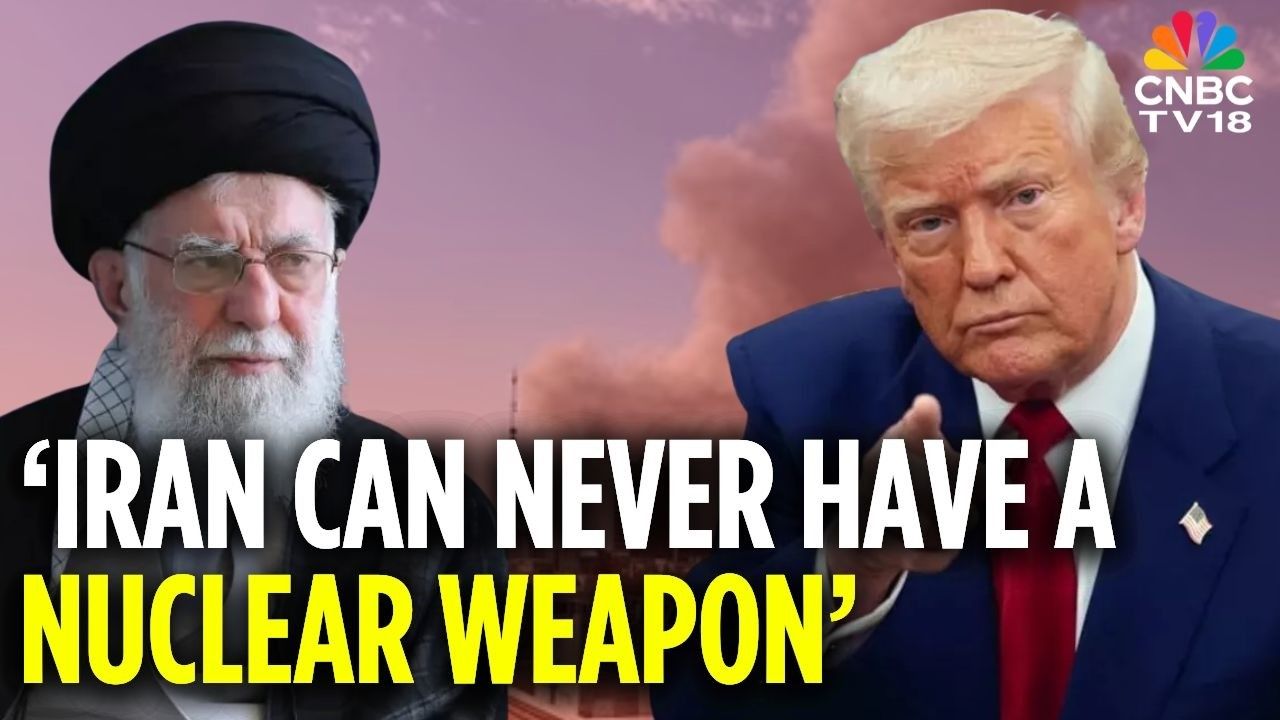
The proposed 15-point ceasefire framework between the United States and Iran represents a shift from ideological posturing toward a transactional stabilization model. By deconstructing the deal into its constituent mechanical parts—kinetic de-escalation, economic liquidity, and verification protocols—one can see the architecture of a "frozen conflict" rather than a permanent peace. The objective is not the resolution of 45 years of enmity but the management of immediate escalatory risks that threaten global energy pricing and regional maritime security.
The Tri-Pillar Architecture of the Proposal
The 15 points are not a linear list but a multi-variable equation designed to address three distinct systemic failures in the current Middle Eastern security environment.
1. Kinetic Synchronization and Proximal Buffer Zones
The framework demands an immediate cessation of hostilities involving "Tier 1" actors (state militaries) and "Tier 2" actors (paramilitary proxies). The logic here is the decoupling of regional flashpoints. For the US, success is defined by the cessation of drone and missile strikes against its regional basing infrastructure. For Iran, the value proposition lies in the preservation of its "Forward Defense" assets, which have faced diminishing returns under sustained aerial interdiction.
The proposal likely utilizes a tiered geographical withdrawal. This is not merely a retreat but a reconfiguration of the "Line of Control." By establishing specific kilometer-based buffers, the plan attempts to reduce the "reaction window" for automated air defense systems—a critical variable in preventing accidental escalations triggered by sensor errors or low-level commander autonomy.
2. The Liquidity-for-Limitation Exchange
Economic levers form the backbone of the negotiation. Unlike previous iterations of the JCPOA (Joint Comprehensive Plan of Action), this framework focuses on "Gray Zone Liquidity." This involves:
- Targeted Sanction Waivers: Moving away from broad sectoral relief toward specific transactional channels for humanitarian and non-dual-use goods.
- Repatriation of Frozen Assets: The phased release of escrowed oil revenues, contingent upon verifiable milestones in enrichment reduction.
- Maritime Insurance Guarantees: Re-establishing the "Safety of Navigation" in the Strait of Hormuz to lower the risk premiums currently inflating global Brent crude benchmarks.
3. High-Fidelity Verification and Signal Processing
Any ceasefire is only as robust as its telemetry. The 15-point plan necessitates a technological upgrade to existing monitoring missions. This includes the deployment of unattended ground sensors (UGS) and enhanced satellite reconnaissance to verify the movement of heavy weaponry. The bottleneck in previous agreements was the "latency of attribution"—the time it takes to prove who fired a shot. The new framework seeks to shorten this loop to near-real-time, using shared data environments to prevent "third-party spoilers" from collapsing the agreement.
The Cost Function of Non-Compliance
For a strategy to be viable, the cost of defection must exceed the benefit of the status quo. The US strategy applies a "Ratchet Mechanism" to the 15 points.
The primary friction point is the Symmetry of Concessions. If Iran reduces its centrifuge spin rate, the US provides a proportional increase in oil export volume allowances. This is a linear relationship designed to be easily audited. However, the complexity arises when quantifying "influence." How does one measure the withdrawal of political support for a proxy group?
The framework attempts to solve this via Proximate Accountability. Under this logic, the primary state actor is held financially and militarily responsible for the actions of its affiliates within specific "High-Risk Zones." This shifts the burden of policing from the international community to the regional hegemon, creating a self-taxing system for aggression.
Strategic Bottlenecks in the 15 Point Plan
Despite the structural elegance of a multi-point plan, three critical variables threaten to destabilize the equilibrium:
The Breakout Time Variable
The mathematical reality of nuclear enrichment means that "lowering tension" does not necessarily increase "breakout time." If Iran retains the technical knowledge and the physical infrastructure of advanced IR-6 centrifuges, any "ceasefire" on enrichment is temporary and reversible within a 90-day window. The US proposal must account for this by demanding the physical decommissioning or monitored storage of high-spec hardware, rather than just a pause in the feed of $UF_6$ gas.
The Asymmetric Escalation Trap
The US operates on a "Conventional Deterrence" model, while Iran often utilizes "Asymmetric Disruption." A ceasefire that stops traditional missile exchanges but ignores cyber-attacks on critical infrastructure or interference with subsea fiber-optic cables is incomplete. The 15 points must explicitly define "hostile acts" to include the digital and electromagnetic spectrums, or the conflict will simply migrate to these less-regulated domains.
Internal Political Volatility
Both signatories face the "Principal-Agent Problem." The negotiators (the Principals) may agree to the 15 points, but the internal factions (the Agents)—such as hardline legislative bodies or autonomous military wings—may have incentives to sabotage the deal to preserve their own domestic relevance or budgetary allocations.
The Logistics of Verification: The Technical Layer
To move from a political document to an operational reality, the 15 points require a specific sequence of technical implementations:
- Baseline Establishment: A 72-hour "Freeze Period" where all parties submit current GPS coordinates of mobile launch platforms.
- Acoustic and Thermal Monitoring: Deployment of sensors at key transit nodes to detect the movement of prohibited hardware.
- Financial "Air-Gapping": Creating specialized banking loops that allow for the purchase of medicine and food while ensuring funds cannot be diverted to ballistic missile R&D.
The efficacy of these measures depends on the "False Positive Rate" of the monitoring technology. If the system is too sensitive, a minor accidental discharge could re-trigger a full-scale regional war. If it is too lax, it allows for "Salami Slicing" tactics, where a party makes small, incremental violations that don't trigger a response but eventually change the strategic balance.
The Energy Market Impact: Quantifying the Peace Dividend
A successful implementation of the ceasefire would remove the "Geopolitical Risk Premium" from the oil market. Analysts estimate this premium currently fluctuates between $5 and $12 per barrel.
- Supply Side: The return of an additional 1 to 1.5 million barrels per day (mb/d) of Iranian crude would provide a significant cushion against supply shocks elsewhere in the global system.
- Logistical Side: Reduced insurance rates for VLCCs (Very Large Crude Carriers) would lower the "delivered cost" of energy for Asian and European markets, potentially cooling global inflationary pressures.
The 15 points act as a market signal. Even before the first point is fully enacted, the "announcement effect" creates downward pressure on futures contracts. This provides the US with a domestic economic win while offering Iran a path out of its hyper-inflationary spiral.
The Strategic Path Forward
The 15-point plan is a pivot from "Maximum Pressure" to "Maximum Management." The immediate move for regional stakeholders is to stress-test the "Incident Management Channels" established in the framework. Success will be determined by the first violation. If a low-level skirmish occurs, and the 15-point communication protocols prevent a retaliatory cycle, the framework will be validated. If the communication fails, the 15 points will join previous failed agreements as a mere historical footnote.
Stakeholders must now focus on the Third-Party Alignment phase. This requires ensuring that regional allies, who may feel sidelined by a direct US-Iran bilateral understanding, are integrated into the security architecture. Without their buy-in, the "Symmetry of Concessions" becomes impossible to maintain, as local actors will have every incentive to provoke a collapse to force a return to a more favorable—or more aggressive—status quo.