Nemesio Oseguera Cervantes, the man known globally as "El Mencho," has long been the primary target of a multi-national manhunt that spanned mountain ranges and financial systems. Recent intelligence confirms that the elusive leader of the Jalisco New Generation Cartel (CJNG) was neutralized during a high-stakes military operation in the heart of Jalisco. While initial reports focused on the simple mechanics of the raid, the real story lies in the exploitation of his inner circle. Security forces did not stumble upon him by accident. They dismantled his security apparatus by identifying a single, human vulnerability—his domestic partner—and used that connection to pierce a defensive perimeter that had held firm for over a decade.
This was not a lucky shot. It was the culmination of a years-long strategy of isolation. By squeezing the CJNG’s financial arteries and picking off middle-tier commanders, Mexican authorities and their international partners forced the kingpin into a smaller, more predictable geographic box. When he finally surfaced to maintain a vital personal connection, the state was waiting.
The Architecture of an Invisible Empire
To understand why this operation succeeded, you have to understand how El Mencho stayed alive for so long. Unlike the flashy, social-media-obsessed narcos of the younger generation, Oseguera Cervantes operated with a paramilitary discipline that bordered on the fanatical. He didn't hide in golden palaces. He hid in the brush, moving between modest safe houses in the rugged Sierra Madre del Sur.
The CJNG was built as a corporate-military hybrid. It utilized a "franchise" model that allowed local cells to operate with autonomy while remaining tethered to the central command in Jalisco. This structure meant that even when high-ranking lieutenants were captured, the hydra simply grew a new head. However, this decentralization created a distance between the leader and his ground forces. To bridge that gap, Mencho relied on a tiny, insular group of couriers and family members.
Intelligence analysts realized early on that they couldn't catch him by chasing his soldiers. They had to wait for him to reach out for something he couldn't replace with money or firepower. They waited for his personal life to override his survival instincts.
The Partner as the Primary Vector
The tactical breakthrough came through the systematic monitoring of Oseguera’s domestic partner. In the world of high-level drug trafficking, communication is the greatest risk. Encryption can be cracked, and signals can be triangulated. But the physical movement of a loved one provides a breadcrumb trail that no VPN can hide.
Authorities focused on a series of "dry cleans"—clandestine meetings where the partner would be moved through multiple vehicles and safe houses to shake off tails. By deploying advanced persistent surveillance, including high-altitude drones and ground-level signals intelligence, the task force identified a pattern. The meetings weren't random. They were timed to specific windows of perceived safety.
When the target moved to a secluded ranch in Jalisco for a face-to-face encounter, the window of opportunity opened. The decision to strike was made not just to capture a criminal, but to decapitate a movement that had become the most violent threat to Mexican sovereignty.
Chaos in the Highlands
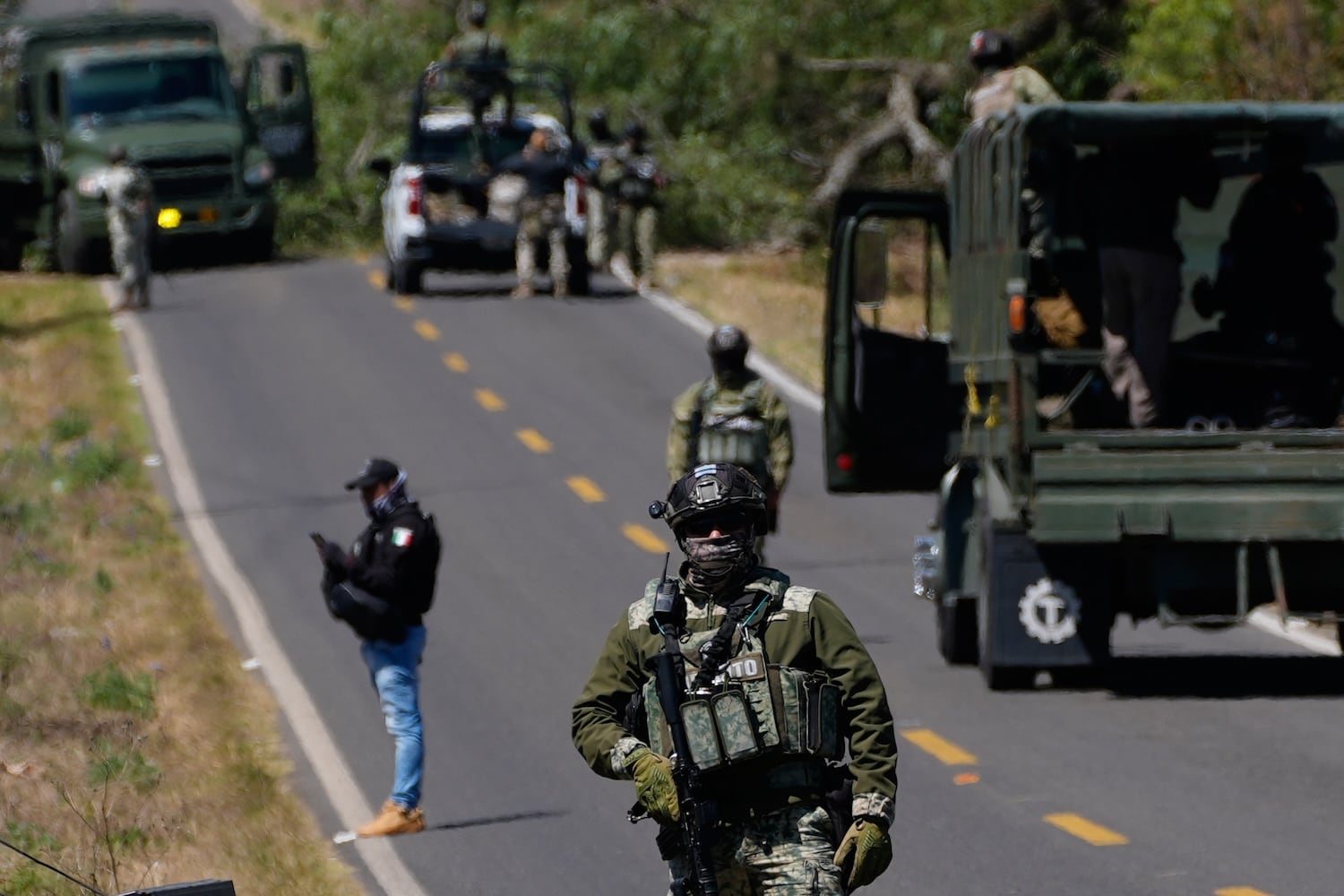
The operation itself was a masterclass in kinetic intervention. Elite units of the Mexican Army and Navy, supported by real-time aerial intelligence, swarmed the location before the CJNG's outer ring of "halcones" (scouts) could sound the alarm.
It was a bloodbath.
The cartel’s security detail was equipped with .50-caliber rifles and rocket-propelled grenades, turning the rural estate into a temporary war zone. But the element of surprise was absolute. Unlike previous attempts where leaks within the police gave the target hours to flee, this operation was kept within a "black cell" of vetted operators.
When the smoke cleared, the man who had ordered the deaths of thousands was dead on the ground. The myth of his invincibility died with him.
The Power Vacuum and the Succession Crisis
History shows us that killing a kingpin rarely kills the cartel. In fact, it often makes things worse for the civilian population. When the head is removed, the "middle management" begins a frantic, violent scramble for the top spot.
We are currently seeing the first tremors of this earthquake. The CJNG is not a monolith; it is a collection of egos and interests held together by Mencho’s terrifying reputation. Without him, the internal fault lines are beginning to crack.
Potential Successors and the Road to Fragmentation
- The Family Loyalists: Those who believe the bloodline should dictate leadership, seeking to keep the "Cuinis" (the financial arm) in control.
- The Regional Commanders: Hardened killers in states like Guanajuato and Michoacán who have the guns but lack the political connections of the central leadership.
- The External Vultures: Rival cartels, specifically the Sinaloa Cartel, who view this as the perfect moment to reclaim lost territory in the lucrative port of Manzanillo.
This is the "Kingpin Strategy" trap. By removing the top layer, the government often triggers a "Los Zetas" scenario—where a disciplined organization fractures into dozens of smaller, more unpredictable, and more violent street gangs. These splinter groups don't have the resources for international trafficking, so they turn to kidnapping, extortion, and fuel theft to survive.
The Failure of Traditional Prohibition
While the death of El Mencho is a symbolic victory, it exposes the fundamental flaw in the global war on drugs. We are playing a game of whack-a-mole with a multi-billion-dollar incentive structure.
The CJNG became powerful because it filled a market demand. It mastered the production of synthetic drugs, specifically fentanyl and methamphetamine, which are cheaper to produce and easier to transport than plant-based narcotics. As long as the demand in the United States and Europe remains at record highs, another "Mencho" will eventually rise to fill the void.
The sophisticated logistics networks, the bribery of local officials, and the control of the shipping ports remain intact. The hardware of the cartel survives the software of its leader. To actually dismantle this threat, the focus must shift from chasing individuals in the mountains to seizing assets in the world's banking capitals.
The Weaponization of Local Intelligence
The success in Jalisco highlights a shift in how these wars are fought. It wasn't just about satellite imagery. It was about "human-centric" intelligence.
By flipping lower-level associates who were tired of the constant heat and the brutal internal purges, investigators built a psychological profile of the target. They knew he was suffering from a chronic kidney ailment. They knew he required regular medical supplies. They knew he was lonely.
Modern counter-insurgency is as much about social engineering as it is about ballistics. You don't just kick down the door; you convince the person holding the key that they have more to gain by handing it over.
The Immediate Impact on the Border
For those living on the U.S.-Mexico border, the death of El Mencho isn't a cause for celebration—it’s a reason to bolt the doors.
Whenever a major leader falls, the supply lines become contested. We should expect an immediate spike in violence in "plaza" towns like Tijuana and Nuevo Laredo. Rival factions will attempt to "re-stamp" the territory. This usually involves public displays of brutality designed to intimidate both the public and the remaining CJNG loyalists.
Customs and Border Protection (CBP) is already on high alert for a surge in "desperation shipments"—cartel members trying to move as much product as possible before their specific branch of the organization is swallowed by a rival.
A Victory Without Peace
The Mexican government will rightfully claim this as a major win. It proves that the "hugs not bullets" era is effectively over, replaced by a more surgical, aggressive posture. But for the families in Jalisco who have lived under the shadow of the CJNG, the fear remains.
The cartel’s infrastructure—the hidden graves, the bribed police chiefs, the control over the avocado and lime industries—didn't vanish when El Mencho took his last breath. The beast is wounded, and a wounded beast is often more dangerous than a healthy one.
The focus must now turn to the "white-collar" cartel members. The lawyers, the accountants, and the politicians who laundered Mencho’s billions and gave him the legal cover to operate. Until the money is dead, the movement lives on.
Monitor the movement of the peso and the casualty rates in the coastal ports over the next 48 hours. That is where the real story of Mencho’s legacy will be written.
The king is dead. Now watch the kingdom burn.
Check the latest reports from the ground in Zapopan to see if the retaliatory blockades have begun.