The heavy oak doors of the high court have a specific sound when they swing shut. It is a dull, final thud that swallows the frantic clicking of camera shutters and the shouted questions of the press pack huddled on the pavement outside. For decades, Peter Mandelson—the architect of New Labour, the Baron of Hartlepool, the man they called "The Prince of Darkness"—was the one who decided which doors opened and which stayed closed. Now, the locks have turned on him.
He walked out of custody into the gray light of a London afternoon, a man momentarily unmoored from the absolute certainty that has defined his career. The bail conditions are a physical tether, a reminder that the world of private jets and high-altitude diplomacy has been replaced by the granular, grinding reality of a police misconduct probe. Meanwhile, you can explore similar stories here: The Cold Truth About Russias Crumbling Power Grid.
This isn't just about a single arrest. It is about the collapse of a specific kind of invincibility.
The Architect in the Room
To understand why a misconduct probe into the Epstein files feels like a tectonic shift in British soul, you have to understand who Mandelson is. He didn't just participate in the British government; he engineered its modern DNA. He was the strategist who knew where every body was buried because, more often than not, he was the one who had handed out the shovels. To explore the full picture, check out the excellent analysis by The Guardian.
In the 1990s and early 2000s, his power was atmospheric. You couldn't see it, but you felt the pressure of it in every policy shift and every carefully placed newspaper leak. He thrived in the "gray zone"—that intersection of corporate interests, international diplomacy, and the raw, ego-driven world of billionaire philanthropy.
Then came Jeffrey Epstein.
Imagine a spiderweb stretched across the Atlantic. At the center sat a man who traded in human beings and social capital with equal coldness. For years, the names in Epstein’s "little black book" were treated like a dirty secret everyone knew but no one dared speak aloud. They were the untouchables. Mandelson’s name was there, woven into the silk.
The current investigation focuses on alleged misconduct—specifically, what happened behind the scenes when the world began to realize the true nature of Epstein’s "island." It is a probe into the silence. It is an inquiry into whether the levers of power were used to shield a predator, or if the men in the room simply looked the other way because the company was too good and the wine was too expensive.
The Weight of the Files
The Epstein files are not just documents. They are a ledger of moral bankruptcy. When the Metropolitan Police began digging into the specific overlaps between Mandelson’s official duties and his private associations, they weren't just looking for signatures. They were looking for the moment where public service was sacrificed for private access.
Consider the hypothetical position of a junior civil servant or a young diplomatic aide during the height of Mandelson’s influence. You see a name on a flight manifest. You see a meeting scheduled at a private residence that doesn't appear on the official calendar. In the world of high-stakes politics, "discretion" is the currency of the realm. To speak up is to commit professional suicide. To stay silent is to become an accidental accomplice.
This is the invisible stake of the misconduct probe. It is a reckoning for a generation of leaders who believed that their brilliance gave them a pass on their associations.
Mandelson has always been a master of the "non-denial denial." He is a man who can speak for twenty minutes and leave you feeling like you’ve been briefed on everything while having learned nothing. But the law is less interested in rhetorical flourish than it is in timelines. The probe is looking at the specific dates of travel, the nature of the communications between London and New York, and whether any official influence was exerted to dampen earlier inquiries.
The Myth of the Necessary Evil
We often tell ourselves a lie about our leaders. We tell ourselves that we need "fixers"—men who are willing to get their hands dirty so the rest of us can live in a stable society. We tolerate the arrogance. We ignore the rumors of strange parties and shadowy benefactors because the economy is growing or the treaty got signed.
But the Epstein saga broke that contract.
The depravity at the heart of that network was so profound that it rendered the "necessary evil" argument moot. There is no policy success great enough to balance the scales against the exploitation of children. When the news of the arrest broke, the shock wasn't that Mandelson was involved in something controversial—controversy has been his shadow for forty years. The shock was the realization that the shield of his "importance" had finally cracked.
He is 72 years old. In the photos taken following his release on bail, the defiance is still there, etched into the thin line of his mouth. But his eyes tell a different story. They look like the eyes of a man who realizes the room is finally empty.
The legal process is famously slow. There will be months of document review, further interviews, and the quiet, methodical work of detectives who are unimpressed by titles or peerages. The bail is just the first movement in a very long, very public symphony of accountability.
The Ghost at the Table
What happens to a political system when its primary architect is under a cloud of systemic misconduct? It begins to leak.
Information that was once guarded like a crown jewel is now being traded by former associates looking to distance themselves from the blast radius. The "Prince of Darkness" is finding that in the harsh light of a criminal investigation, shadows offer no protection. They only make you a target.
The real tragedy isn't the fall of one man. It’s the realization of how much we allowed to slide because we were enamored with the theater of power. We watched the stage-managed press conferences and the elegant maneuvers in the House of Lords, while in the background, the files were thickening.
We are now living through the "after" of the Epstein era. It is a messy, uncomfortable period where the glamorous veneer of the global elite is being stripped away to reveal a rotting framework. Mandelson’s arrest is a signal flare. It tells us that the era of the untouchable statesman is over.
There is a specific kind of silence that follows a great fall. It’s not the silence of peace, but the silence of a crowd holding its breath, waiting to see who else was in the room when the lights went out.
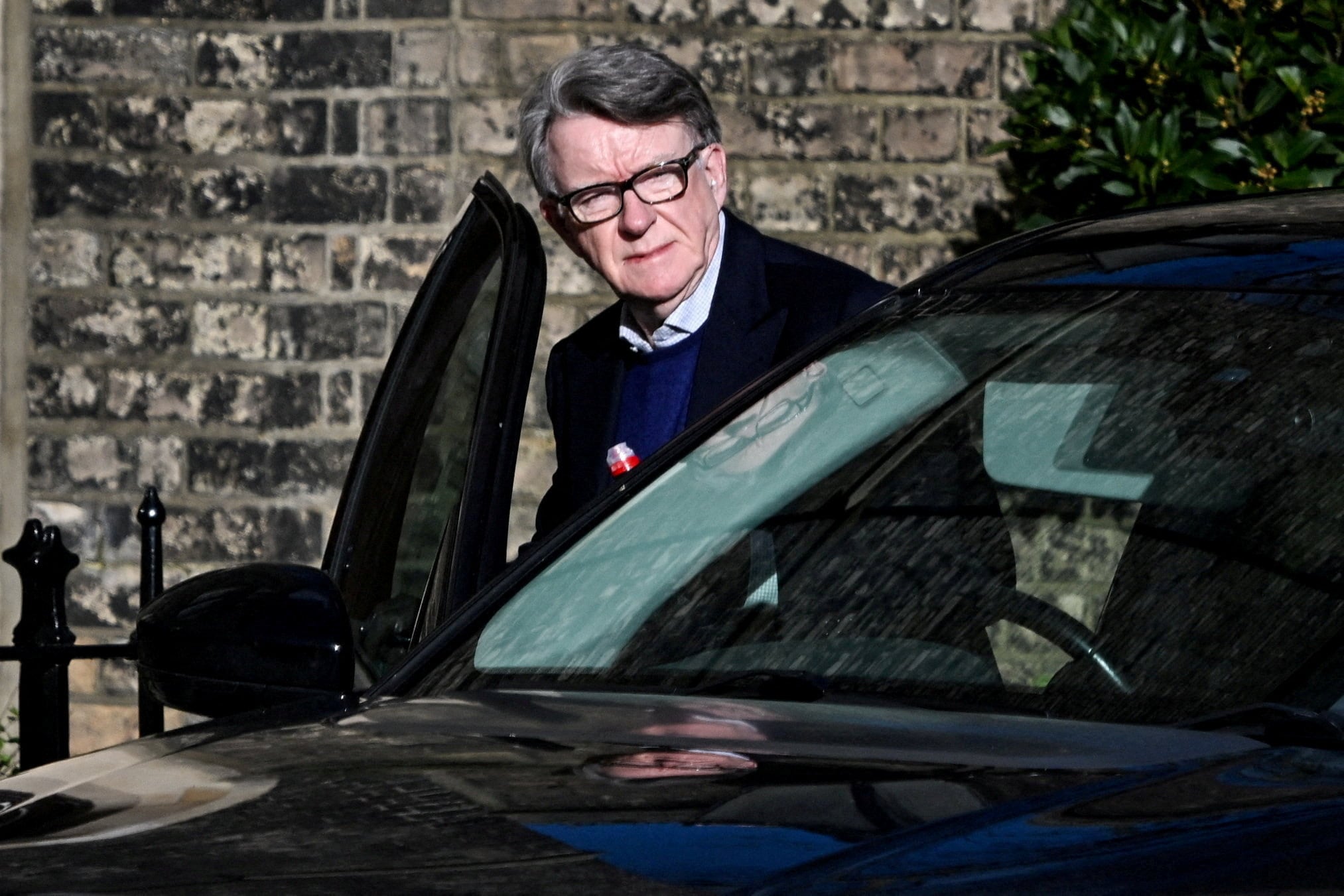
The Baron walked to his waiting car, the door clicked shut, and the engine hummed. He drove away from the station, but he didn't drive away from the files. They are everywhere now. They are in the headlines, they are in the archives, and they are in the minds of a public that has finally stopped believing in the magic of the fixers.
The kingmaker is now just a man on bail, waiting for the next phone call, watching the clock, and realizing that some stains don't wash out, no matter how much power you once held over the water.