The headlines are screaming about triggers, fingers, and the end of diplomacy. They want you to believe we are forty-eight hours away from a regional apocalypse. They are lying to you.
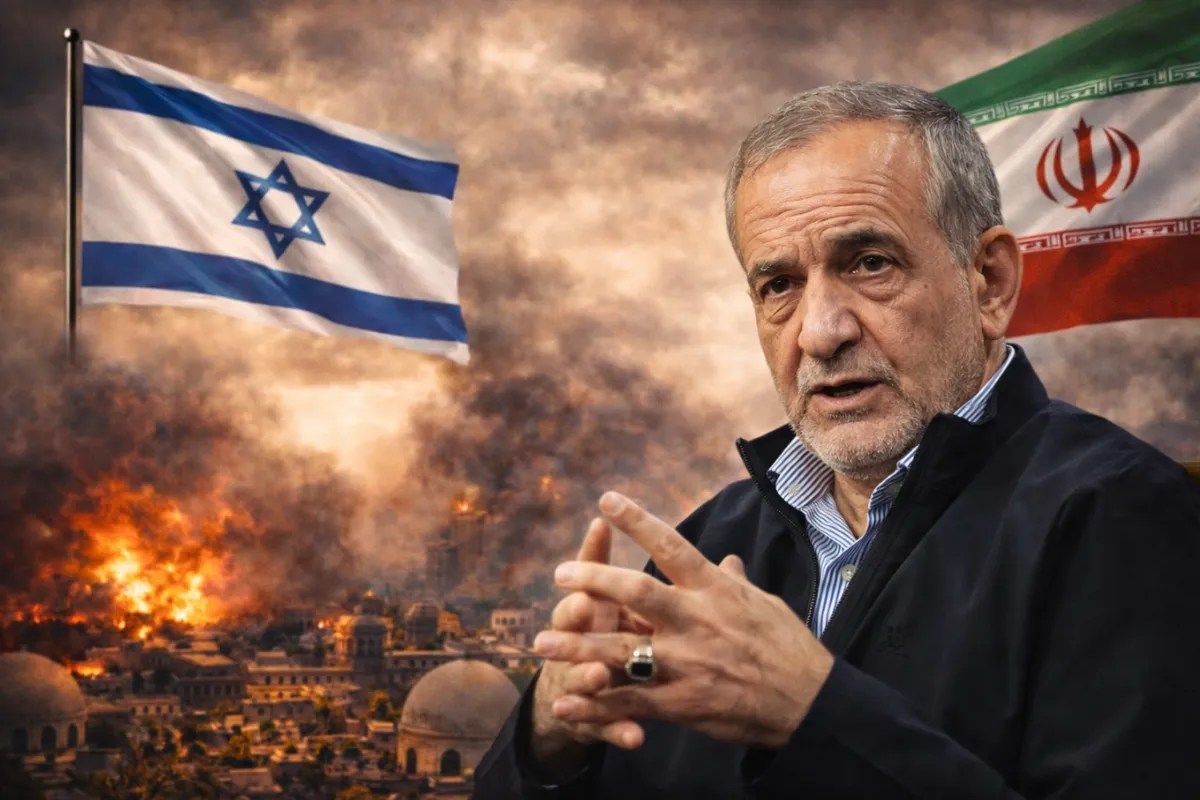
The recent rhetoric from Tehran following Israel’s operations in Lebanon isn't a prelude to a world-altering conflict. It is a desperate exercise in brand management. When the Iranian President claims "negotiation is meaningless," he isn't announcing a tactical shift; he’s reading from a script written in 1979 to mask a profound lack of options.
The media loves the "all-out war" narrative because it drives clicks. The reality is far more cynical and much more stable. We are witnessing a high-stakes performance where both sides have a vested interest in the status quo, even if that status quo involves a few thousand missiles and a shattered border.
The Myth of the Iranian Trigger Finger
Let’s look at the "finger on the trigger" cliché. If Iran’s finger were actually on the trigger, they would have pulled it when the IRGC leadership was being picked off in Damascus. They would have pulled it when the communication infrastructure of their primary proxy, Hezbollah, was turned into pocket-sized explosives.
They didn't.
Iran operates on a doctrine of Strategic Patience, which is a polite way of saying they are terrified of a direct kinetic confrontation with a nuclear-armed state backed by the Pentagon. Tehran’s power is derived entirely from its ability to fight to the last Lebanese, the last Syrian, and the last Yemeni. The moment an Iranian missile originates from Iranian soil with the intent to level Tel Aviv, the regime's survival clock hits zero.
The regime in Tehran is many things, but it is not suicidal. They are survivors. They watched what happened to Saddam Hussein and Muammar Gaddafi. They know that as long as they stay in the "gray zone"—funding proxies and shouting about red lines—they stay in power. The rhetoric is a pressure valve for their internal hardliners, nothing more.
Israel Does Not Want a "Big" War Either
The common misconception is that Israel is itching to "finish the job" in the north. This ignores the crushing reality of military logistics and economic exhaustion.
Israel’s economy is not built for a multi-year, multi-front war of attrition. The reservist system, which pulls doctors, engineers, and tech founders out of the economy and into a tank, is a finite resource. You cannot run a "Startup Nation" when the entire workforce is sitting in a trench near Metula for twelve months straight.
Israel’s current strategy isn't "Total War." It is Mowing the Grass.
- Deign-to-Degrade: They aren't trying to occupy Lebanon; they are trying to reset the clock on Hezbollah’s capabilities.
- Intelligence Superiority: The goal is to prove that no one is safe, from the guy holding the pager to the commander in the bunker.
- The Buffer Trap: Israel knows that a ground invasion of Lebanon is a quagmire. They’ve been there before. 1982 and 2006 didn't produce a "victory"; they produced a stalemate that birthed the very version of Hezbollah they are fighting today.
When Netanyahu speaks, he is playing to a domestic audience that demands security. When Pezeshkian speaks, he is playing to a regional audience that demands resistance. Neither man is actually looking for the "Big One."
Diplomacy is Not Dead It is Just Honest
The competitor article claims "negotiation has no meaning." That is objectively false. Negotiation is the only thing happening, just not at a mahogany table in Geneva.
Negotiation is happening through the flight paths of drones. It is happening through the targeted assassination of mid-level logistics officers. This is "Kinetic Diplomacy." Each strike is a message: "This is what we can do, so don't do that."
The West is obsessed with the idea that diplomacy means a signed piece of paper. In the Middle East, diplomacy is the calibration of pain. Iran is currently negotiating for its seat at the regional table by showing it can still disrupt global shipping and rattle Israel’s northern residents. Israel is negotiating for its survival by showing that the "Axis of Resistance" is a Swiss-cheese organization filled with holes.
The Proxy Trap
Everyone talks about Hezbollah as Iran’s "crown jewel." It’s actually Iran’s "insurance policy."
If Iran uses Hezbollah to its full extent—launching 150,000 rockets in a week—the insurance policy is cashed in. Once those rockets are fired, Iran has no more leverage. They have spent their only deterrent.
Imagine a scenario where Hezbollah is actually destroyed or neutralized. Iran becomes a paper tiger. They lose their forward-deployed defense. This is why the "total war" scenario is so unlikely. Iran cannot afford to lose Hezbollah, and they lose Hezbollah the moment they use them for a total war. They need the threat of Hezbollah, not the memory of it.
Why the Status Quo is the Real Winner
We are stuck in a cycle of "controlled escalation."
- Israel pushes the boundary of what Iran will tolerate.
- Iran authorizes a calibrated response from a proxy.
- Both sides claim victory.
- The media screams about World War III.
- Repeat.
This cycle is profitable for the defense industry, useful for politicians who need an external enemy to distract from internal failings, and devastating for the civilians caught in the middle. But it is fundamentally stable.
The "triggers" aren't being pulled. They are being polished.
Stop looking at the angry quotes from presidents and generals. Look at the oil prices. Look at the troop movements that aren't happening. Look at the backchannel messages being sent through the Swiss embassy. If the world were actually ending, you wouldn't be reading about it in a press release; you'd be feeling it in the dark.
The rhetoric of "no more talk" is the loudest kind of talk there is. It signals a desire to return to the shadows where the real deals are made. The regional war isn't coming because the current state of perpetual, low-boil conflict is far too useful for everyone involved.
Don't buy the hype. The "trigger" is a prop in a theater of the absurd where the actors are too scared to leave the stage.
Go back to work. The world isn't ending today; it's just getting louder.