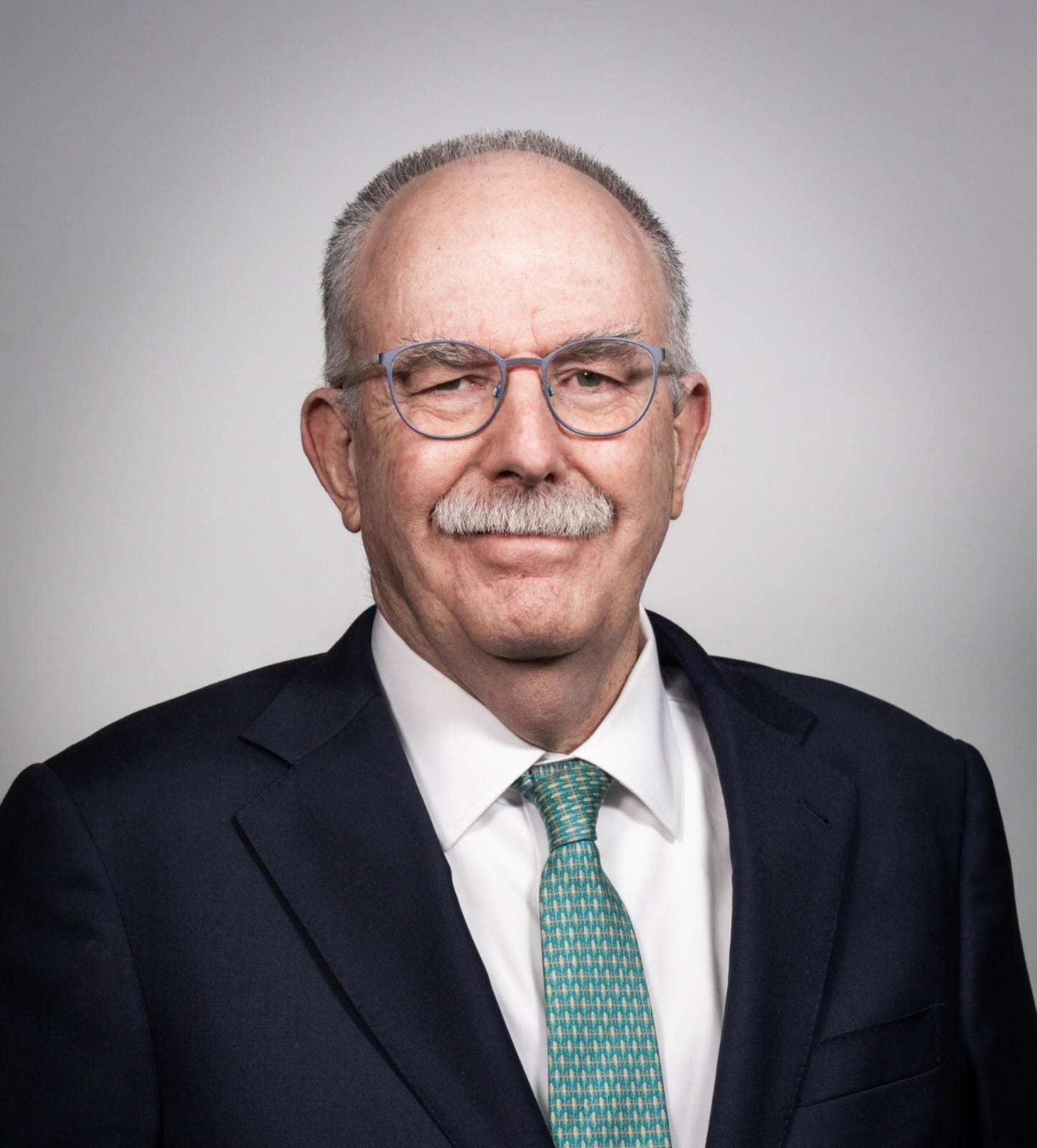
Claudia Sheinbaum did more than just fill a cabinet seat when she appointed Julio Berdegué Sacristán as Mexico’s Secretary of Agriculture and Rural Development. She signaled a fundamental shift in how the nation intends to feed itself. Berdegué, a seasoned agronomist with deep roots in international food policy, inherits a department caught between the populist promises of the previous administration and the cold reality of a drying, warming climate. This is not a simple personnel change. It is a desperate pivot toward scientific pragmatism in a country where the price of a tortilla can determine the fate of a presidency.
For the last six years, Mexico’s agricultural policy focused heavily on smallholder subsidies through programs like Sembrando Vida. While socially significant, these initiatives did little to shore up national food security or modernize a crumbling irrigation infrastructure. Berdegué is now tasked with reconciling the ideological goal of "food sovereignty" with the urgent need for industrial efficiency. Mexico remains heavily dependent on imports for basic grains, and the incoming administration knows that rhetoric alone won't fill the silos.
The Water Debt and the Death of the Northern Farm
The most immediate threat to Berdegué’s tenure isn't political opposition; it is the vanishing of the Mexican aquifer. In the northern states of Chihuahua and Sonora, the breadbaskets of the country are literally turning to dust. Decades of over-extraction and a rigid treaty with the United States regarding the Rio Grande have left farmers with a zero-sum game.
Berdegué has signaled that water management will move to the center of agricultural policy. This represents a departure from the traditional "yield at all costs" mentality. To survive, Mexico must transition from flood irrigation to precision technology. However, the cost of this transition is staggering. Most small-to-mid-sized producers lack the credit access to install drip systems or modern sensors. Without a massive injection of state-backed financing, the northern agricultural sector faces a slow, thirsty collapse.
Technology over Ideology
One of the biggest friction points in the Sheinbaum-Berdegué era will be the ongoing dispute over genetically modified (GM) corn. The previous administration’s decree to phase out GM corn for human consumption sparked a massive trade row with the United States. Berdegué, a man of science who previously held high-ranking roles at the Food and Agriculture Organization (FAO), finds himself in a tight spot. He must defend the sovereignty of Mexican corn varieties while ensuring that the poultry and livestock industries—which rely on imported yellow corn—don't go bankrupt.
The "Berdegué Way" appears to be one of quiet compromise. He has emphasized the need for "agronomic intelligence," which is shorthand for using data and biotechnology where it makes sense, rather than banning it outright for political points. The market is watching closely to see if he will roll back some of the more restrictive measures that have chilled investment in the seeds and chemicals sector.
The Labor Crisis in the Fields
While the world focuses on trade deals, the actual hands that pick Mexico’s produce are disappearing. Rural flight is not a new phenomenon, but it has reached a breaking point. Young people in states like Oaxaca and Michoacán are no longer interested in the back-breaking labor of the fields when they can find service jobs in the cities or risk the journey north.
Berdegué has inherited a labor market that is increasingly reliant on migrant workers from Central America, yet the legal framework to protect these workers remains flimsy. The industry is seeing a rise in "ghost farms"—operations that have the land and the seed but lack the hands to harvest. Automation is the obvious answer for large-scale exporters of avocados and berries, but for the staple crops of the Mexican diet, the math doesn't work.
The Shadow of the Cartels
You cannot talk about Mexican agriculture without talking about the "green gold" tax. In regions like the Tierra Caliente, organized crime has moved far beyond the drug trade and into the systematic extortion of lime and avocado growers. These criminal organizations dictate harvest dates, control transport routes, and take a cut of every crate sold.
This is where Berdegué’s mandate hits a wall. As Agriculture Secretary, he has no police powers. Yet, if the state cannot guarantee the safety of the supply chain, no amount of agricultural innovation will matter. The cost of security is now baked into the price of food. When you pay more for a lime in Mexico City, you aren't always paying for a bad harvest; you are often paying a "protection fee" that has been passed down from the farm to the consumer. Sheinbaum’s administration must decide if the military will continue to oversee rural security or if a new strategy is needed to decouple the food supply from criminal influence.
The Smallholder Trap
A recurring theme in Mexican politics is the romanticization of the campesino. There is a deep cultural attachment to the image of the independent farmer working a small plot of land. While this is vital for biodiversity and local food cultures, it is a difficult model for national-scale food security.
- Fragmentation: Most Mexican farms are under five hectares, making economies of scale nearly impossible.
- Credit Drought: Commercial banks view small-scale agriculture as high-risk, leaving farmers at the mercy of predatory lenders.
- Climate Vulnerability: Small plots are the first to fail during the increasingly frequent heatwaves.
Berdegué’s challenge is to create "clusters" or cooperatives that allow these smallholders to pool resources without losing their land. It is a delicate social balancing act. If he pushes too hard for consolidation, he loses the base. If he does nothing, the smallholders will continue to sink into poverty.
The USMCA Pressure Cooker
The 2026 review of the United States-Mexico-Canada Agreement (USMCA) looms over every decision Berdegué makes. The U.S. remains Mexico’s largest trading partner, and the friction over agricultural standards is a constant threat. The Americans want fewer restrictions on their exports; the Mexicans want better protections for their seasonal workers and a defense against what they see as "dumping" of cheap U.S. grain.
Berdegué is expected to be a more sophisticated negotiator than his predecessors. He understands the global markets and the language of international trade law. He knows that Mexico cannot afford a trade war, but he also knows that the country’s dependency on U.S. corn is a strategic liability. The goal is to slowly diversify Mexico’s import sources while boosting domestic production of white corn and beans. It is a long-term play in a world that demands short-term results.
The Climate Reckoning
Mexico is warming faster than many other parts of the world. The traditional planting calendars, passed down for generations, are no longer reliable. The rainy season is becoming a chaotic lottery. Berdegué has spoken extensively about "climate-smart agriculture," but the reality on the ground is that most farmers are still using techniques from the 1970s.
The transition requires a massive overhaul of the national extension service. Farmers need real-time weather data, heat-resistant seed varieties, and soil management techniques that retain moisture. Currently, the gap between the high-tech export farms in Sinaloa and the subsistence plots in Chiapas is a canyon. Bridging that gap is the only way to prevent a mass internal migration of "climate refugees" from the countryside to the urban slums.
The Fertilizer Factor
Since the war in Ukraine began, the price of fertilizer has become a matter of national security. Mexico imports a significant portion of its nitrogen-based fertilizers. The previous administration attempted to revive the domestic fertilizer industry by rehabilitating old, state-owned plants. The results were mixed at best.
Berdegué must now decide whether to double down on these state-led industrial projects or to open the doors wider for private investment and alternative, bio-based fertilizers. The soil in much of central Mexico is exhausted, stripped of nutrients by decades of intensive monoculture. Regenerative agriculture is no longer a buzzword for organic boutiques; it is a necessity for the survival of the Mexican dirt.
The Tortilla Connection
Everything in Mexican agricultural policy eventually leads back to the tortilla. It is the political barometer of the country. If the price of corn flour spikes, the government’s approval ratings crater. Berdegué’s most difficult task will be managing the "Tortilla Chain"—from the field to the industrial mills to the local shops.
He is dealing with powerful monopolies in the milling and distribution sectors. These companies have the leverage to hold the government hostage. Berdegué will need to use every ounce of his diplomatic skill to ensure that a fair price is paid to the farmer without causing a riot at the neighborhood tortilleria.
A Legacy of Dust or Growth
Julio Berdegué enters the Secretariat at a time when the margin for error is zero. The country is facing a multi-year drought, a labor shortage, and a geopolitical environment that is increasingly protectionist. His appointment is a tacit admission that the "old ways" of managing the countryside—through patronage and slogans—are over.
The success of the Sheinbaum administration will be measured by its ability to turn the agricultural sector from a drain on the treasury into a resilient engine of growth. It requires more than just better seeds; it requires a total reimagining of how Mexico values its land and the people who work it. The stakes are nothing less than the stability of the Mexican table.
Berdegué has the resume, the intellect, and the mandate. Now he has to deal with the weather. Stop looking at the politics and start looking at the reservoir levels. That is where the real story of the next six years will be written.