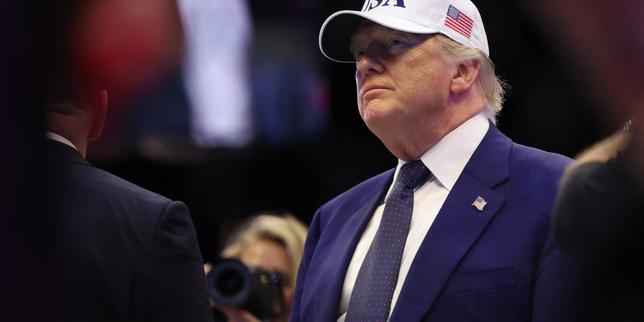
Donald Trump has officially merged the United States semiquincentennial with his personal political brand, announcing that the federal July 4 celebration on the National Mall will double as a signature Trump rally. The declaration explicitly transforms what historically serves as a non-partisan commemoration of the nation’s 250th anniversary into a highly polarized, campaign-style event. By labeling the official "Tribute to America" festivities as "the most spectacular TRUMP RALLY of them all," the administration has effectively dismantled the traditional boundary separating state-sponsored patriotism from partisan electoral politics.
This move is not an isolated incident. It represents the culmination of a systematic effort to re-engineer federal landmarks, public resources, and national milestones to serve an ongoing executive narrative.
The Mechanics of a State Sponsored Campaign
Planning documents from the "Freedom 250" organization—the entity spearheaded by the administration to oversee the semiquincentennial—indicate that more than one million people are expected to descend upon the National Mall. The logistical scale is immense.
The event is scheduled to begin at 7:00 PM EST between the Lincoln Memorial and the Washington Monument. The staging will incorporate over 300 members of joint military bands, orchestras, and ceremonial units alongside a highly specific musical playlist curated directly by Trump.
This integration of state assets creates an immediate regulatory and ethical gray area. Federal laws, specifically provisions under the Hatch Act for lower-level officials and long-standing government norms, are designed to prevent the use of public funds and official military personnel for campaign purposes. By explicitly designating an official civic milestone as a political rally on social media, the administration forces federal agencies, including the National Park Service and the Department of Defense, to facilitate an event that is overtly partisan yet funded by taxpayers.
The musical selection itself highlights a deeper conflict. The president noted that the evening would feature his own playlist rather than traditional artists, stating he preferred to bypass performers who "constantly complain." This follows a series of high-profile walkouts from the associated Great American State Fair, where multiple scheduled artists withdrew after realizing the extent of the administration's direct control over the programming.
Infrastructure and Spectacle as Political Currency
The July 4 rally follows a pattern of using unconventional venues to project executive authority. Just hours before the announcement, the White House South Lawn was converted into an arena for a Ultimate Fighting Championship event, an unprecedented use of the executive mansion's grounds for a commercial combat sports enterprise. The intersection of pop culture, physical spectacle, and state power serves as the preferred backdrop for this administration's messaging.
Simultaneously, the physical space of the capital is undergoing a rapid aesthetic overhaul. The administration has initiated extensive beautification projects across Washington, D.C., treating the city’s historic core much like a private real estate development. Workers have been deployed to repaint the Reflecting Pool on the National Mall and repair long-dormant city fountains in anticipation of the July 4 crowds.
These rapid infrastructure adjustments are designed to project an image of immediate, visible competence. The physical restoration of the capital’s monuments provides a sharp, cinematic contrast to the bureaucratic gridlock that typically defines Washington. It creates a stage-managed environment where the grandeur of the state is visibly linked to the directives of a single executive.
The Cost of Commercialized Patriotism
The financial and cultural toll of these large-scale events remains a point of significant friction. The corporate-sponsored UFC event on the South Lawn reportedly cost upwards of $60 million, a tab picked up by the organization as a one-off spectacle due to the extreme logistical headaches of building outdoor cages on federal landmarks.
For the broader public, the national celebration is increasingly experienced through a commercial and partisan lens. The Great American State Fair, a 16-day exhibition running from June 25 to July 10 along the Mall, was intended to showcase cultural heritage from all 50 states. Instead, it has been plagued by political withdrawals, leading the president to schedule a separate kickoff rally on June 24 featuring country musician Lee Greenwood to fill the cultural void.
This division transforms a milestone that should theoretically foster national unity into a stark geographic and ideological boundary. Those attending the National Mall on July 4 will not merely be celebrating American independence; they will be voluntarily participating in an explicit demonstration of political alignment.
The Erasure of Civic Neutrality
The blurring of these lines carries permanent consequences for American civic culture. Historically, the National Mall during Independence Day served as a neutral zone where citizens of every political persuasion could gather without endorsing an active administration. By claiming ownership of the space, the music, and the military flyovers, the executive branch effectively locks out dissenting voices from participating in their own nation's landmark anniversary.
This strategy relies on the calculated weaponization of nostalgia and patriotism. By aligning historic military units, iconic monuments, and the 250th anniversary fireworks with the aesthetics of a campaign rally, the administration forces a false binary: to celebrate the country is to celebrate the leader. The true casualty of this approach is the concept of a shared national identity that exists independently of whoever occupies the Oval Office.
Government agencies are left with no mechanism to decline these directives. When the commander-in-chief orders a military flyover or commands a joint service band to play alongside a campaign playlist, the institutional guardrails meant to preserve military neutrality bend to the will of executive pressure. The infrastructure of American democracy is quietly repurposed to serve as the scaffolding for a continuous political rally.