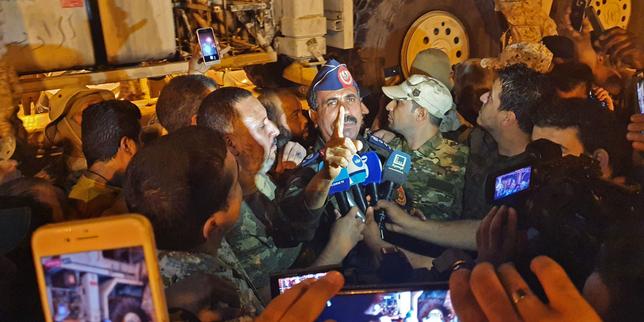
The quiet that held Yemen’s fractured frontlines together since 2022 is dissolving into ash and high-explosive ordnance. In the high-altitude escarpments and coastal corridors of western Yemen, government-aligned forces and Houthi combatants are trading artillery fire over ground that has changed hands three times too many. This is not merely a localized skirmish or a routine flare-up along a frozen boundary. It is the violent unravelling of a fragile status quo, centered on the strategic districts of Taiz and Al-Hudaydah, where the architecture of a forgotten war is rebuilding itself in real time.
For years, international monitors pointed to the UN-brokered truce as a sign of permanent stabilization. They mistook exhaustion for resolution. While diplomatic channels remained choked in regional capitals, both sides spent the quiet months reinforcing supply lines, digging defensive networks, and positioning heavy armor along the administrative boundaries separating Lahj, Taiz, and the Red Sea littoral. When the positions at Tabbat al-Khazan in the Jabal Habashi district fell to government elements, it did not happen in a vacuum. It was the kinetic punctuation mark on months of creeping militarization.
Understanding why this escalation matters requires looking closely at the geography of southwestern Yemen. Taiz is a densely populated urban crucible, surrounded by jagged mountains that overlook critical shipping corridors and inland supply routes. Whoever holds the high ground around Taiz commands the logistics of the entire southwest. When the Yemeni army and aligned factions like the National Resistance Forces push into sectors like Maqbanah or launch counteroffensives on the Al-Jarahi front, they are fighting for the arteries that supply the interior.
The combat is brutally tactile. It involves drone interdiction, trench warfare, and counter-battery fire echoing across valleys where civilian populations have already endured a decade of deprivation. When a missile strikes a crowded mountain road south of Taiz city, killing non-combatants, it lays bare the human cost of these shifting tactical lines. The combatants are pushing forward meter by meter, using mortar teams and infantry assaults to dislodge entrenched defenders who have spent years fortifying their positions.
Behind these localized ground maneuvers lies a broader regional entanglement that complicates every tactical gain. The Houthi movement has spent the past year expanding its operational profile far beyond traditional domestic frontlines, launching maritime strikes and missile salvos tied to wider Middle Eastern flashpoints. These actions have drawn retaliatory air campaigns from foreign coalitions and kept the country tethered to global crises. Consequently, when government forces claim a strategic district or repel an infiltration attempt near Al-Qasr, those tactical victories resonate across international intelligence boards monitoring Red Sea security and maritime choke points.
Yet, viewing these clashes purely through the lens of international geopolitics misses the internal friction corroding the anti-Houthi coalition itself. The internationally recognized government is a patchwork of disparate militias, southern separatists, and political factions whose unity is sustained only by a mutual opposition to Sanaa’s de facto authorities. Alignments shift based on funding, tribal allegiances, and external patrons. When the National Resistance Forces launch naval operations to intercept explosives-laden boats off Al-Hudaydah, they are operating with a degree of operational autonomy that highlights the decentralized nature of the command structure opposing the Houthi movement.
This fragmentation makes sustainable military victory nearly impossible for either side. The Houthis possess the advantage of internal interior lines, administrative consolidation in the capital, and a heavily mobilized ideological base. Conversely, the government coalition holds key coastal access and international backing, but suffers from logistical friction and internal political rivalries. Every offensive crests against these structural limitations. Territory is captured, reinforced, counter-attacked, and lost, leaving behind scorched infrastructure and communities trapped in a perpetual cycle of displacement.
The diplomatic machinery that once froze this conflict into a manageable stalemate is now struggling to keep pace with the escalation. Mediation efforts led by regional actors face an uphill battle as military commanders on the ground prioritize tactical positioning over cease-fire compliance. Every artillery shell fired across the Taiz escarpment pushes a comprehensive political settlement further out of reach, hardening positions and ensuring that the human catastrophe inside Yemen deepens with each passing week. The frontlines are moving again, and the map of the country is fracturing along lines written in blood and iron.