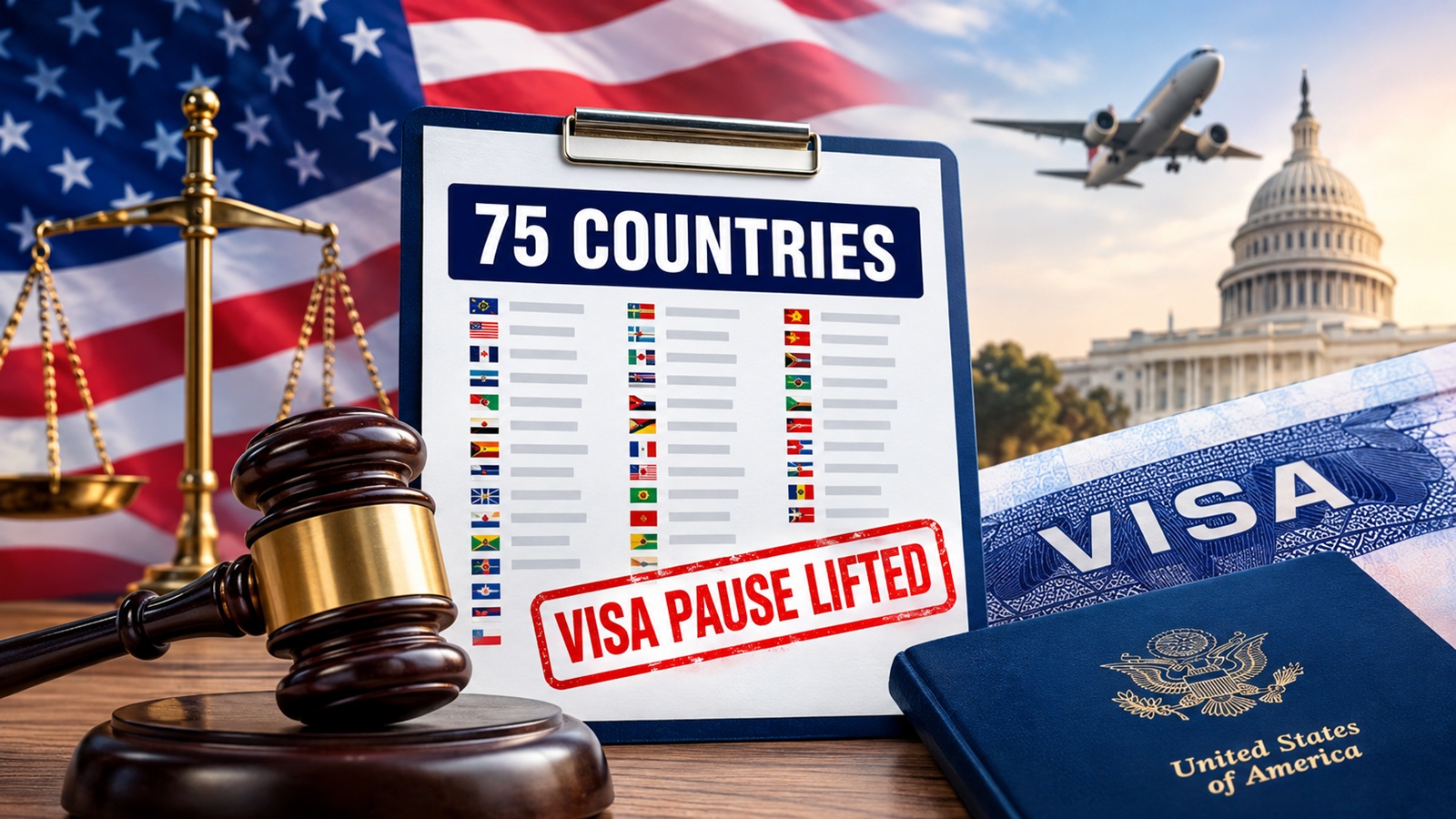
A federal judge in Manhattan has quietly dismantled a sweeping administrative directive that froze immigrant green card processing for nationals across seventy-five foreign states. For months, thousands of prospective families, skilled workers, and employment-based applicants watched their petitions stall in bureaucratic limbo. Then came the ruling in CLINIC v. Rubio. U.S. District Judge Jeannette A. Vargas declared the policy unlawful, striking down an executive maneuver designed to restrict permanent residency based strictly on country of origin.
The Department of State officially confirmed the policy's demise, ordering consular posts to resume case-by-case adjudications. Yet beneath the celebratory headlines lies a more complicated operational reality. Administrative freezes rarely vanish without leaving structural wreckage in their wake.
The Anatomy of an Overreach
When the administration introduced the immigrant visa pause in January 2026, the stated justification relied entirely on public charge concerns. Officials argued that applicants from designated nations posed a heightened risk of utilizing public assistance.
The mechanism, however, vastly exceeded traditional screening protocols. Consular officers received directives not merely to evaluate financial self-sufficiency on an individual basis, but to halt approvals wholesale for anyone holding citizenship in the targeted seventy-five countries.
That blanket approach triggered immediate legal resistance. Civil rights organizations and legal advocacy groups filed suit, arguing that the directive violated foundational tenets of the Immigration and Nationality Act.
Judge Vargas agreed. Her sixty-one-page opinion zeroed in on statutory limits, noting that executive agencies cannot bypass statutory mandates against nationality-based discrimination by cloaking administrative delays as mere vetting reviews. The court ruled that the Secretary of State lacked the statutory authority to impose such sweeping geographic blockades.
Decoding the Scope
Confusion immediately followed the ruling regarding who actually benefits. Nonimmigrant categories—such as temporary tourist visas, student visas, and H-1B professional work permits—were never technically part of the seventy-five-country immigrant visa pause.
Those temporary pathways faced entirely separate regulatory pressures during the same period, but the Manhattan federal court order specifically targets immigrant visas, meaning permanent residency green cards processed through overseas consulates.
For applicants from nations like Brazil, Egypt, Nigeria, and Pakistan, the decision vacates prior refusals that relied solely on the frozen directive. Consular offices must now clear those backlogs and return to individualized statutory reviews.
The Operational Bottleneck
Unfreezing a system does not automatically make it move fast. Consular posts globally are confronting staggering institutional backlogs.
Consider a hypothetical applicant named Rajesh, an engineer whose employment-based immigrant petition cleared USCIS approval months ago. His file sat gathering virtual dust at a U.S. consulate abroad because of the blanket suspension. Now that the federal court has invalidated the policy, Rajesh is technically back in the queue.
The backlog, however, is immense. Consular staffing levels have not doubled overnight. Appointment calendars are booked months in advance, and interview slots remain a scarce commodity.
Furthermore, the State Department's public statements accompanying the rollback carry an implicit warning. While the categorical pause is dead, the underlying scrutiny regarding public benefits and financial vetting remains central to executive priorities. Consular officers retain broad discretion under existing law to demand extensive financial documentation, tax histories, and affidavits of support.
What Lies Ahead in the Courts
Legal analysts expect the administration to challenge the ruling before the Second Circuit Court of Appeals. The White House views immigration enforcement as a core executive prerogative, making an aggressive defense likely.
Until an appellate court issues a stay or reverses the lower court decision, the injunction stands. Affected applicants are advised to monitor their consular case management portals, respond immediately to any communications from National Visa Center processors, and ensure their financial documentation meets strict statutory thresholds.
The court has re-established the rule of individual merit over broad geographic exclusion, but navigating the resulting administrative backlog will test the endurance of every applicant caught in the transition.

