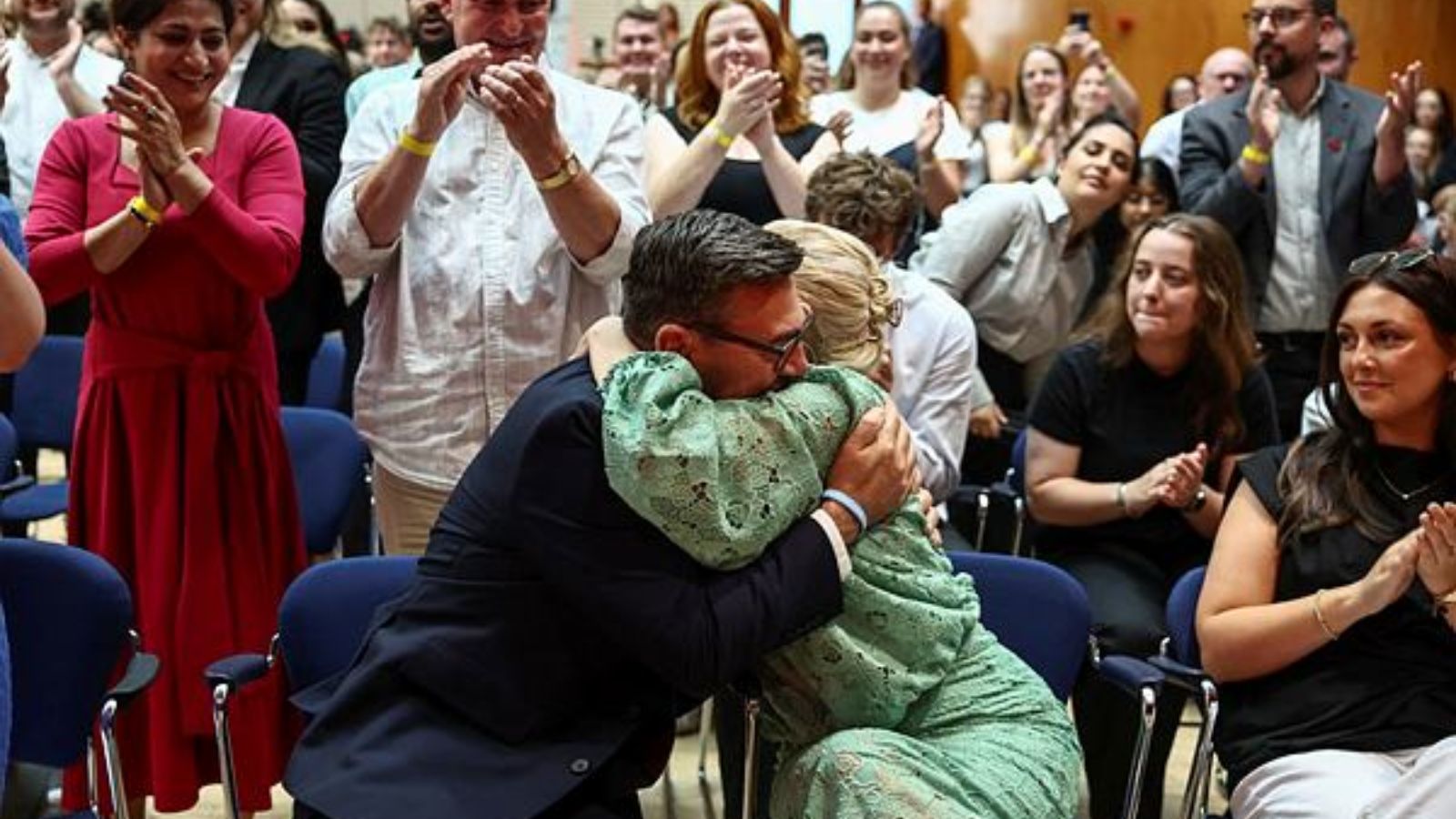
Andy Burnham will walk into 10 Downing Street on Monday as Britain’s next Prime Minister, completing one of the most audacious, decade-long political resurrections in modern British history. After winning the Makerfield by-election in June and securing the Labour leadership completely unopposed following Keir Starmer’s sudden resignation, Burnham has achieved the prize that eluded him in both 2010 and 2015.
To the public, he remains the soft-left, flat-cap-wearing "King of the North" who fought Westminster for pandemic funding. To his critics, he is an ideological chameleon who has merely perfected the art of regional grievance. Yet, as he prepares to lead a nation battered by a cost-of-living crisis and failing public infrastructure, the real question is no longer who Andy Burnham is, but whether his local brand of "Manchesterism" can survive the brutal reality of national governance.
The Evolution of the King of the North
The standard narrative surrounding Burnham paints him as a sudden populist hero born out of the devolution experiment. The reality is far more calculated. Burnham is a seasoned product of the Westminster system he now pledges to dismantle.
Educated at Cambridge, he climbed the ranks of New Labour as a special adviser before entering Parliament in 2001. He served in Gordon Brown’s cabinet as Culture Secretary and Health Secretary, firmly embedded in the party's metropolitan establishment. When he lost the 2015 leadership race to Jeremy Corbyn, his national ambitions appeared dead.
Leaving Parliament in 2017 to become the first Mayor of Greater Manchester was not a retreat; it was a pivot. In Manchester, Burnham reinvented himself. He shed the slick Westminster vernacular for a grounded, accessible aesthetic, positioning himself as a defender of the deindustrialised working class.
His watershed moment came in October 2020. Standing on the steps of the Bridgewater Hall, Burnham openly defied the Conservative government’s attempts to impose Tier 3 Covid restrictions without adequate financial support. It was a theatrical piece of political defiance that earned him his royal moniker. By standing up to London, he became the de facto leader of regional England.
The Mechanics of Manchesterism
Now, Burnham plans to take the blueprint that defined his mayoral tenure and scale it nationally. His ideological framework, colloquially dubbed Manchesterism, rejects both the rigid centralisation of traditional Westminster governance and the aggressive market privatization initiated in the 1980s.
Instead, it hinges on three distinct pillars.
- Public Control of Utilities: Burnham has already signalled an intention to bring troubled infrastructure, such as Thames Water, into public hands, replicating his successful municipal integration of Manchester's bus network into the Bee Network.
- Radical Devolution: The centrepiece of his structural reform is "No. 10 North," a dedicated branch of the prime ministerial operation based in Manchester, designed to strip Whitehall of its monopoly on decision-making.
- The Postcode Economy: Moving away from the purely corporate-driven growth metrics of the previous administration, Burnham advocates for state-backed reindustrialisation and a legal focus on brownfield development to regenerate neglected provincial towns.
It is an undeniably attractive pitch to an electorate fatigued by years of political stagnation. Yet, implementing this model on a national level presents immediate fiscal and structural contradictions.
The Blank Canvas Dilemma
While Burnham’s coronation was a masterclass in party management—securing nominations from 379 MPs and every major trade union without facing a single opponent—it has left him with a distinct lack of democratic scrutiny. He has spent the last month conducting a highly controlled media campaign, preferring soft-ball interviews and public question-and-answer sessions over rigorous journalistic grilling.
Consequently, parliamentary colleagues view him with a mixture of hope and deep anxiety. One Labour MP privately compared Burnham to an "open-air cinema" onto which every faction of the party is currently projecting their own ideological desires.
The left of the party celebrates his promises to fix social care and build council homes. The right is pacified by his explicit declarations that he will remain a "pro-business" leader.
He cannot be both indefinitely. The moment he takes office, he will face an immediate choice. He can appease the markets by maintaining fiscal discipline, or he can satisfy his core base by borrowing heavily to fund the structural overhaul of Britain's crumbling public sector.
The Reality of Power
Behind the scenes, the transition is already fraught. His anticipated appointment of Shabana Mahmood as Chancellor has sparked quiet fury among the party's left wing, who fear her fiscal conservatism will stifle Burnham's grand reindustrialisation plans. Simultaneously, his pragmatic willingness to allow continued North Sea oil drilling—despite sticking to a manifesto ban on new licences—has alienated environmental factions.
Burnham's greatest challenge will not be managing his cabinet, but confronting the sheer inertia of the British civil service. Creating a "No. 10 North" looks excellent on a campaign leaflet, but duplicating executive power across two geographic hubs risks creating administrative paralysis. Whitehall does not yield its authority easily.
The "King of the North" has spent nearly a decade arguing that Westminster is the root of Britain’s systemic failures. On Monday, he becomes the absolute master of that very system. If he fails to deliver tangible economic relief to the postcodes he spent years championing, he will quickly find that the crown he fought so long to secure is remarkably heavy.