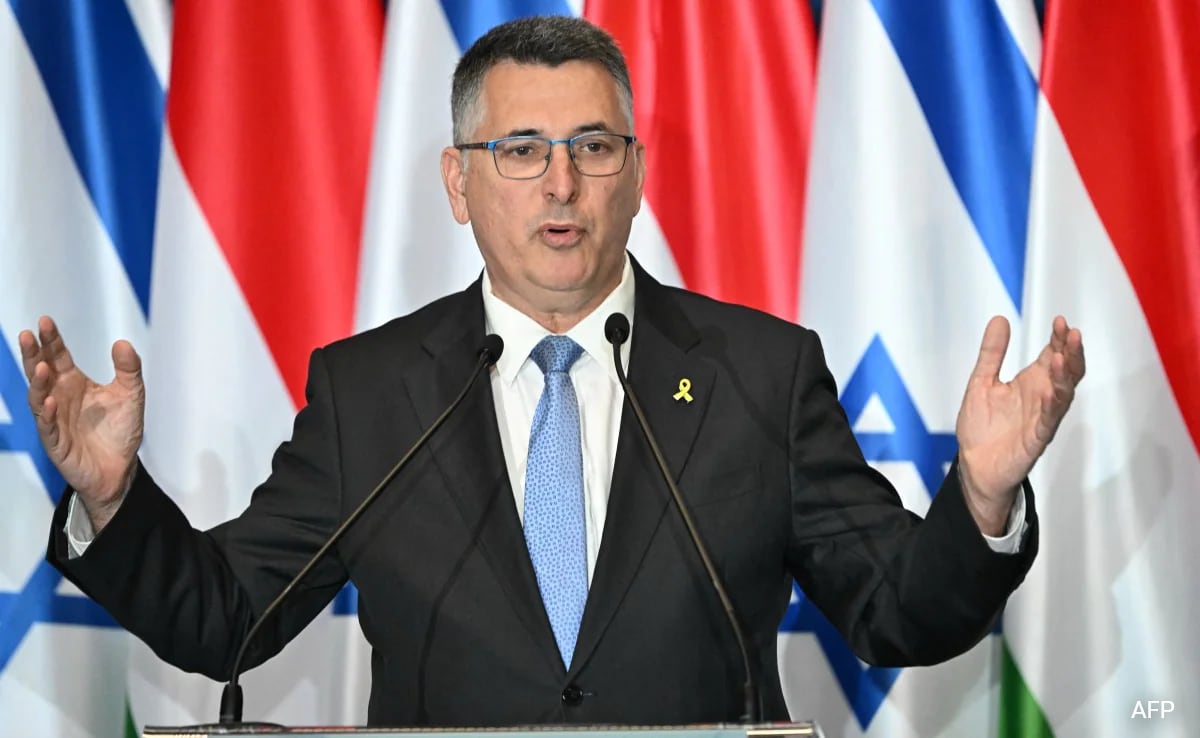
Foreign Minister Gideon Sa’ar stood before a bank of microphones in Jerusalem on Tuesday and declared that Israel has already won its war against Iran. It was a bold, categorical statement designed to project the image of a decapitated enemy and a shifting regional order. But as Sa’ar spoke, the reality on the ground told a far more complicated story. While the initial 18-day blitz of Operation Epic Fury has undoubtedly shattered the Islamic Republic’s conventional military architecture, the definition of "victory" remains dangerously fluid. Israel has broken the regime’s bones, yet the heart of the threat—and the war itself—shows no sign of stopping.
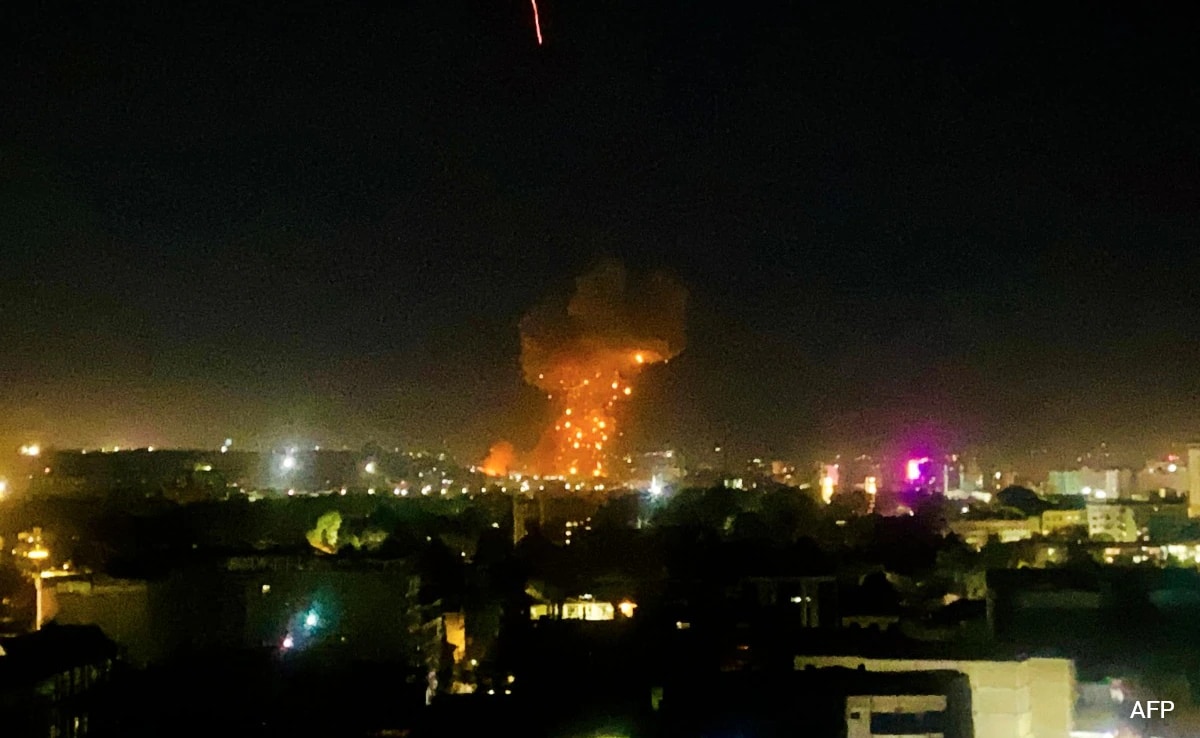
The Minister’s claim rests on a series of undeniable tactical successes. Since the joint U.S.-Israeli campaign began on February 28, the Iranian military has been systematically dismantled. Intelligence reports suggest that 80 percent of Iran’s long-range strike capacity is gone. The Revolutionary Guard’s command-and-control centers are smoldering ruins. Just hours before Sa’ar’s announcement, Israel confirmed the death of Ali Larijani, the man acting as Iran’s de facto leader following the opening strikes that killed Supreme Leader Ali Khamenei. By any traditional metric of 20th-century warfare, this is a rout.
However, "winning" a war of choice against a regional power is not the same as ending it. Sa’ar himself admitted that the mission is incomplete. This admission exposes the central friction in the current strategy: Israel and its American allies have achieved the "what" but are nowhere near the "how." They have removed the immediate existential threat of a nuclear-threshold state, but they have yet to secure a stable successor or a pathway to an exit.
The Strategy of Forced Collapse
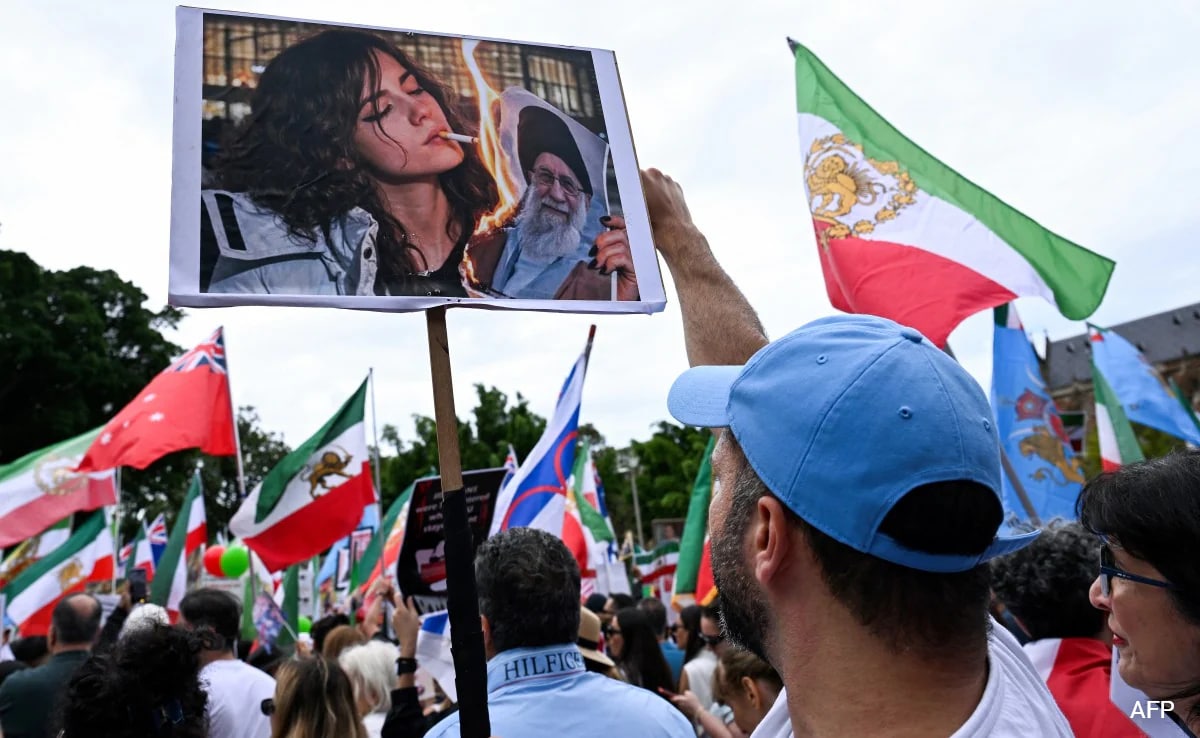
The current campaign is built on a specific, high-stakes gamble. The objective isn't just to destroy missile silos or centrifuges; it is to weaken the regime’s internal repression mechanisms to the point where the Iranian people can finally finish the job. This is regime change by proxy of the proletariat. Sa’ar was explicit in his briefing, noting that while Israel cannot topple the regime directly, it can "create the conditions" for an uprising.
This approach assumes a level of predictability in human behavior that rarely survives the chaos of war. Israel is betting that a humiliated, weakened IRGC will lose its grip on the streets of Tehran and Isfahan. They are betting that the Iranian public, currently enduring a day-16 internet blackout and the constant thrum of non-stealth B-1 bombers overhead, will choose revolution over nationalist rallying.
There are cracks in this logic. While the "Axis of Resistance" has been hit hard, it is far from neutralized. Hezbollah continues to pin down Israeli forces on the northern border, and the Houthi movement remains a wildcard in the Red Sea. More importantly, the vacuum created by a collapsing central authority in Tehran is not guaranteed to be filled by secular democrats. History suggests that when a security apparatus fails, the best-organized and most radical factions—not the most liberal ones—often seize the spoils.
The Strait of Hormuz and the Economic Front
While Jerusalem celebrates tactical wins, the global economy is feeling the weight of the "victory." Iran’s effective closure of the Strait of Hormuz has sent energy prices into a vertical climb. This is Tehran’s version of asymmetric warfare. They cannot win in the air, so they are suffocating the world’s oil supply.
Sa’ar dismissed this as "modern piracy," but labeling the problem doesn't solve it. The U.S. and Israel launched this war without a unified coalition. Several European and Arab allies have notably refused to join the maritime escort missions, citing a lack of consultation before the February 28 strikes. This diplomatic rift is the silent crisis of the conflict. Without a broad international mandate to reopen the Strait, the "won" war in the air could become a lost war at the gas pump and the supermarket.
The Nuclear Variable and the Fragmented State
The most terrifying prospect of this campaign is not a unified Iranian response, but a fragmented one. Analysts are already warning that the "Balkanization" of Iran would create a geopolitical nightmare. A central government, however hostile, can be deterred. A collection of nuclear warlords operating out of hardened, underground facilities like Fordow cannot.
The strikes have damaged the Natanz facility, but the technical knowledge and dispersed materials remain. If the regime collapses too quickly—before those assets are secured—the world faces the prospect of "loose nukes" in a region already defined by proxy wars and sectarian strife. Sa’ar’s call for "patience" suggests the government is aware that the endgame is a minefield.
The Disconnect Between Rhetoric and Reality
There is a jarring gap between the triumphalist language coming out of Jerusalem and the alerts still flashing on the phones of Israeli civilians. Even as Sa’ar spoke of victory, sirens sounded in the south as Iranian-linked salvos proved that the "dramatically weakened" enemy still has some reach.
The military says it has plans for the next three weeks and beyond. This contradicts the "we have already won" narrative. If the war is won, why are the reserves still mobilized? If the threat is removed, why are the objectives still unmet?
The truth is that Israel has achieved a massive, historic military victory that has fundamentally changed the Middle East. But that victory is currently a hollow one. It is a victory of destruction without a parallel victory of stabilization. Until the "conditions" Sa’ar speaks of translate into a new, stable Iranian reality, the war hasn't been won—it has only been entered into a more dangerous, unpredictable phase.
The government is asking for patience, but in the fast-moving reality of 2026, patience is a luxury that the global economy and regional security may not afford. The "mission" will only be complete when the sirens stop for good, the Strait is open, and a new flag flies over Tehran. Until then, any talk of winning is premature.
Watch the skies over Tehran for the next 72 hours.