In a small village in Haryana, a farmer named Rajesh wakes up before the sun. He doesn't think about the World Trade Organization (WTO). He doesn't care about "aggregate measurement of support" or "peace clauses." He cares about the moisture in his soil and the price of urea. But every time he sits down to calculate his debt, he is unknowingly locked in a high-stakes wrestling match with a bureaucrat in Geneva.
The fluorescent lights of the WTO headquarters in Switzerland feel a world away from the dust of the Indian plains. Yet, the decisions made there dictate whether Rajesh gets to survive another season or if he becomes a statistical casualty of global trade rules. This is the heart of the tension between India and the global trading order. It isn't just a debate about policy. It is a battle over who has the right to eat.
The ghost in the granary
For decades, India has operated on a simple, life-saving principle: the state buys grain from farmers at a fixed price and sells it to the poor at a massive discount. It is the largest food security program on the planet. To a trade lawyer in Washington or Brussels, this looks like a "distortion." They see a government tipping the scales, making it harder for international agribusiness to compete. They see numbers on a spreadsheet that violate the rules of a "free market."
But the market is never truly free when one side is starving.
India’s Public Stockholding (PSH) program is the shield Rajesh relies on. When the WTO says India is subsidizing its farmers too much, they are using a yardstick from 1986. Think about that. The global trade body calculates "allowable" subsidies based on prices from forty years ago. It is an absurdity. Imagine trying to buy a house today using a budget from the mid-eighties. You’d be laughed out of the bank. Yet, this outdated formula is the primary weapon used to pressure India into dismantling its support systems.
A stalemate of principles
The conflict isn't just about money; it's about the very definition of fairness. To the developed West, fairness means a level playing field where goods flow without government interference. To India, fairness means ensuring that 800 million people don't go to bed hungry. These two versions of reality are currently on a collision course.
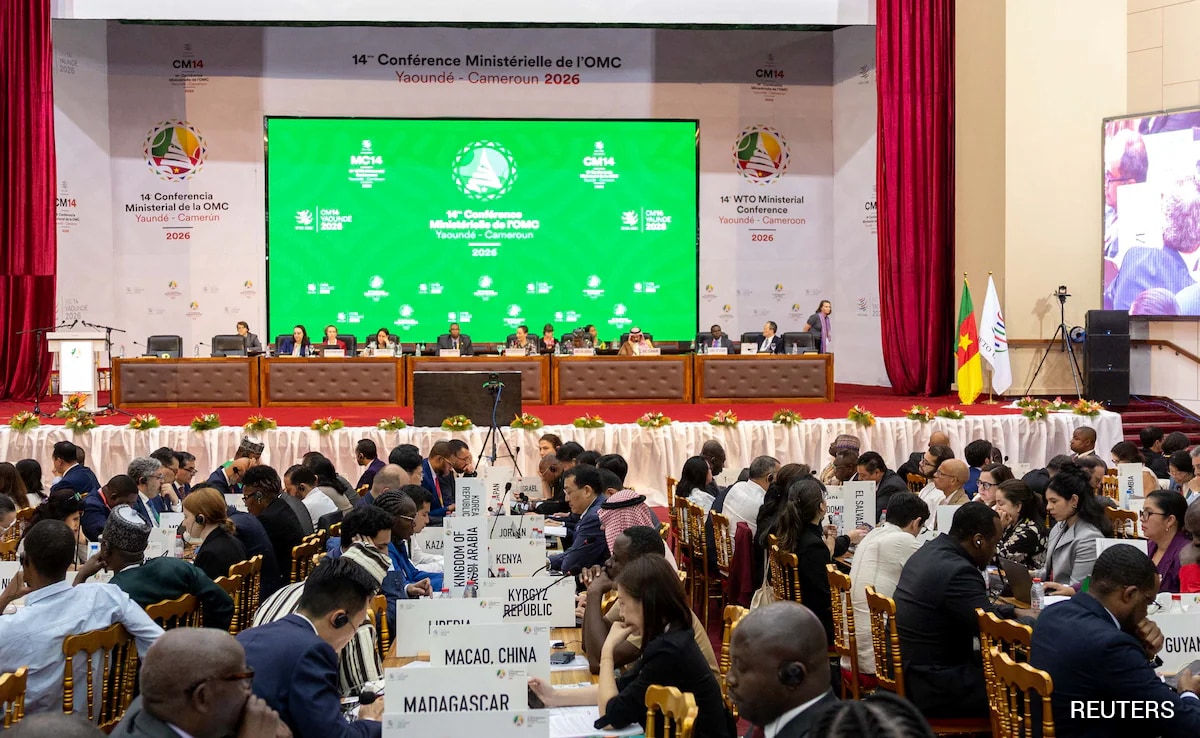
At recent ministerial meetings, the air was thick with the scent of a deadlock. India refused to budge on a permanent solution for food security. The pressure was immense. Negotiators from wealthier nations argued that India’s stockpiling of grain could lead to "dumping"—the act of selling surplus crops on the global market at rock-bottom prices, which hurts farmers in other developing countries.
It is a valid concern, but it ignores the local reality. India isn’t trying to corner the global wheat market. It is trying to prevent a domestic famine. When the pandemic hit and supply chains snapped like dry twigs, those government silos were the only thing standing between the population and catastrophe. If India had followed the "pragmatic" advice of its critics and relied entirely on global markets, the human cost would have been unthinkable.
The digital frontier and the new taxman
While the fight over grain roars in the foreground, a quieter, perhaps more dangerous battle is brewing over the invisible. Since 1998, there has been a global moratorium on imposing customs duties on electronic transmissions. This means that every time you stream a movie, download software, or send an email across borders, no government is taking a cut at the digital "border."
To the tech giants of Silicon Valley, this moratorium is sacred. It is the fuel for the digital revolution. But for India, it represents a massive leak in the bucket of national revenue.
As the world shifts from physical goods to digital services, the tax base is evaporating. If you import a physical DVD, the government gets a duty. If you stream the same movie, they get nothing. India is lead-advocating for the right to tax these digital flows. The argument is simple: why should the world’s most powerful tech companies get a free pass while local brick-and-mortar businesses are taxed to the hilt?
The pushback is fierce. Critics argue that taxing data will "break the internet" or slow down innovation. They warn of a fragmented web where every country has its own digital toll booth. India’s stance, however, is born of a pragmatic necessity. In a world where data is the new oil, developing nations cannot afford to let that oil flow out of their territory without any benefit to their own treasuries.
The hypocrisy of the high ground
There is a certain irony in being lectured on "market distortions" by nations that built their wealth on protectionism. For a century, the West used every tool in the shed—tariffs, subsidies, and colonial extraction—to secure their industrial dominance. Now that they have reached the summit, they want to pull up the ladder and declare the game must be played by "neutral" rules.
India knows this history. It informs the sharp, often stubborn edge of their diplomacy. When Indian representatives stand up in Geneva and refuse to sign a deal that doesn't protect their farmers, they aren't just being difficult. They are acting as the voice for the "Global South"—a collection of nations that feel the current global system was designed by the winners, for the winners.
But being a leader comes with a cost. By positioning itself as the champion of the developing world, India often finds itself isolated. It faces accusations of being an "obstructionist" that prevents the WTO from evolving. There is a delicate dance happening here: how do you stay true to your principles without becoming a pariah in the global trade community?
The invisible stakes
We often talk about trade as if it’s a game of chess played by grandmasters. We focus on the moves, the strategies, and the endgame. But we forget the pieces on the board are living, breathing people.
When a trade deal fails, a headline says "Talks Collapse."
When a trade deal fails for Rajesh, it means the price of fertilizer doubles and he has to take his daughter out of school to help in the fields.
The stakes are invisible because they are dispersed across millions of households. They are buried in the "minor" details of a thousand-page treaty. India's role at the WTO is to make those stakes visible. It is to remind the world that a trade policy that works for a multinational corporation but fails a small-scale farmer is not a success; it is a moral failure.
The pivot toward pragmatism
Recently, something has shifted. India is no longer just saying "no." It is beginning to propose its own frameworks. It is seeking alliances with South Africa, Brazil, and others to create a counter-narrative. This is the "pragmatism" mentioned in the sterile policy briefs, but in reality, it is a survival instinct.
India is learning to play the game better. It is using its massive market size as a bargaining chip. "You want access to our 1.4 billion consumers?" the negotiators ask. "Then you must respect our right to feed them."
This isn't just about protectionism. It's about sovereignty. In an era of "friend-shoring" and trade-wars between the US and China, India is trying to carve out a middle path. It is a path that recognizes the benefits of global trade but refuses to sacrifice its most vulnerable citizens on the altar of efficiency.
The weight of the future
The sun is high over the fields in Haryana now. Rajesh is taking a break under a neem tree. He doesn't know that thousands of miles away, people in expensive suits are debating the "legality" of the subsidy that paid for his lunch.
The WTO is at a breaking point. Its dispute settlement mechanism is paralyzed. Its rules feel increasingly out of sync with a world of climate change, digital monopolies, and soaring inequality. India stands at the center of this storm, not just as a participant, but as a provocateur.
The world needs a trading system that works. But "working" shouldn't just mean higher GDP numbers in the aggregate. It should mean that the path to prosperity isn't blocked by rules written in a different century. It should mean that a country can participate in the global economy without being forced to choose between a trade deal and a hungry child.
As the negotiations continue, the ghost of 1986 still haunts the halls of Geneva. The giants will continue to argue over the rules of the game. They will talk of "principles" and "pragmatism" until their voices go hoarse. But the real truth isn't found in their speeches. The truth is found in the dirt of the Haryanvi plains, in the hands of a man who only asks for a fair price for his labor and enough grain to see his family through the winter.
The question isn't whether India will blink. The question is whether the world is brave enough to build a system where the grain in a farmer’s shed is worth more than the dogma of a trade manual.
Would you like me to analyze the specific impact of the digital customs moratorium on India's burgeoning software export sector?