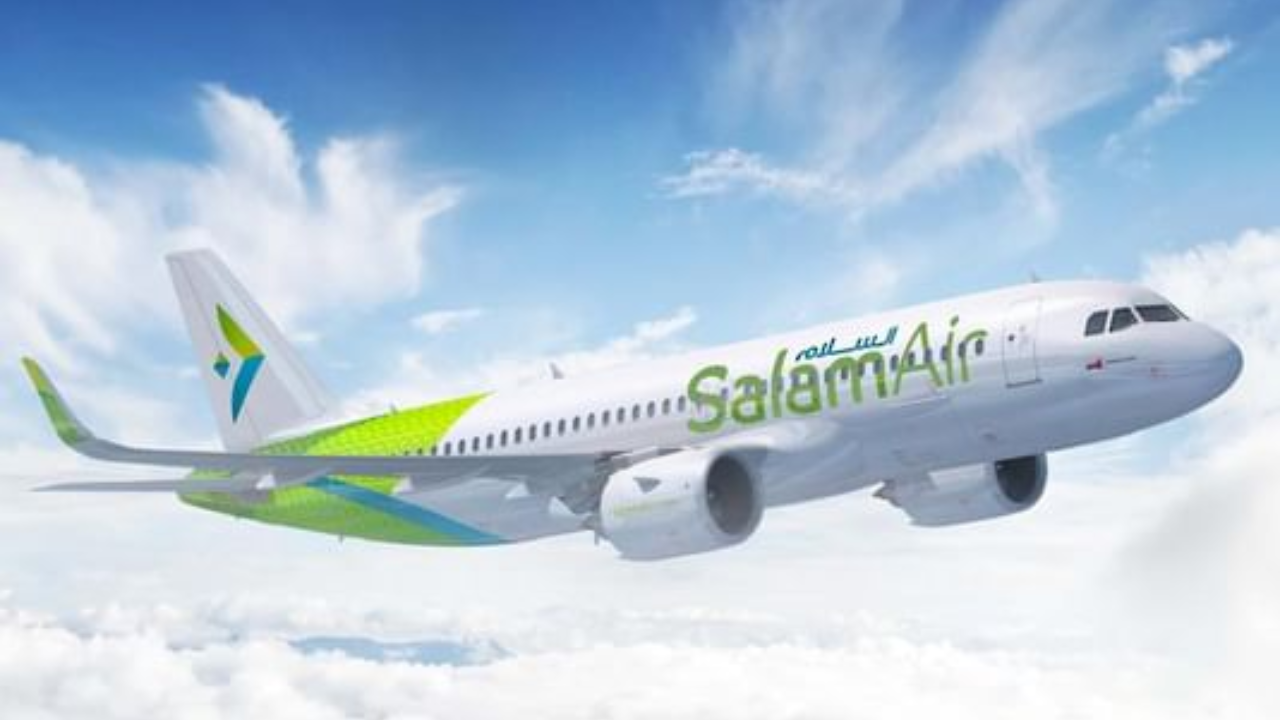
The desert heat in Muscat doesn't just sit; it vibrates. It’s a shimmer that turns the black asphalt of the runway into a liquid mirror, reflecting the dreams of a nation that has spent decades trying to carve its name into the sky. For years, that sky was divided. On one side stood Oman Air, the grand, gold-trimmed legacy carrier, carrying the weight of national prestige. On the other was SalamAir, the scrappy, lime-green upstart that promised the people of the Gulf something they rarely had: a cheap way out and a fast way home.
Now, the division is gone. The mirror has shattered.
The Omani government recently moved to acquire the remaining shares of SalamAir, bringing the budget carrier fully under the state’s umbrella. To the casual observer reading a ticker tape, it looks like a standard consolidation—a bit of accounting, a change in the board of directors. But to anyone who understands the fragile ecosystem of Middle Eastern aviation, this is a desperate, calculated pivot. It is an admission that in the modern world, you cannot fly toward the future if your wings are beating against each other.
The Weight of the Gilded Wing
Imagine a man named Ahmed. Ahmed works in the oil fields of Marmul. For a decade, his life was a rhythm of isolation and reunion. When he wanted to see his family in Salalah, he didn't need a three-course meal at 30,000 feet or a hot towel. He needed a seat that didn't cost half his weekly paycheck. For Ahmed, SalamAir wasn't just a business; it was a bridge. It was the "low-cost" alternative that finally broke the monopoly of the elite.
But bridges cost money to maintain.
Oman Air has long been the Sultanate's pride, but pride is expensive. The airline has struggled with staggering debts and the brutal reality of competing against regional titans like Emirates and Qatar Airways. While those giants were building global hubs, Oman Air was caught in a middle-ground identity crisis: too small to dominate the world, too expensive to dominate the local market.
Then came SalamAir. It was birthed in 2017 to capture the "Ahmeds" of the region. It worked, perhaps too well. Suddenly, the Omani government found itself subsidizing two different entities that were effectively cannibalizing the same limited pool of passengers. It was a house divided against itself, burning fuel and cash in equal measure.
The Invisible Mandate
The decision to take over SalamAir isn't about killing the low-cost model. It’s about surgery. By bringing both carriers under the same ownership, the government is attempting to end the "civil war" for Omani airspace.
In the offices of the Ministry of Finance, the maps look different than they do to the traveler. They see a puzzle. If Oman Air focuses on the long-haul, high-value luxury routes—London, Bangkok, Paris—and SalamAir acts as the tactical feeder, sucking in passengers from smaller regional cities and dumping them into the Muscat hub, the system might finally breathe.
This is the "Dual Brand" strategy. It’s a delicate dance. If you make SalamAir too comfortable, you steal customers from the flagship. If you make it too sparse, you lose the market to Air Arabia or FlyDubai. The stakes are invisible until they aren't—until a route is canceled, a plane is grounded, or a national budget hits a deficit that can no longer be ignored.
Turbulence in the Boardroom
Critics will tell you that state-owned enterprises are where innovation goes to die. They will point to the history of nationalized airlines across the globe—bloated, slow, and resistant to the "move fast and break things" mentality that allowed SalamAir to thrive in its infancy.
There is a real fear that the lime-green spirit of the budget carrier will be suffocated by the heavy, velvet curtains of government bureaucracy. When a private entity runs an airline, the bottom line is the only god. When a government runs it, the goals shift. Suddenly, you aren't just flying planes; you are managing diplomatic relations, employment quotas, and national optics.
But the alternative was worse.
Left to its own devices, SalamAir faced an uphill battle against rising fuel costs and a post-pandemic world that is increasingly hostile to independent, mid-sized players. The government didn't just buy an airline; they bought a safety net. They are betting that by controlling both pieces of the board, they can finally execute a cohesive vision for "Oman 2040," the nation's ambitious blueprint to diversify away from oil.
The Human Cost of Efficiency
Consider the staff. The pilots who chose the "fun" startup over the "stodgy" national carrier. The flight attendants who mastered the art of the quick turnaround. For them, this takeover feels like a loss of identity. There is a specific kind of pride in being the underdog.
Now, they are part of the establishment.
The government has promised that the two airlines will continue to operate separately. They will keep their brands, their distinct uniforms, and their specific missions. But "separate" is a relative term when the same hand holds the purse strings. The coming months will be a test of culture. Can you keep the scrappy energy of a budget airline alive when it’s being fed by the same treasury that supports the royal fleet?
It is a psychological tightrope.
A Sky Without Shadows
The truth is that Oman is tired of being the "quiet neighbor" in the Gulf. They watched as Dubai turned sand into a global transit point. They watched as Doha became a household name through a fleet of silver birds. Oman doesn't want to be Dubai, but it can no longer afford to be a bystander.
This takeover is a signal. It says that the time for experimentation is over. The era of the "private" experiment in Omani skies has yielded to the era of national coordination.
The move is bold. It is also risky. If they fail to integrate the back-end operations—the maintenance, the procurement, the scheduling—they will simply have two failing airlines instead of one. But if they succeed, they create a pincer movement. One airline to court the wealthy tourist, and one to serve the worker, the student, and the weekend traveler.
Late at night, when the Muscat International Airport grows quiet, the two types of planes sit on the tarmac together. The gold and the green. They look like different worlds. But for the first time, they are finally pointing in the same direction.
The Sultanate has stopped hoping the market will fix its problems and has decided to take the controls itself. Whether this leads to a smooth landing or a catastrophic stall depends entirely on whether they remember that an airline isn't just a collection of turbines and seats. It is a promise to the person in the cabin.
Ahmed is still waiting for his flight. He doesn't care who owns the wings, as long as they carry him home.
The engines are starting. The pressure is rising. The horizon is waiting to see if Oman can finally learn to fly with both hands on the yoke.
Would you like me to analyze how this consolidation compares to other national airline mergers in the Middle East?