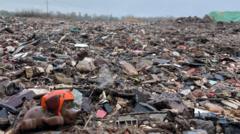
The smoke rising from the rubble of Tehran’s Mehrabad Airport is more than just the debris of a failed regional power; it is the funeral pyre of the global energy status quo. Since the joint U.S.-Israeli strikes of February 28, 2024, the narrative has been one of regime decapitation and surgical strikes. But as the war enters its fourth week, the "mission accomplished" rhetoric coming out of Washington and Jerusalem is masking a brutal economic reality. While the Ayatollah’s military infrastructure lies in ruins, the collateral damage to the global economy has handed a historic, unearned victory to the one player who didn’t fire a single shot: Vladimir Putin.
This is not a war about borders. It is a war about flows. By forcing the closure of the Strait of Hormuz—the jugular of the global oil trade—Tehran has successfully triggered the largest supply disruption in history. Brent crude, which hovered comfortably near $70 just months ago, is now threatening to breach $120. For the Kremlin, this is a fiscal miracle. For the rest of the world, it is the beginning of a long, cold era of stagflation.
The Kremlin’s Accidental Windfall
Before the first Tomahawk missiles hit Iranian soil, Russia was staring into a fiscal abyss. Sanctions and a tepid global demand had hollowed out Moscow's energy revenues. The Kremlin was preparing for 10% cuts across non-military sectors. Then the war began.
Every $10 increase in the price of a barrel adds roughly $1.6 billion to Russia's monthly coffers. With prices up nearly 60% since the opening salvos of Operation Epic Fury, Putin no longer has to choose between funding his campaign in Ukraine and keeping the lights on in Moscow. In a bitter irony, the American-led effort to neutralize one adversary has effectively bankrolled another for the next decade.
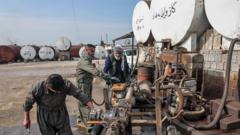
The Biden-Trump transition team's decision to "unsanction" 140 million barrels of Iranian oil currently sitting at sea is a desperate move to cap gasoline prices before the U.S. midterms. It is a band-aid on a gunshot wound. The market knows that 20% of the world’s oil and LNG is effectively trapped behind a wall of Iranian sea mines and anti-ship missiles.
The Death of the Transatlantic Bargain
Europe is the most visible loser in this new architecture of chaos. For years, the continent banked on a "special relationship" with Washington to secure its energy needs after weaning itself off Russian gas. That bond is now a liability.
The strikes on Qatar’s Ras Laffan facility—retaliatory blows from Iranian drones—have wiped out nearly 17% of the world's LNG export capacity. QatarEnergy estimates repairs will take five years. For a Europe that is only 30% through its winter storage replenishment, this is a catastrophe. The U.S. is now viewed by Brussels not as a protector, but as a destabilizing force that prioritizes domestic gas prices over the survival of the European industrial base.
We are seeing the birth of a "partnership of middle powers." European capitals and Arab Gulf states, both feeling abandoned by an increasingly erratic American foreign policy, are beginning to coordinate on security and supply chains outside the traditional NATO-centric framework. They have realized that in a world where the U.S. is willing to collapse the global energy market to settle a decades-old score with Tehran, everyone is on their own.
The Chinese Pivot to Resilience
While the West scrambles, Beijing is playing the long game. China anticipated this. In the first two months of 2026, Chinese oil imports surged by 16% as the state built a massive strategic reserve. They didn't just buy oil; they bought time.
China is using this crisis to accelerate its transition away from the "Hormuz Dilemma." While they remain the world's largest crude importer, their massive investments in domestic renewables and EV infrastructure have created a buffer that the U.S. and India lack. More importantly, Beijing is positioning itself as the only credible mediator left. By abstaining from UN resolutions and maintaining back-channel ties with the new, fractured leadership in Tehran, China is setting the stage to be the primary contractor for Iran's eventual reconstruction.
The Asymmetric Cost of Victory
The tactical success of the U.S.-Israeli air campaign is undeniable. Over 85% of Iran’s detection and defense capabilities have been neutralized. The leadership is in disarray. However, the cost of this "victory" is being billed to the global consumer.
- Global Stock Markets: The Dow and S&P 500 have seen their most volatile month since 2008.
- Logistics: Shipping routes are being redrawn, adding weeks to transit times and billions to insurance premiums.
- Inflation: The 0.8% projected spike in global inflation is a conservative estimate that doesn't account for the permanent loss of Qatari LNG.
The war in Iran has proven that you can destroy a regime without winning the conflict. The U.S. has achieved its military objectives while simultaneously surrendering its role as the guarantor of global economic stability. In the vacuum left behind, a new, more cynical world order is taking shape—one where energy is no longer a commodity, but a weapon of mass economic destruction used by those who can afford to wait out the storm.
The real question is no longer who will rule in Tehran. It is who will be able to afford the world the war has created. As of today, that list has exactly one name on it.
Would you like me to analyze the specific impact of the Qatari LNG disruption on the 2027 European manufacturing forecasts?