Ink dries quickly on a voter registration card. But erasing a name takes mere seconds.
For millions of young citizens across India, the realization arrived like a sudden drop in temperature. It is one thing to watch political debates on a screen, to scroll past promises of economic miracles while standing in endless lines for entry-level jobs that never materialize. It is entirely another to wake up and discover that your name, your family's history, your quiet legal right to shape the future has simply vanished from the rolls.
Consider what happened in the heart of Delhi, where the administration executed what it termed a routine cleanup. Under the banner of scrubbing duplicate entries, relocating voters, and targeting unauthorized residents, more than four million people were quietly sheared off the city's electoral registers. Nearly a third of the capital's voice, wiped clean. Across the country, the scale expanded into a massive, chilling purge affecting over 130 million entries.
This is not a story about abstract administrative errors or dry spreadsheet discrepancies. This is about a young student walking toward a polling booth, ready to cast a vote, only to be told they do not exist on paper.
And so, they returned to the streets.
The atmosphere in New Delhi and Mumbai crackles with a raw, electric tension. It is a familiar script rewritten for a new era. Months ago, this exact demographic—young, hyper-connected, yet economically squeezed Generation Z students—flooded public squares to protest leaked civil service examination papers that throttled their futures. That summer wave forced a minister's resignation. It proved that collective pressure could crack the armor of an invincible-seeming administration led by Prime Minister Narendra Modi.
Now, the anger has shifted from employment to the very machinery of democracy itself.
The target this time is the Chief Election Commissioner, Gyanesh Kumar, and a contentious electoral revision process that critics argue systematically disenfranchises opposition strongholds and marginalized communities. The ruling Bharatiya Janata Party dismisses the outrage as orchestrated anarchy, claiming the opposition is trying to undermine independent state institutions. Yet, the streets tell a different story. They tell a story of citizens who feel cornered.
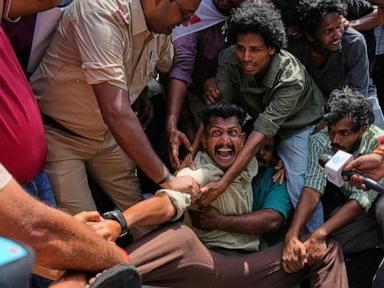
Walk down the avenues near Jantar Mantar, and you will feel the physical weight of a state responding to dissent. Barricades slice through neighborhoods. Police vans idle with engines smoking. Over seven thousand protesters have tasted temporary detention, hauled away for carrying national flags or demanding transparency from an election commission they accuse of partisan bias.
Meet someone like Ratna, a voice within the decentralizing student network known colloquially as the Cockroach movement—a moniker born from the idea that no matter how many times authorities try to step on them, they scatter, survive, and reappear. They operate without a single supreme leader or a traditional hierarchy. When digital communication channels face throttling or surveillance, they rely on decentralized, offline coordination. They anticipate pre-emptive arrests. They draft peace bonds in jail cells, only to step back outside and raise their voices again.
This resilience cuts directly through the state's carefully curated international image. Abroad, the machinery of governance promotes India as the undisputed mother of democracy. At home, ordinary citizens find themselves boxed into designated protest zones that are swiftly sealed off, criminalized, or denotified.
The stakes go far beyond a single election cycle or the political tug-of-war between the ruling coalition and the opposition INDIA bloc. Beneath the political friction lies a deep, structural anxiety about the future. Economic growth figures climb on paper, boasting of massive infrastructure investments and soaring tech sectors, but for a young person navigating a job market where youth unemployment stubbornly lingers, those macroeconomic triumphs feel distant and hollow. When the economic ladder feels broken, the ballot box remains the last true equalizer.
When that box is perceived to be rigged or quietly manipulated through administrative purges, the social contract frays completely.
The resistance is spreading beyond elite university campuses in the capital. Marches in Kochi, Chennai, and Mumbai prove that this is not merely a localized political tantrum. It is a nationwide reckoning with institutional capture. Women stand shoulder-to-shoulder at the barricades, dismantling the superficial gender narratives often deployed in state campaign messaging, asserting that true empowerment means looking state power in the eye and demanding accountability.
The authorities hold immense power. They control the police force, the regulatory timelines, and the administrative levers. Millions of citizens face tight deadlines to file objections and claw their voting rights back before final registers lock in.
Yet, history suggests that an entire generation cannot be permanently locked out of its own country.
The police vans can clear the avenues. The barricades can reroute the marches. But in the quiet spaces between digital blackouts and street-corner whispers, something has irrevocably shifted. The illusion of absolute compliance has cracked.
A crowd disperses into the twilight, leaving behind empty plastic bottles and scattered leaflets under the amber streetlamps, while a lone student folds a tricolor flag and tucks it safely inside a backpack, knowing tomorrow morning the walk begins all over again.
India's Gen Z youth flock to streets over voter roll purge
This video provides a direct, ground-level look at the youth-led demonstrations in New Delhi surrounding the controversial voter roll purges.