We have reached peak foreign policy illiteracy. Standard mainstream commentary loves to pretend that Washington and Tehran are operating in tidy, predictable bubbles, completely insulated from domestic political shocks. The lazy consensus claims that the U.S. election calendar holds zero sway over the trajectory of the ongoing war, as if missiles over the Strait of Hormuz obey a completely different clock than congressional pollsters.
It is a comforting fairy tale for analysts who prefer clean equations over messy realities. I have watched commentators blow millions of words on strategic doctrines while ignoring the basic mechanics of how domestic political survival dictates military posture. The notion that Donald Trump and the Iranian leadership are completely indifferent to the electoral countdown is not just naive—it is a dangerous distortion of statecraft.
Let us dismantle the illusion.
The Myth of the Strategic Vacuum
To understand why the election calendar dictates every pulse of this conflict, we must first define how modern asymmetric warfare intersects with domestic political vulnerability. Mainstream pundits argue that because the ideological hostility between Washington and Tehran is decades deep, short-term electoral deadlines do not matter.
This argument collapses under the weight of basic political science. When an administration faces severe domestic blowback over soaring fuel prices and a sinking approval rating tied directly to a foreign intervention, the electoral calendar stops being a background detail and becomes the entire operating system.
Imagine a scenario where a sitting president faces a catastrophic midterm backlash driven entirely by inflation at the pump. To claim that leadership views upcoming voting cycles as irrelevant is to misunderstand the core instinct of political self-preservation. Tehran knows precisely how much pressure domestic American fatigue places on the White House. They are not waiting out the storm because of abstract ideological patience; they are counting down the days until political math forces their adversary's hand.
The Misread Calculus in Tehran and Washington
The conventional narrative insists that Iran misreads how political peril shapes American decision-making. The inverse is equally true. Washington routinely assumes that economic strangulation will force a regime to capitulate before voters head to the ballot boxes.
Both sides are playing a dangerous game of temporal chicken, and both are relying on flawed assumptions. Tehran calculates that an electorally vulnerable administration will hesitate to launch high-risk escalations that could spike oil prices further and alienate an already war-weary public. Meanwhile, the White House flirts with the idea that a sudden, sharp display of kinetic force can break the stalemate and rewrite the domestic narrative before the political damage becomes permanent.
This is why the calendar matters. Every troop movement, every carrier deployment, and every sudden shift in rhetoric from defiance to delayed engagement is filtered through the lens of domestic electoral fallout. When approval numbers crater, the threshold for what constitutes an acceptable military risk changes entirely.
The Cost of Convenient Delusions
Pretending that domestic politics do not drive war strategy allows leaders to mask policy failures behind grand strategic pretenses. Secretaries of State can stand at podiums and declare that economic coercion makes further military action obsolete, while ground-level economic realities punish candidates at the ballot box.
The truth is stark: the war in Iran and the domestic U.S. political calendar are welded together. The friction points—rising diesel costs, fractured congressional support, and desperate scrambles by vulnerable lawmakers to distance themselves from an unpopular conflict—prove that the ballot box is the primary theater of this war.
When analysts pretend otherwise, they are not offering objective analysis. They are providing cover for a system that refuses to admit its own internal contradictions. Stop looking at this conflict through the lens of detached geopolitical theory. Look at the polling data, look at the gas prices, and look at the electoral map. That is where the war is actually being fought.
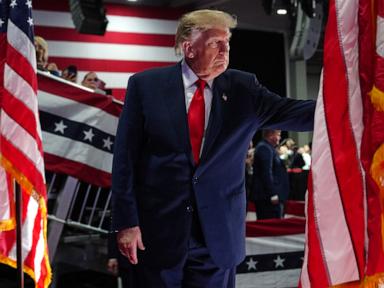
Trump concedes Iran war impacted midterm elections but insists he'd 'do it again'
This clip captures the direct acknowledgment from the top of the administration that the electoral fallout and the war were inextricably linked, completely dismantling the notion that domestic calendars played no role in strategic calculations.