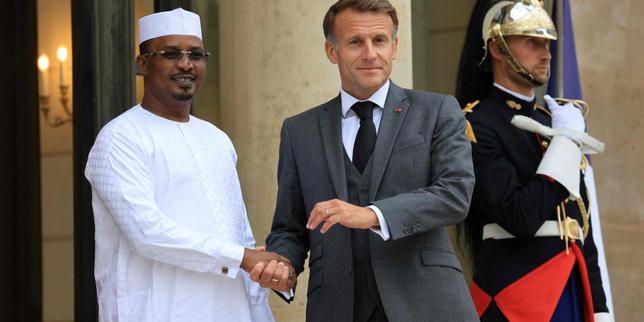
Less than two years after N'Djamena kicked French forces out and ripped up a decades-old defense pact, Chadian President Mahamat Idriss Déby Itno walked back into the Élysée Palace on October 13, 2026. That meeting wasn't a nostalgic reunion. It was a calculated reset.
On that day in Paris, French Armed Forces Minister Catherine Vautrin and her Chadian counterpart, General Issakha Maloua Djamous, signed a declaration of intent to revive military cooperation between the two states. If you only read headlines celebrating a "return" of French influence, you're missing the real story. There are no reopened French bases in this deal. No wave of incoming troops. No sweeping weapons contract announced on the spot.
Instead, both governments are testing a much smaller, far more conditional arrangement built around training, expertise, defense industry links, and technology. After years of watching French military clout shrink across Mali, Burkina Faso, and Niger, Paris finally has a crack of daylight in central Africa. Yet nobody in Paris or N'Djamena is acting like the old Françafrique playbook is back. Trust got burned too badly for that.
What Actually Changed in Paris and Why It Matters
To understand why this military cooperation agreement matters, you have to look at what it leaves out. For decades, France's presence in Chad relied on permanent basing, stationed warplanes, and a heavy troop footprint—roughly 1,000 personnel before the pullout began in late 2024 and wrapped up at the end of January 2025. That model became politically radioactive across the Sahel.
When Chad terminated its defense agreement in November 2024 and forced French troops and aircraft like Mirage fighters out, it looked like the final nail in the coffin of France's regional security posture. Yet by August 2026, quieter security engagement—including training and intelligence support—had already started creeping back. The October 13 declaration at the Élysée formalized that thaw without restoring the old rules.
I've watched plenty of diplomatic "resets" in security policy over the years, and the biggest mistake analysts make is treating a declaration of intent like a finished treaty. A declaration of intent is a handshake on paper. It sets priorities—training, technical know-how, defense industrial cooperation—while leaving the hard details of execution, legal scope, and equipment deals to future negotiations.
Still, timing tells you plenty. This was Déby's third visit to meet Emmanuel Macron in less than ten months. Leaders don't fly to Paris that often by accident. Both sides needed a face-saving channel that respected Chadian sovereignty while acknowledging hard security realities.
Why Both Sides Swallowed Their Pride
Diplomacy rarely runs on sentiment when borders are on fire. For N'Djamena, walking away from French forces was a massive assertion of sovereignty, yet Chad still sits in one of the roughest neighborhoods imaginable. Neighboring Sudan's brutal conflict continues to spill regional pressure onto Chad's eastern frontier, while instability around the Lake Chad basin and wider Sahel never takes a break.
During their October talks in Paris, Macron and Déby also discussed Sudan, pushing for a humanitarian truce and a settlement that preserves Sudan's unity and territorial integrity. That says a lot about Chad's strategic bind. N'Djamena can diversify suppliers—and over recent years Chad has worked with a mix of partners, including Turkish drones and armor, alongside limited U.S. training engagements—but specialized intelligence, technical training, and industrial support still carry real value.
On the French side, the motive is equally pragmatic. After losing military footholds in Mali, Burkina Faso, and Niger, Paris lost much of its operational reach in West and Central Africa. Meanwhile, Russian personnel and Russian-linked actors have expanded their footprint in places like neighboring Niger, the Central African Republic, and Libya.
Let's be honest with ourselves: France isn't regaining its old dominant perch in Chad. A French military source put the mood plainly after the meeting, noting that Paris will move slowly, step by step, because officials haven't forgotten being pushed out. A senior Chadian officer struck a parallel note, framing the relaunch around clear, solid terms that serve both countries' interests rather than one-sided habit.
The Misconceptions Clouding This Reset
Whenever two countries reconcile after a public rift, coverage quickly splits into two lazy caricatures. One side claims France is "back in control." The other claims Chad completely caved. Both miss what's actually happening on the ground.
- The "bases are coming back" myth: Nothing in the October 2026 declaration reopens French bases or brings back a large garrison. Political sensitivities in Chad make permanent foreign bases a tough sell, and Paris knows forcing that issue would blow up the fragile progress already made.
- The "old pact restored" myth: Chad ended its previous defense agreement in November 2024. Signing a declaration of intent on training, expertise, defense industry, and technology builds a lighter, narrower framework—not a copy-paste of the old arrangement.
- The "zero-sum" myth: Rebuilding ties with France doesn't automatically erase Chad's other security relationships. In fact, Washington also pays close attention to N'Djamena precisely because Chad remains one of the few regional states willing to engage Western militaries while keeping options open elsewhere.
There's also a transparency catch worth flagging for anyone tracking this story closely. Much of the public detail around the October 13 agreement comes from official readouts, diplomatic reporting, and press accounts rather than a published, line-by-line treaty text. Until concrete training programs, industrial projects, or procurement contracts are signed and implemented, the real weight of the pact remains partly on paper.
What This Model Signals for Security in the Sahel and Central Africa
If this quieter approach holds, it could become a template for how France—and potentially other Western partners—operates in a skeptical region. Analysts have described the shift as a cautious return through the side door: fewer troops, lower visibility, and much heavier reliance on host-country political consent.
That's a huge shift in leverage. Under the old model, external powers often treated military presence as a durable fixture that gave them automatic influence in capitals and border zones. Under the new model, access is earned incrementally, reversible on short notice, and tied to tangible capabilities like training and technology transfer.
At the same time, Macron and N'Djamena have paired security talks with broader talk of economic cooperation, investment, and development. That makes strategic sense. Purely military relationships are brittle when domestic politics turn sour; broader economic and technical ties give both capitals more reasons to stay at the table even during rough patches.
Still, fragility cuts both ways. Domestic political friction in Chad, shifting regional alliances, or renewed border crises could slow momentum just as quickly as it picked up between August and October 2026. Cautious cooperation isn't guaranteed stability—it's just a better starting point than open hostility.
How to Track What Happens Next
If you're following France–Chad relations or regional security in Central Africa and the Sahel, don't judge the story by presidential photo-ops in Paris. Watch the follow-through over the coming months:
- Look for concrete program announcements: Track whether the October 13 declaration translates into named training courses, technical exchanges, or defense-industrial agreements between French and Chadian officials.
- Watch the troop and base footprint closely: Verify any claims about personnel or equipment against credible defense reporting—no bases or troop deployments were announced in the declaration.
- Monitor neighboring flashpoints: Pay attention to developments in Sudan and across Chad's borders, since external security pressure is one of the strongest forces pushing N'Djamena toward pragmatic partnerships.
- Compare diplomatic rhetoric with budget and legal steps: Notice whether both governments back up warm statements about renewed partnership with formal protocols and real economic or industrial commitments.