A sign at the entrance of a Bronx parking lot will not stop a federal immigration raid. It is a piece of plastic with zero constitutional weight.
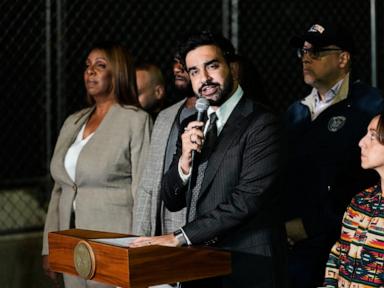
Mayor Zohran Mamdani and more than a hundred New York Democrats are urging private garage and parking lot owners to bar U.S. Immigration and Customs Enforcement agents from using their properties as staging areas. The push followed tense enforcement actions in the city, including an October shooting involving immigration officers near Marble Hill and the Bronx that sparked widespread outrage and scrutiny over where federal agents stage operations.
Standard coverage treats this push like a simple showdown between sanctuary champions and federal overreach. Politicians say no. Agents show up anyway. Property owners pick a side.
That framing is lazy. It misses the real trap being laid for commercial operators, retail landlords, and garage managers across New York.
What Standard Coverage Gets Wrong About Property Bans
Most coverage of the push to ban ICE from parking lots assumes two things that fall apart under pressure: that municipal calls to action carry real shield power for private operators, and that federal agents need a property owner's permission to stage or operate in publicly accessible spaces.
Here is the lazy consensus floating through the headlines:
- Myth 1: Asking private lot owners to bar ICE creates an enforceable "ICE-free zone" around stores, banks, and garages.
- Myth 2: Refusing access or posting a sign stops federal enforcement operations from happening on or adjacent to private property.
- Myth 3: Parking operators caught in the middle have a clean, risk-free legal exit just by following City Hall's talking points.
In reality, the city's own officials have acknowledged that municipal rules governing city-owned lots and parks do not automatically dictate how private garages and retail lots operate. When politicians urge private owners to block federal agents, they are shifting a high-friction constitutional and operational problem onto businesses that do not write federal law or command federal police.
The Supremacy Clause Reality Nobody Wants to Say Out Loud
Property law in New York gives private owners broad authority over who may stay on their land—against ordinary trespassers, solicitors, or loiterers. Federal law enforcement is not an ordinary trespasser.
Under the Supremacy Clause of the U.S. Constitution, valid federal law overrides conflicting state or local mandates when federal officers are acting within their statutory authority. Immigration enforcement is a core federal function. While local governments can restrict the use of municipal property—as New York leaders have moved to do with city-owned lots and parks under local directives and state-level proposals—telling a private commercial landlord to physically bar federal agents is a very different legal animal.
A commercial parking lot in Queens or a big-box lot in the Bronx is not a gated vault. Many lots are open to the general public during business hours, with unguarded entry lanes, customer stalls, and shared driveways. If federal vehicles pull into an open customer lot or stage along its perimeter, a minimum-wage lot attendant with a clipboard is not going to block marked or unmarked federal cruisers. Nor should they try.
Imagine a Scenario Where an Attendant Plays Sheriff
Imagine a scenario where a garage operator in Upper Manhattan posts a prominent sign banning federal immigration enforcement and instructs evening staff to order agents off the premises. Two unmarked SUVs pull into an open section of the lot during a busy shift. A 22-year-old attendant walks up to the window and tells armed federal officers they are trespassing and must leave immediately.
Either the officers ignore the attendant and complete their work, leaving the business feeling humiliated and powerless, or the confrontation escalates into obstruction claims, physical danger, or chaotic bystander videos that go viral within ten minutes. Neither outcome protects customers, staff, or the business owner.
Why "People Also Ask" Questions Are Aimed at the Wrong Target
Searchers looking into this story usually ask predictable questions: Can a private parking lot legally ban ICE? Do ICE agents need a warrant to enter a parking lot? Can New York penalize businesses that let ICE stage on their property?
Those questions miss the real operational question every property owner and local policymaker should be asking instead: Who bears the liability, safety risk, and customer backlash when enforcement spills onto commercial turf?
Can a Private Parking Lot Legally Ban ICE?
A property owner can set general house rules for private property and refuse to lease, rent, or invite outside agencies to use a lot as a staging base. There is a massive difference between declining to cut a deal with an agency and physically blocking federal officers who drive onto an open lot during active operations.
Owners who confuse a political request with a legal forcefield will get burned. If a store or garage has no agreement with federal authorities, saying "we did not rent our lot to them" is accurate. Claiming "we banned them from ever setting a tire on our asphalt" overstates what private signage can actually enforce.
Do ICE Agents Need a Warrant to Enter a Parking Lot?
Fourth Amendment law draws sharp lines between private spaces where a person has a reasonable expectation of privacy—like the inside of a home or a locked non-public area—and open commercial areas or spaces visible to the public. A judicial warrant signed by a judge is one thing; an administrative immigration document is another; operating in open, publicly accessible areas raises distinct constitutional questions depending on the exact facts, whether a space is open to the public, and how officers act.
Reducing that complex Fourth Amendment line to a bumper-sticker rule like "no warrant, no entry to any square inch of a parking lot" is sloppy legal shorthand. Property owners should never give bad legal advice to staff or customers based on a soundbite.
What Happens to Businesses Caught Between Activists and Federal Agents?
Here is the squeeze that lawmakers rarely spell out. In immigrant neighborhoods across New York, activists and local leaders have called out retailers and banks when enforcement happens near or on their lots. Boycotts, protests outside storefronts, angry calls, and reputation damage hit fast.
At the exact same time, picking a physical fight with federal agents creates legal and safety exposure that City Hall press releases will not pay to defend. Businesses become involuntary buffer zones in a national political war.
Battle Scars From High-Stakes Policy Squeezes
I have watched businesses and institutions blow millions of dollars and months of leadership bandwidth trying to turn physical property rules into political shields. When organizations treat a complex jurisdictional clash like a simple "ban them" checklist, three predictable failures show up:
- Overpromising to the public: Management puts up signs or issues sweeping statements that sound decisive on social media, then looks deceptive or weak the first time enforcement occurs nearby anyway.
- Under-training front-line staff: Parking attendants, security guards, and store managers get vague marching orders to "keep them out" without clear de-escalation rules, putting hourly workers in harm's way.
- Ignoring contractual and lease realities: Shopping centers often involve shared easements, multi-tenant leases, municipal permits, and third-party garage operators. One party's unilateral pledge can collide with another party's property rights or vendor contracts.
In constitutional and regulatory disputes, legal scholars and courts—from foundational Supremacy Clause jurisprudence to modern preemption and Fourth Amendment litigation—consistently show that local rhetoric does not rewrite federal authority on the ground. Real-world enforcement happens in messy, fast-moving streets and lots, not in legislative press conferences.
The Honest Downsides of Pushing Back Hard
My contrarian take has real trade-offs, and pretending otherwise would be dishonest.
First, pointing out the limits of private property bans can sound like defeatism to communities terrified of aggressive enforcement. When families feel unsafe going to a store, a bank, or a park, legal nuance feels cold.
Second, taking a cautious, compliance-first posture as a business owner can anger vocal local stakeholders who demand an unmistakable stand. Neutrality in a polarized neighborhood rarely satisfies everyone.
Third, city and state officials do have real levers over public property—city-owned lots, municipal garages, and parks. Drawing a sharp line between public property rules and private lot limits does not mean municipal action on public land is meaningless; it simply means the mechanics are different.
What Smart Property Owners Should Actually Do Instead
If you own, lease, or manage a parking lot, garage, or retail property in New York, stop looking for a magic sign and start managing real operational risk.
- Refuse voluntary staging agreements in writing. Do not rent space, grant temporary staging permissions, or coordinate logistics for civil immigration operations on private property. Keep your policy clean and verifiable.
- Train staff to observe and de-escalate, never obstruct. Instruct attendants and managers not to physically block vehicles, argue with armed officers, or put themselves between federal agents and targets. Document what happens calmly from a safe distance.
- Audit your leases, easements, and operator contracts. Know who actually controls the lot at night and on weekends—a third-party operator, a mall owner, or a master landlord—before making public promises.
- Separate public safety protocols from political theater. Focus on lighting, cameras, emergency contacts, and clear customer communication so your property stays as calm and safe as possible when tensions spike outside.
Politicians get headlines by demanding bans on private lots. Property owners get sued, boycotted, or hurt if they mistake a press conference for the law.