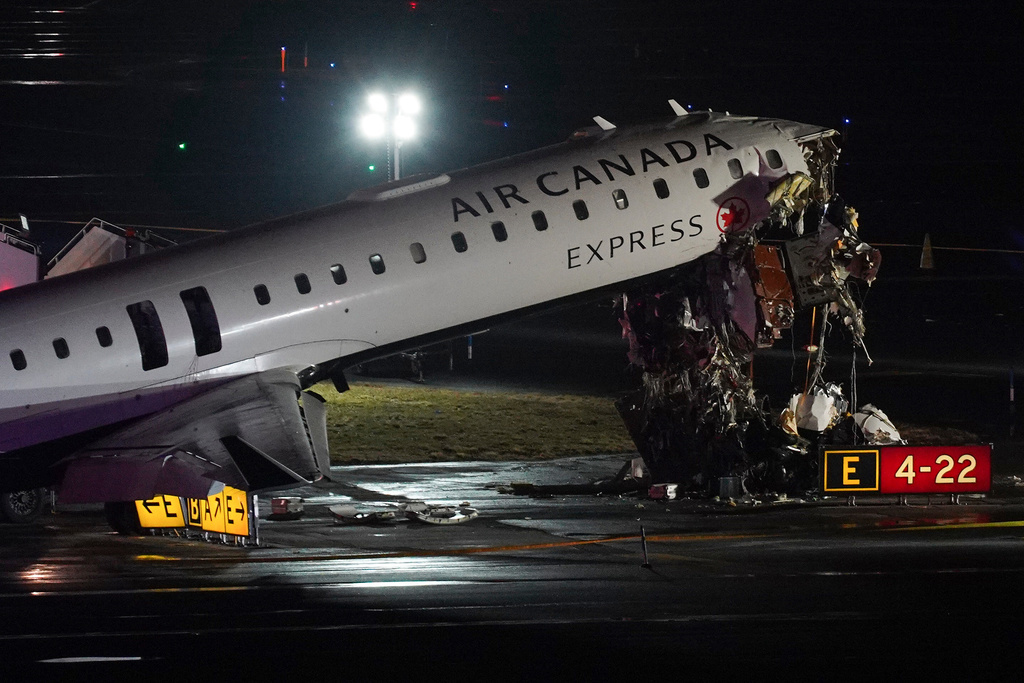
The collision between a departing aircraft and an emergency response vehicle is not a random accident but a systemic failure of the Surface Movement Guidance and Control System (SMGCS). When a Latam Airlines Airbus A320neo, accelerating for takeoff, struck a fire truck crossing the runway at Jorge Chávez International Airport, it exposed a fatal breakdown in the synchronization between Air Traffic Control (ATC), flight crew situational awareness, and ground vehicle navigation protocols. This event functions as a textbook case of Runway Incursion (RI), specifically a Category A incident where a collision is narrowly avoided or, in this instance, realized with fatal consequences.
The lethality of this specific event stems from the Kinetic Energy Differential. An aircraft at V1—the critical decision speed where a takeoff can no longer be safely aborted—possesses massive forward momentum. The introduction of a physical obstacle into this high-energy path transforms a controlled departure into a catastrophic structural failure. Understanding this event requires deconstructing the three layers of protection that failed: procedural communication, technological surveillance, and human-machine interface.
The Triad of Runway Safety Failure
In aviation safety, the Swiss Cheese Model suggests that accidents occur when holes in multiple layers of defense align. In this runway collision, the holes appeared in the following specific domains:
1. The Communication Protocol Gap
The primary defense against incursions is a rigid, closed-loop communication system. ATC must issue a "clearance" for any movement on a "hot" runway. The breakdown occurs when there is a mismatch between the Instruction (Source) and the Execution (Recipient).
- Frequency Congestion: If the fire department was conducting a "Response Time Demonstration" (a common drill), they may have been operating on a different radio frequency than the departing aircraft.
- Phraseology Ambiguity: Standard ICAO phraseology requires specific terms like "Hold short" or "Line up and wait." If the ground vehicle crew interpreted a "proceed" instruction as permission to cross an active runway rather than a taxiway, the procedural barrier vanished.
2. Surveillance Technology Limitations
Modern airports utilize Surface Movement Radar (SMR) and Automatic Dependent Surveillance-Broadcast (ADS-B) to track every moving object on the airfield. Jorge Chávez International is a major hub, yet the presence of a fire truck on an active runway during a takeoff roll indicates a failure in the Runway Status Lights (RWSL) or the Airport Surface Detection Equipment (ASDE-X) if such systems were active.
ASDE-X is designed to integrate data from multiple sources to provide a seamless map of the airfield. When a vehicle enters a protected area without authorization, an alert should trigger in the ATC tower. The latency between the vehicle’s entry into the "Red Zone" and the aircraft reaching the collision point is often measured in seconds. If the alert logic failed to distinguish between a scheduled drill and an unauthorized incursion, the technical barrier was nullified.
3. The Visual Identification Bottleneck
During a takeoff roll, a pilot’s "Scan Pattern" is focused internally on airspeed and engine parameters, and externally on the centerline. The peripheral detection of a vehicle approaching from a taxiway is hindered by the high-speed focal narrowing known as "tunnel vision." Furthermore, the profile of an emergency vehicle can easily blend into the background of airport infrastructure, especially if the vehicle’s strobe lighting is not distinct from the runway’s high-intensity edge lights.
The Cost Function of Airport Closures
The immediate aftermath of a runway collision extends beyond the tragic loss of life; it triggers a massive disruption in the Global Aviation Network. When a primary hub like Lima shuts down, the ripple effect follows a predictable economic and operational decay curve.
Diversion Logistics and Fuel Penalties
Every airborne flight destined for the closed airport must immediately execute a "Diversion Protocol." This forces aircraft into holding patterns, consuming contingency fuel, before rerouting to "Alternate" airports. These alternates are rarely equipped to handle a sudden influx of wide-body international flights. The cost is measured in:
- Fuel Burn: Long-haul flights loitering at 20,000 feet consume thousands of pounds of fuel per hour.
- Crew Time Outs: Pilots have strict legal limits on "Duty Time." A diversion often pushes a crew over their limit, grounding the aircraft at the alternate airport until a fresh crew can be flown in.
Passenger Displacement and Re-accommodation
The closure of a single runway at a major international gateway creates a "Slot Deficit." Even after the runway reopens, the airport cannot simply resume normal operations. It must process the backlog while managing the current day’s scheduled arrivals. This leads to a multi-day recovery period where the "Passenger Re-accommodation Cost" scales exponentially as hotel vouchers, meal compensations, and lost productivity mount.
Mechanical Dynamics of the Collision
The Airbus A320neo involved in the incident suffered a "Right-Side Structural Failure." Analysis of the debris field and fire patterns suggests the following sequence of mechanical destruction:
- Impact and Shear: The right landing gear and the Number 2 engine (right side) bore the brunt of the impact. High-bypass turbofan engines are not designed to ingest large metallic objects. The collision caused an immediate Uncontained Engine Failure.
- Fuel Release and Ignition: The wing-spar, which serves as the primary fuel tank, is located directly above the landing gear. The force of the collision likely breached the wing structure, spraying Jet A-1 fuel onto the white-hot components of the shattered engine.
- Asymmetric Drag: The loss of the right-side landing gear and the total failure of the right engine created a massive "Yaw" moment. The aircraft pivoted toward the right, dragging its wing along the pavement, which generated further frictional heat and sparks, sustaining the fire.
Institutional Accountability and Strategic Adjustments
To prevent a recurrence, the aviation authority must transition from "Blame-Based Investigation" to "Systemic Reliability Analysis." This involves auditing the Safety Management System (SMS) of both the airport operator and the emergency response units.
The Problem with Training Drills
If the fire truck was participating in a response time exercise, the drill itself became the hazard. "Training Realism" often pushes crews to move at maximum speed, which can lead to "Expectancy Bias"—the belief that they have been cleared because the drill is scheduled, leading them to ignore or misinterpret contradictory signals.
Mandatory Technological Upgrades
The industry must move toward Autonomous Incursion Prevention. This involves:
- In-Vehicle Warning Systems: Equipping every ground vehicle with a cockpit-style display that provides an auditory "Runway Occupied" warning based on real-time ADS-B data.
- Direct-to-Pilot Alerts: Current systems alert the controller, who then alerts the pilot. In a high-speed takeoff, this "Human-in-the-loop" delay is too long. Next-generation systems must provide a direct visual alert on the aircraft's Primary Flight Display (PFD).
Risk Mitigation for the Global Traveler
For the corporate or frequent traveler, an airport closure of this magnitude requires a shift in "Contingency Planning."
- Hub Avoidance: In regions with single-runway major airports, the "Single Point of Failure" risk is high. Routing through multi-runway hubs (like Bogota or Panama City in the Latin American context) provides more redundancy.
- Asset Visibility: Using tools that track "Inbound Tail Numbers" allows a traveler to see where their physical aircraft is. If the inbound aircraft is diverted due to a runway closure, the traveler can rebook hours before the airline officially cancels the flight.
The investigation will eventually produce a "Probable Cause," likely citing a mix of human error and communication breakdown. However, the deeper truth remains that aviation safety is a precarious balance of technology and discipline. When a fire truck—the very symbol of safety—becomes the instrument of destruction, it signals that the system's "Fail-Safe" mechanisms have become "Safe-Fail" illusions.
The strategic priority for Jorge Chávez International and similar facilities is the immediate implementation of Physical Barriers (such as automated stop bars) that physically or visually prevent vehicle entry into active runway environments during peak departure windows. Relying solely on voice commands in an era of high-speed, high-density operations is a legacy methodology that has reached its limit of safety.