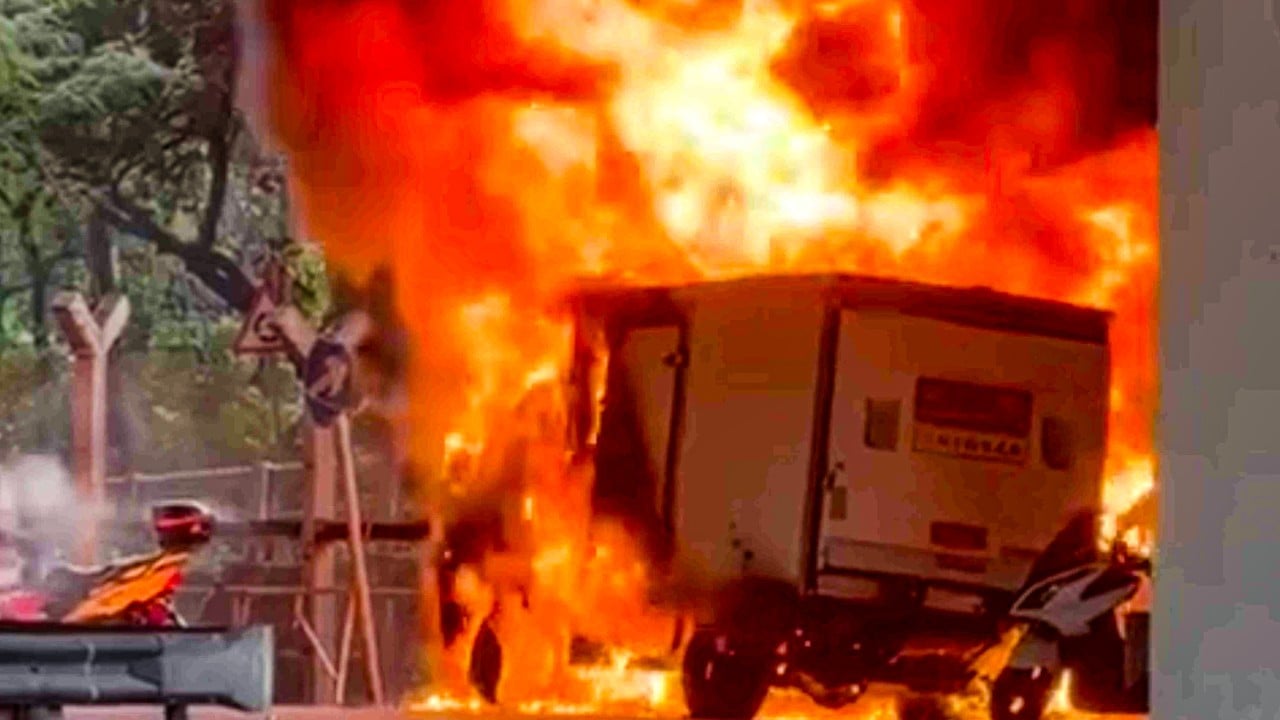
A truck doesn't just turn into a fireball for no reason. When a heavy vehicle goes up in flames on a busy highway, most people see a tragic accident or a mechanical failure. Investigators see something else. They see a potential link to a shadow economy that's been draining billions from the formal sector and putting every driver on the road at risk. The recent surge in vehicle fires involving transport trucks has blown the lid off a sophisticated network of illegal fuel operations that authorities are finally starting to take seriously.
It’s a simple, dirty business. Criminal syndicates siphon fuel from pipelines or hijack tankers, then move the product through "ghost" distribution networks. They use modified trucks—often poorly maintained and structurally unsound—to haul thousands of gallons of highly combustible liquid. When one of these mobile bombs hits a pothole or suffers a brake failure, the result isn't a breakdown. It's an inferno.
The Chemistry of a Mobile Bomb
Illegal fuel isn't just stolen. It’s often "stretched" or adulterated. To increase profit margins, syndicates mix high-grade diesel or gasoline with cheap solvents, kerosene, or even used cooking oil. This changes the chemical properties of the liquid. It lowers the flashpoint. It makes the fuel more volatile.
When you have a truck carrying an unstable, chemically altered substance in a tank that wasn't designed for hazardous materials, you're looking at a disaster waiting to happen. Most of these "black market" tankers lack the baffled compartments required by law. Baffles prevent the liquid from "sloshing" back and forth. Without them, a sudden stop sends a massive wave of kinetic energy forward, often causing the driver to lose control or the tank to rupture.
Then there’s the static. Professional fuel transporters use grounding straps and specialized equipment to bleed off static electricity. Illegal operators don't care about safety protocols. One spark from a frayed wire or a dragging metal chain, and the entire rig disappears in a mushroom cloud.
Following the Money Behind the Smoke
Law enforcement isn't just looking at the charred remains of a chassis. They’re looking at the supply chain. Illegal fuel operations don't exist in a vacuum. They require "wash sites" where the fuel is treated to remove chemical markers added by legitimate companies. They need "blind" gas stations that are willing to sell the product to unsuspecting commuters.
If you’ve ever filled up at a station and noticed your engine knocking or your fuel efficiency plummeting, you might’ve been a victim of this trade. The syndicates undercut legitimate prices by 20% to 30%. That’s a massive incentive for struggling independent stations. But the cost to the public is far higher than the savings at the pump. We’re talking about ruined engines, environmental devastation from spills, and, as we’ve seen lately, horrific accidents on public roads.
Authorities are now using forensic accounting and chemical "fingerprinting" to trace the origin of the fuel found at crash sites. They're finding that these fires aren't isolated incidents. They’re the visible symptoms of a deep-seated organized crime problem that involves everything from money laundering to public corruption.
Why Current Regulations are Failing
The problem is that the law is often three steps behind the syndicates. While high-tech sensors can detect leaks in major pipelines, they can’t track a nondescript box truck carrying IBC totes (Intermediate Bulk Containers) filled with stolen diesel. These "curtain-side" trailers look like they’re hauling furniture or dry goods, but inside, they’re carrying thousands of liters of liquid gold.
Regulatory agencies are overwhelmed. Roadside inspections usually focus on driver logs and tire tread, not the chemical composition of the cargo hidden behind a tarp. To stop the fires, we have to stop the profitability. That means stiffer penalties for the retailers who buy the black-market product, not just the "mules" driving the trucks.
If a truck goes up in flames and the driver vanishes before the fire department arrives—a common occurrence in these cases—it’s a neon sign for illegal activity. Legitimate drivers stay with their rigs. They have insurance. They have manifests. Illegal operators have a burner phone and instructions to run.
What You Should Watch For on the Road
You don't have to be a detective to spot a "hot" truck. There are signs that a vehicle is part of an illegal operation. Often, these trucks will have obscured license plates or company names that look like they were slapped on with a sticker five minutes ago. You might smell a strong, chemical odor that doesn't quite smell like standard diesel.
Most tellingly, look at the suspension. A truck that is carrying thousands of gallons of liquid in a container meant for lighter goods will sit dangerously low. The tires will bulge. The vehicle will struggle to maintain speed on even slight inclines. If you see a rig that looks like it’s struggling under a massive, invisible weight, give it plenty of space.
The Reality of the Risk
The environmental impact is another nightmare. A single tanker fire can dump enough fuel to contaminate local groundwater for decades. The heat from these fires is so intense that it can actually melt the asphalt, requiring weeks of road repairs and causing massive economic shutdowns.
Stopping this isn't just about police work. It's about corporate responsibility. Fuel companies need better tech to secure their pipelines. Tech like "DNA markers" in fuel can help identify stolen batches instantly. But until the demand for cheap, illegal fuel dries up, these trucks will keep rolling. And they’ll keep exploding.
If you suspect a local station is selling adulterated fuel or you see suspicious "trans-loading" happening in a warehouse district—where fuel is being pumped from one unmarked truck to another—report it to the Department of Transportation or local environmental authorities. It’s not just about "snitching" on a tax dodger. It’s about making sure the truck next to you on the highway doesn’t turn into a blowtorch.
Check your vehicle's performance. If your "check engine" light pops on immediately after a fill-up at a questionable station, save your receipt and report the fuel quality. Your car is the best sensor you have. Stay alert, keep your distance from suspicious heavy vehicles, and prioritize safety over a cheap gallon of gas every single time.