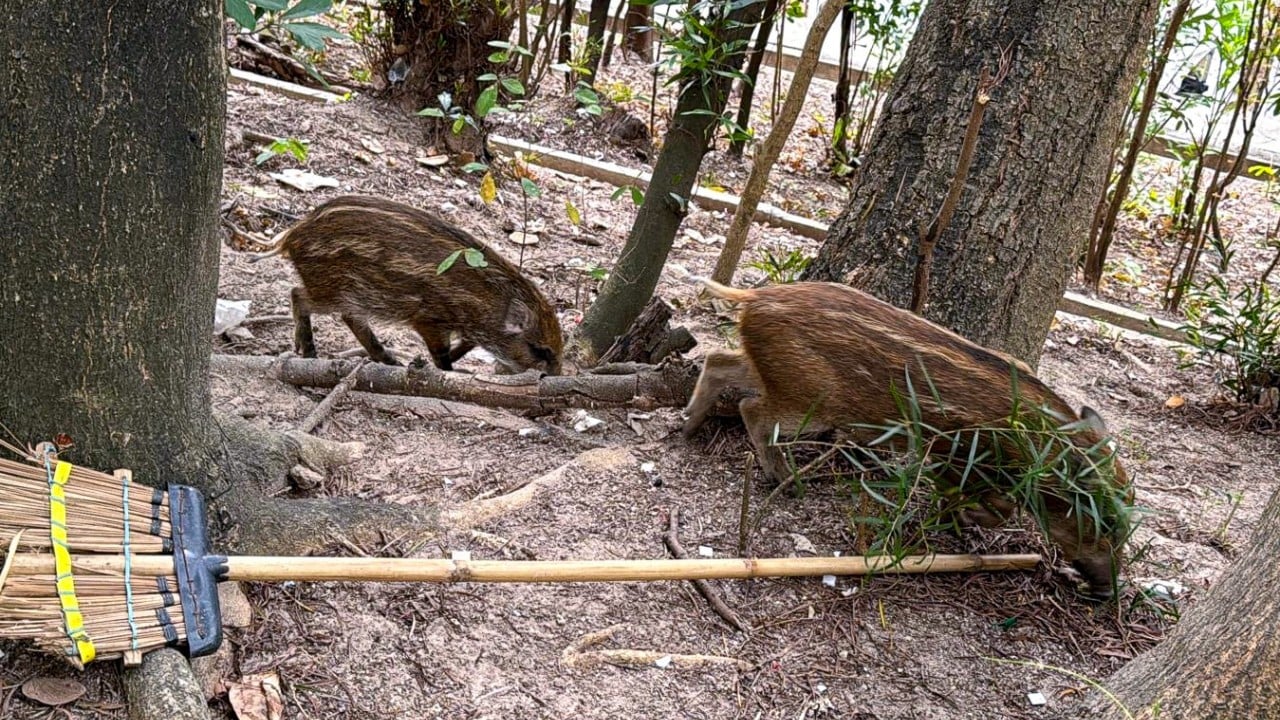
Hong Kong's urban edges are disappearing. What used to be a clear line between the concrete jungle and the actual jungle has blurred into a messy, sometimes dangerous overlap. The latest evidence of this friction played out in the heart of Wong Tai Sin, where authorities recently captured and put down eight wild boars. If you think this is just another routine animal control story, you're missing the bigger picture of how the city’s relationship with wildlife has fundamentally broken down.
The incident near the Lion Rock foothills wasn't a random encounter. Eight boars, ranging in size and age, wandered into a residential pocket of Wong Tai Sin, sparking immediate concern from the Agriculture, Fisheries and Conservation Department (AFCD). By the time the operation ended, all eight were dead. This is the reality of Hong Kong’s "capture and kill" strategy, a policy that remains one of the most polarizing topics in local urban management.
Why Wong Tai Sin became a flashpoint
Wong Tai Sin is a unique spot. It’s densely populated, yet it sits right at the base of the mountains. When boars come down from the slopes, they aren't just looking for a scenic stroll. They're looking for an easy meal. This specific group of eight wasn't shy. They were acclimated to humans, which is the most dangerous state a wild animal can reach.
When a 200-pound boar loses its fear of people, it stops being a "nature sighting" and starts being a public safety hazard. The AFCD’s decision to euthanize the animals on-site or shortly after capture reflects a shift in policy that started back in 2021. Before that, the government tried a "capture and relocate" tactic. It didn't work. The boars just walked back, or they moved the problem to a different neighborhood.
The reality is that once these animals identify a housing estate as a food source, they keep coming back. They've learned that trash cans and, more unfortunately, certain residents are reliable sources of high-calorie snacks. In Wong Tai Sin, the proximity of hiking trails to high-rise apartments makes this transition from forest dweller to urban scavenger incredibly fast.
The feeding problem that everyone ignores
We need to be honest about why eight boars were in a residential area in the first place. It isn't just habitat loss. It's the feeding. Despite heavy fines and constant public service announcements, people still feed these animals. Some do it out of a misplaced sense of "kindness," while others just want a photo for social media.
Feeding changes the biological wiring of a wild boar. They stop foraging for roots and tubers in the hills and start waiting for plastic bags. This behavior leads to aggressive begging. If you've ever walked through a country park with a grocery bag and been shadowed by a boar, you know exactly how intimidating it feels. Now imagine that happening to an elderly resident or a child in a housing estate.
The AFCD has ramped up enforcement, with fines for feeding wildlife reaching up to $100,000 and even potential imprisonment under the Wild Animals Protection Ordinance. Yet, the habit persists. The eight boars killed in Wong Tai Sin are, in many ways, victims of human "generosity" that signed their death warrants the moment the first loaf of bread was tossed their way.
Moving past the capture and kill debate
Every time an operation like the one in Wong Tai Sin happens, the city splits into two camps. One side demands the total removal of boars to ensure safety. The other side calls the culling inhumane and demands a return to sterilization and relocation.
The middle ground is hard to find because the numbers don't lie. Hong Kong sees hundreds of boar-related reports every year. Injuries to the public, while not daily, are often serious when they occur. A boar's tusks and sheer muscle mass can cause devastating trauma.
The current policy focuses on "nuisance" boars—those that repeatedly enter urban areas or show no fear of humans. The eight boars in Wong Tai Sin hit every criteria on that list. They weren't just passing through; they were occupying a human space. For the AFCD, the risk of a physical confrontation in such a crowded district was simply too high to ignore.
Better waste management is the only real fix
If we don't want to see more culling operations in Wong Tai Sin or elsewhere, we have to talk about trash. Standard trash cans are a joke to a hungry boar. They've learned how to tip them, rip them, and scavenge through them with surgical precision.
The government has been rolling out boar-proof bins, which feature weighted bases and specialized openings. They're effective, but they aren't everywhere yet. Until every housing estate bordering the hills has "wildlife-resistant" infrastructure, the boars will keep coming down. It's basic biology.
We also need to look at the landscape. In some areas, clearing thick brush near residential entrances can reduce the cover boars use to creep into estates. It’s about making the urban environment as unattractive to a pig as possible.
What you should do if you encounter a boar
If you live in an area like Wong Tai Sin, Shatin, or Aberdeen, an encounter is almost inevitable. The worst thing you can do is run or scream. That triggers a flight-or-fight response in the animal, and you won't win that fight.
- Keep your distance. Don't try to get a close-up photo. A boar's personal bubble is larger than you think.
- Hide your food. If you’re carrying groceries, keep them out of sight or get indoors quickly.
- Don't corner them. Most attacks happen because the animal feels trapped. Always leave them a clear escape route back to the trees.
- Report the sighting. If the boars are acting aggressively or appearing in high-traffic areas, call the 1823 hotline.
The deaths of the eight boars in Wong Tai Sin are a grim reminder of what happens when urban planning and wildlife management fail to sync up. We can't keep acting surprised when forest animals show up on our doorsteps if we're essentially inviting them to dinner with poor waste habits and illegal feeding.
Check your building’s waste disposal area today. If the bins are overflowing or easily tipped, talk to your property management about installing boar-proof versions. It’s a small step that actually saves lives—both human and animal.