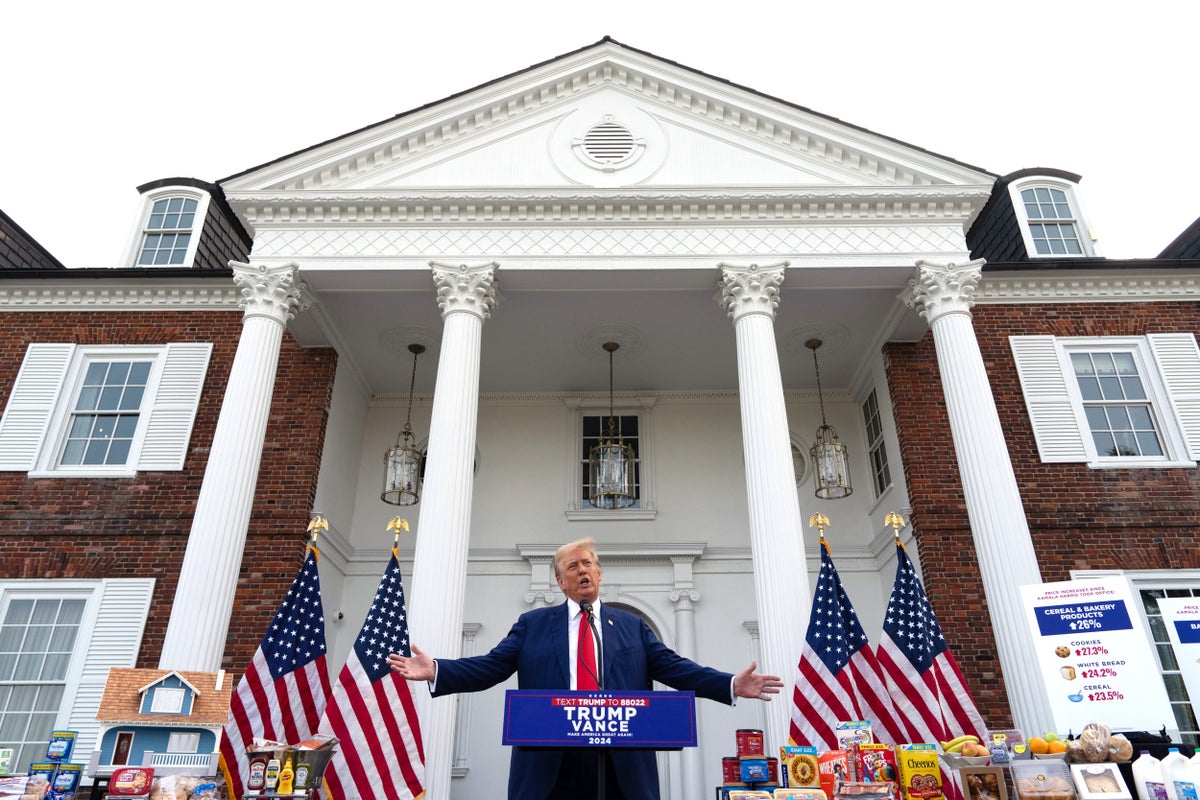
The media elite love a neat narrative. Feed them a striking visual—say, a candidate pumping a fist against a backdrop of smoke and sirens—and they immediately map out its expiration date. The conventional wisdom on viral campaign moments follows a predictable script: initial shock, maximal monetization, and then a slow, agonizing decay as the public grows weary. Analysts love to claim that hyper-charged imagery inevitably backfires, turning into a political anchor that drags down future legislative and electoral ambitions.
It is a comfortable theory. It is also entirely delusional.
I have watched strategists blow millions trying to engineer moments of raw authenticity, only to miss the mechanics of how modern attention actually operates. When commentators argue that iconic visual stunts come back to haunt parties down ballot, they fundamentally misunderstand the currency of modern discourse. They think politics operates on a ledger of balanced decorum. It does not. It operates on emotional resonance and tribal fortification.
To understand why the mainstream consensus misses the mark, we need to look at how information consumption has fractured. The lazy critique assumes that a polarizing visual repels the vital middle. But the middle, in a hyper-polarized electorate, is largely a ghost town. Elections are decided by intensity, not persuasion. When a campaign freezes a high-stakes, violent millisecond into a permanent brand asset, it stops being a mere photo op. It becomes an organizational totem.
Consider the mechanics of modern political branding. Outlets like The Associated Press document these flashpoints, but the real distribution happens organically through decentralized networks where nuance goes to die and symbols reign supreme. Critics look at a contentious image and see a liability because they measure it through institutional standards of propriety. That is a fatal analytical error.
Let us define the core misunderstanding: institutionalists confuse temporary institutional friction with permanent electoral toxicity. When a campaign event sparks controversy—whether on a campaign stage or at a solemn national landmark like those covered by outlets tracking The Guardian—the establishment treats it as a fatal miscalculation. They predict immediate alienation. Yet, empirical reality consistently shows that base voters view institutional outrage as confirmation of their candidate's outsider status. The very backlash that pundits predict will sink a coalition often acts as industrial-strength cement.
Imagine a scenario where a political brand operates entirely by traditional PR rules. Every misstep is apologized for; every controversial frame is scrubbed. That brand dies a quiet, bloodless death in an attention economy that rewards volume and defiance. The alternative approach—leaning directly into the friction—turns headwinds into propulsion.
This brings us to the lazy questions floating around media panels. People ask whether a single afternoon of high-stakes theater can poison an entire legislative cycle for down-ballot candidates. The premise is flawed. Down-ballot candidates do not sink because of an iconic image; they sink because they fail to capture the energy of the top-of-ticket gravity well. In modern American politics, candidates are not separate entities from their movement's central sun; they are moons locked in its orbit. If the sun generates immense gravity, the moons stay aloft, regardless of the atmospheric turbulence.
The data from recent election cycles proves that institutional scolding has zero conversion power over hardened partisan alignments. When legacy publications report on the fallout of aggressive campaign optics, they project their own institutional horror onto an electorate that has entirely checked out of institutional trust. You cannot punish a political figure with reputational damage when their entire support system views the reputation-makers as hostile actors.
We must stop treating politics as a polite debate club where a breach of etiquette results in disqualification. It is a street fight waged through screens. The side that masters the visual lexicon wins, even if the cultural establishment rolls its eyes. Analysts who predict doom based on standard political science models are using a map of a city that burned down ten years ago.
Stop looking for the penalty box. In the current political arena, the rules are written by those who break them best.


