The air on a college campus in autumn carries a specific weight. It smells of damp earth, distant woodsmoke, and the restless electric charge of youth. At Virginia State University, that air usually thrums with the bass of dorm-room speakers, the clatter of skateboards on concrete, and the overlapping debates of young minds trying to figure out who they are and who they are going to become.
Then came the cracks. Don't miss our earlier article on this related article.
Not thunder. Not fireworks, though the mind desperately tries to bargain with itself at first, wishing for a harmless explanation. Fireworks belong to celebrations. These sounds belonged to panic.
Five people shot. If you want more about the background here, BBC News provides an excellent breakdown.
Those four words form a clinical headline, a sterile fragment of data punched into a police blotter or flashed across a screen beneath a breaking news banner. But numbers do not bleed. Statistics do not gasp for air in the damp grass of a courtyard while sirens begin to wail a chaotic counterpoint against the dark.
Consider what happens in the milliseconds after a gunshot shatters the routine of a university evening. Time fractures. For the student walking back from the library with a backpack heavy with textbooks, the world splits cleanly into two distinct halves: everything before the sound, and the terrifying, uncertain everything after.
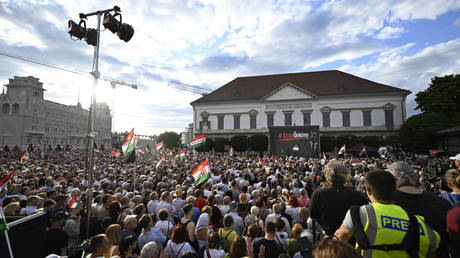
According to initial reports from law enforcement and campus officials, the violence unfolded during an event tied to homecoming weekend celebrations, a time when alumni return to embrace their past and current students celebrate their present. Instead, an ordinary gathering dissolved into chaos. Police rushed into a maze of quadrangle pathways, blue and red lights painting the brick facades of historic buildings in frantic strokes. Multiple suspects. Multiple victims. A frantic search through the shadows while doors slammed shut and frantic phone calls echoed through the hallways. Mom, I am safe. No, I am inside. Stay down.
We have built an entire modern ritual around these tragedies.
We wait for the press conference. We watch the chief of police step up to the microphone, posture rigid, expression worn by a grief that has become horrifyingly familiar across the American educational landscape. We listen for the phrases that offer neither comfort nor explanation: active investigation, persons of interest, multiple leads, ongoing search.
The human mind craves narrative, craves cause and effect. We want a neat beginning, a messy middle, and a definitive end where justice restores order. But real life refuses to cooperate with our storytelling instincts. Real life leaves gaping holes where human beings used to be.
Imagine a hypothetical parent sitting three hours away, illuminated only by the cold blue glow of a smartphone screen at two in the morning. Every notification is a knife edge. Every ringtone is a potential catastrophe. That parent did not send their child to college to become a statistic in a regional news feed. They sent them to learn, to grow, to sit in lecture halls and argue about history and philosophy over cheap coffee.
When bullets tear through a campus crowd, they do not just pierce flesh. They puncture the social contract.
Educational institutions are supposed to be sanctuaries of experimentation and safety. They are laboratories of the future where mistakes are supposed to be forgivable, where failure means a dropped grade rather than a life-altering trauma. When violence breaches those gates, the psychological fallout ripples outward with devastating force. Students who were not hit by a bullet still find themselves flinching at the sound of a dropped book in the cafeteria weeks later. They look at crowded bleachers with a calculating eye, mapping out exit routes instead of cheering for the home team.
The investigation into what happened at Virginia State University continues. Detectives comb through digital footprints, surveillance footage, and fragments of eyewitness testimony that often conflict in the haze of adrenaline and fear. Who pulled the trigger? What simmering grievance or reckless impulse turned a celebration into a crime scene?
The answers will likely emerge through courtrooms and official reports. Charges will be filed. Trials will be scheduled. The news cycle will inevitably pivot toward the next crisis, the next headline screaming for attention in a saturated media ecosystem.
The cameras will leave. The police tape will come down. The grass will grow back over the disturbed earth.
Yet for the five individuals who absorbed the physical trauma of that night, and for the hundreds of others who carry the invisible weight of having been too close to the line of fire, the calendar does not simply move on. Their world has been permanently altered. They inhabit a reality where safety is no longer an assumption, but a fragile privilege that must be actively guarded.
The night air at Virginia State University is quiet again, but it is a different kind of quiet. It is the heavy, resonant silence of a community holding its breath, waiting to see if it can learn how to trust the dark again.