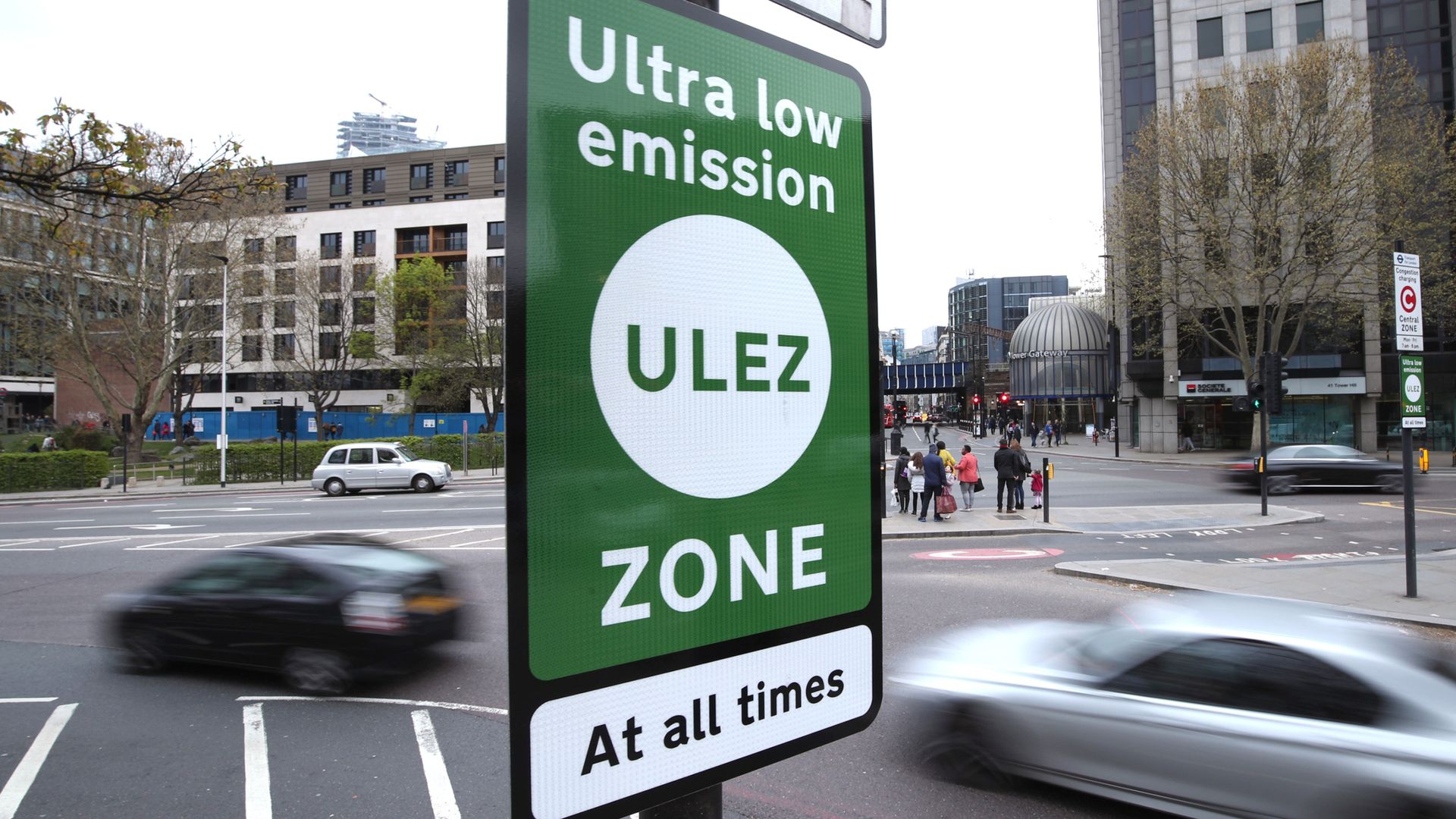
The media is popping champagne over a new Lancet-backed study claiming London's Ultra Low Emission Zone turned local kids into Olympic athletes with superhuman lung capacity. The lazy consensus parroted across every newsroom is simple: tax older cars, banish combustion engines from the M25, and watch pediatric respiratory tracts magically expand.
It is a neat, emotionally manipulative narrative. It is also a statistical mirage that ignores how modern cities actually function, how real epidemiological confounding works, and why politicians love weaponizing children to mask regressive tax policies.
I have watched policy wonks blow millions on urban zoning models that look immaculate on a whiteboard and completely disintegrate on contact with reality. Let us dismantle the clean-air fairy tale using actual data, inconvenient control groups, and basic common sense.
The Control Group Fallacy
The study in question—the CHILL cohort tracking children in London against Luton—wants you to believe that a neat boundary line drawn by City Hall is the single variable dictating childhood physiology.
Imagine a scenario where two parallel universes exist. In Universe A, a city installs an automated camera network to fine drivers of pre-2015 diesel hatchbacks. In Universe B, it does not. The researchers found that London children experienced an acceleration in lung function growth matching Luton kids after the zone launched.
Here is what they conveniently gloss over: the entire study period collided with the global pandemic. Lockdowns, remote learning, structural shifts in commuter traffic, and the complete evisceration of central business district congestion occurred simultaneously across the UK. To isolate an administrative road-pricing scheme as the sole engine of biological recovery while ignoring the largest forced behavioral and industrial shutdown in modern history is either staggering incompetence or deliberate narrative engineering.
As biostatisticians like Cambridge's Stephen Burgess have quietly noted, attributing these shifts strictly to the zone rather than sweeping macro-disruptions or general fleet turnover is a massive methodological leap. Fleet turnover happens everywhere organically. Car manufacturers stop building dirty engines because technology moves forward, not simply because a mayor erects a warning sign on the North Circular.
The Flawed Premise of Urban Air Management
Let us address the core question driving public discourse: does traffic restriction improve urban health metrics?
The brutally honest answer is yes, lower particulate matter helps. But pretending that slapping a daily charge on a delivery driver in a ten-year-old Transit van is the apex solution to urban morbidity is a bad joke. It substitutes economic punishment for structural engineering.
If you genuinely want to clean urban air, road charging is a blunt financial instrument that disproportionately penalizes working-class tradespeople who cannot afford a brand-new electric vehicle. It treats pollution like a moral failing of the car owner rather than an infrastructure design flaw.
True public health interventions do not rely on pricing out the poor. They overhaul public transport networks, mandate hyper-efficient industrial filtration, and rethink heavy freight logistics. When you use traffic schemes primarily as revenue generators or political trophies, you miss the forest for the exhaust pipes.
The Unspoken Trade-Offs
Every intervention has a shadow. Proponents of these zones refuse to admit the severe downstream economic and psychological costs inflicted on families. When you price essential service vehicles off the road, the cost of plumbing, electrical work, and local delivery skyrockets. Small businesses absorb the blow, passing expenses onto the exact households whose children you are supposedly saving.
Furthermore, shifting traffic patterns often creates the displacement effect. Pollution does not magically vanish; it gets squeezed onto boundary roads and secondary arteries just outside the charging zone perimeter. You haven't solved the emissions problem; you've simply played geographic whack-a-mole with local exhaust concentrations, exposing children in adjacent neighborhoods to worse localized gridlock.
Stop looking for silver bullets in municipal traffic cameras. Real urban health comes from electrification driven by market maturation, massive investments in rapid transit, and a refusal to use children as emotional shields for bureaucratic tax grabs.
Check the data. Question the models. Stop buying the press releases.