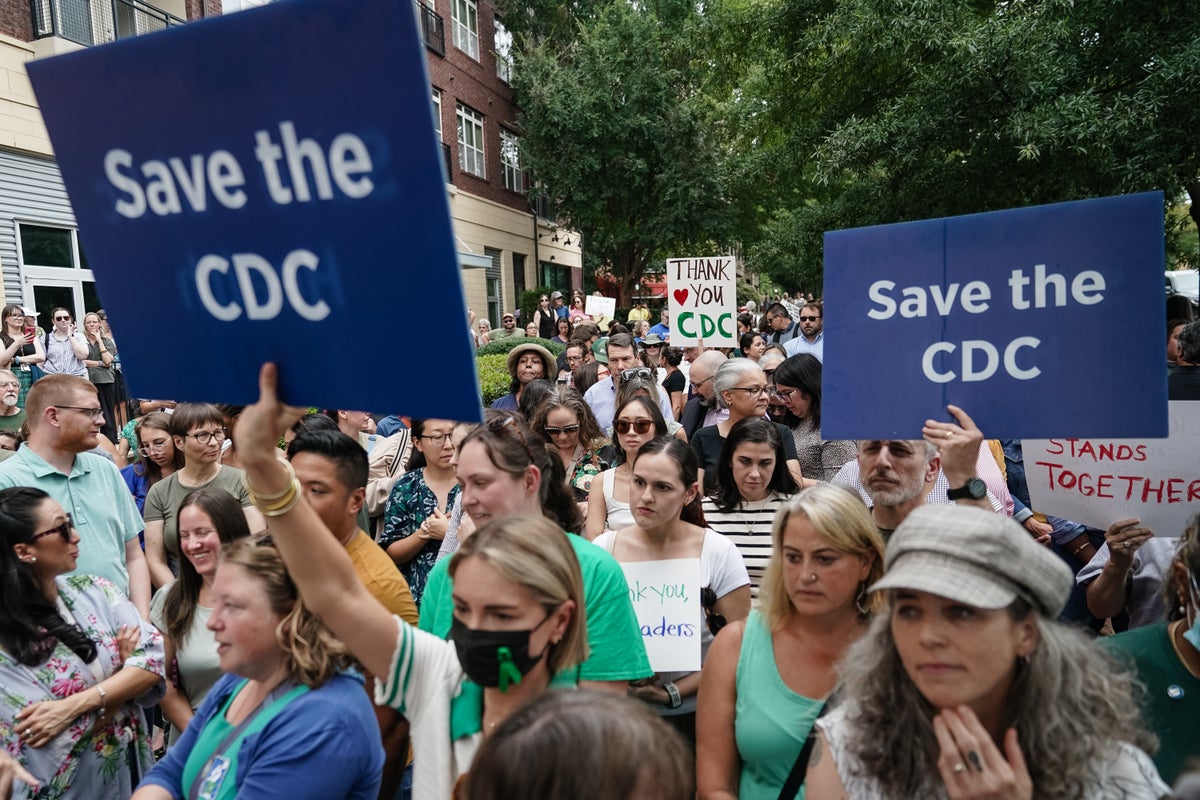
The Centers for Disease Control and Prevention is currently facing a profound internal reckoning. The agency finds itself attempting to regain its footing after the aggressive budget interventions spearheaded by the Department of Government Efficiency, or DOGE, essentially froze or shuttered dozens of public health initiatives. New leadership at the agency is under immense pressure to identify which of these dormant programs are truly defunct and which are essential shields against future biological threats.
This is not a simple bureaucratic cleanup operation. The reality is that the agency is currently operating with a damaged central nervous system. When DOGE initiated its sweeping cuts, the primary mechanism was not always a surgical elimination of wasteful spending. Instead, it frequently relied on a blunt-force approach to funding freezes. This stalled high-impact research, surveillance networks, and outreach efforts that were already mid-stream.
Consider the situation of regional pathogen surveillance programs. Imagine a hypothetical scenario where an agency has a network of labs monitoring wastewater for early indicators of influenza or novel respiratory viruses. If that funding is abruptly cut, the equipment does not just disappear, but the talent pool disperses. Specialists find work in private industry, laboratory contracts expire, and the historical data stream experiences a hard stop. Restarting these operations is not merely a matter of signing a check; it requires rebuilding the human capital and re-establishing the logistical web that took years to cultivate.
The core challenge for current leadership lies in determining the cost of inaction. A zombie program is defined by the agency as an initiative that remains on the books as an authorized entity but lacks the fiscal fuel to actually execute its mission. These programs occupy space in the federal ledger, creating an illusion of preparedness while providing zero functional protection.
DOGE proponents argue that these programs represent bloat, arguing that if an initiative can be cut without immediate, catastrophic failure, it was not necessary to begin with. This perspective fails to account for the nature of preventative public health. It is an industry predicated on being invisible when things go right. When a surveillance program catches a localized outbreak before it spreads, the success is a non-event. Politicians rarely celebrate the pandemic that never occurred. This makes preventative infrastructure a perennial target during budget austerity measures.
The agency is now conducting a comprehensive audit of every program impacted by the recent cycle of austerity. This process is grueling. It requires bureaucrats to defend the relevance of projects that have been sidelined for months or even years. Some of these programs are undoubtedly legacy efforts that have outlived their utility. They were created to address specific health challenges from a different era, and their continued existence is indeed an argument for modernization. However, other programs were quietly integrated into the bedrock of American pandemic response.
The tension within the agency is palpable. Career scientists and administrators are forced to navigate a landscape where every request for funding restoration is scrutinized as potential fiscal irresponsibility. They must provide data-driven evidence that a specific initiative will yield a tangible return, even when the return is measured in saved lives rather than immediate tax revenue.
The fallout from these cuts has extended beyond the walls of the agency. State and local health departments, which often rely on federal grant structures to sustain their own specialized response teams, have been left in a lurch. If the federal backbone is weak, the local extremities are paralyzed. Many municipalities have been forced to reallocate their own limited resources to cover for gaps left by the sudden evaporation of federal support. This has exacerbated regional disparities in health security, where wealthy jurisdictions can afford to backfill the gaps while rural or lower-income areas are left exposed.
This dynamic creates a dangerous cycle. As local capacity drops, the demand for federal assistance during a crisis will rise, yet the federal apparatus is currently designed to provide less, not more.
The debate over these programs is also exposing a divide in how the federal government views its role in health security. There is an increasing push to shift away from long-term, broad-spectrum investment toward localized, immediate-action funding. The problem with this shift is that pathogens do not respect the fiscal cycles of a legislature. A pandemic does not wait for a budget appropriation to be signed, nor does it pause while an agency conducts an internal review of its own relevance.
Furthermore, the personnel flight from the agency has been significant. When programs are cut, the expertise that drove them does not remain static. Highly specialized epidemiologists, data analysts, and logistical experts have moved toward private biotech firms or philanthropic organizations that offer more stability. The agency is now facing a recruitment hurdle that goes beyond money. It is struggling to restore its reputation as a reliable, long-term employer for the nation’s top scientific talent. If the prevailing message to potential employees is that their work can be dissolved at the whim of a political budget committee, the brightest minds will continue to look elsewhere.
Restoring the agency will require a level of transparency that has historically been lacking. Leadership must be willing to admit which programs were indeed redundant and move to kill them decisively. This provides the political capital needed to save the initiatives that are vital. The agency needs to perform a radical pruning, not just a haphazard trimming.
The public should expect this audit to lead to a more streamlined, but potentially more vulnerable, agency. If the goal of the DOGE-led cuts was to eliminate waste, it has succeeded in forcing the agency to justify its existence at every level. The danger is that in the process of eliminating the fat, the agency has already nicked the artery.
The next phase of this struggle will happen in the appropriations committees. This is where the theoretical budget-cutting meets the brutal reality of national health security. If the data from the internal audit is ignored, the agency will remain a hollowed-out institution. If the data is used to justify a genuine restoration of essential functions, it might regain its purpose.
The reality is that we are currently operating in a state of high-stakes improvisation. The infrastructure that keeps the nation informed about emerging threats is functioning at a fraction of its capacity. We are essentially flying the plane while the maintenance crew is still arguing over whether the wings are necessary or just an unnecessary expense. The cost of a system failure will not be measured in the millions of dollars the agency is trying to restore, but in the exponential damage of a health crisis that goes undetected until it is far too late to contain.
The agency will either emerge from this cycle of austerity as a lean, agile, and effective guardian of public health, or it will become a shell, waiting for the next catastrophe to reveal just how much was lost in the name of fiscal efficiency. The decision is no longer about the programs themselves, but about the fundamental value placed on collective safety.