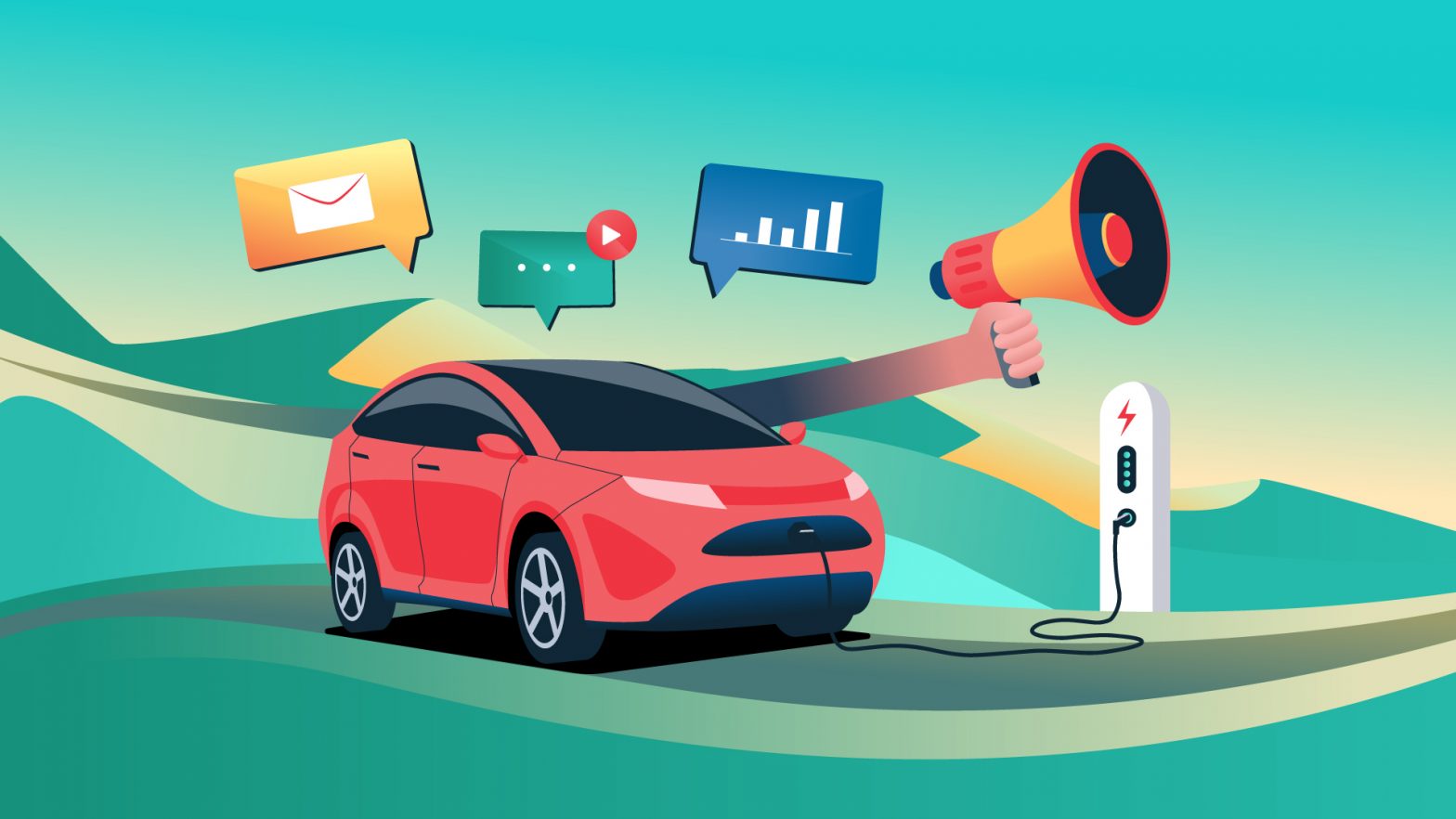
Stop staring at the digital sign above the gas station. It is a blinking monument to your own cognitive bias. Every time a regional conflict erupts and the price of a gallon of 87-octane jumps fifty cents, the same tired narrative resurfaces. The "experts" crawl out of the woodwork to tell you that the era of the internal combustion engine is over and that your only salvation lies in a 6,000-pound battery on wheels.
They are lying to you. Not because EVs are "bad," but because they are selling you a lateral move disguised as a revolution.
The competitor's take is lazy. It frames the debate as a simple math problem: $4.50 per gallon vs. $0.14 per kilowatt-hour. That isn't an analysis; it's a brochure. If you are switching to an EV because you’re scared of a war in a country you can’t find on a map, you aren't "going green." You are just swapping one volatile master for another.
The Energy Independence Myth
The most pervasive lie in the current automotive discourse is that electricity equals independence. It doesn't. When you fill up a gas tank, you are engaging with a global commodity market that is, for all its flaws, incredibly liquid and physically decentralized. Gasoline is energy density in a can. You can store it in your garage. You can transport it in a plastic jug.
Electricity is a real-time service. You don't "own" the power in your EV any more than you own the water in your pipes. You are tethered to a centralized, aging, and increasingly fragile bureaucratic machine. In the United States, the electrical grid is a patchwork of mid-20th-century tech trying to handle a 21st-century load.
I’ve spent fifteen years watching energy markets fluctuate. I’ve seen fleets pivot to electric only to realize their "fuel" costs are now at the mercy of a local utility commission that can hike rates by 20% on a Tuesday because of a wildfire risk or a botched nuclear decommissioning. When gas prices spike, you can drive less or find a cheaper station. When utility rates spike, you pay or you sit in the dark.
The Lithium Trap is the New Oil Well
The "war spikes gas prices" crowd loves to ignore the supply chain of the "solution." We are told that moving away from oil reduces our dependence on hostile regimes. This is a fundamental misunderstanding of geology.
While we are frantically trying to wean ourselves off the OPEC teat, we are sprinting headlong into a total reliance on a lithium and cobalt supply chain that is significantly more consolidated and ethically compromised than the oil market.
- Refining Dominance: One single country controls over 80% of the world’s lithium refining capacity.
- Scarcity Economics: You can drill for more oil. You can’t just "manifest" more high-grade nickel.
- The Capex Cliff: Replacing a $40,000 internal combustion car with a $65,000 EV because gas went up $1.00 is a financial tragedy. You would have to drive over 150,000 miles just to break even on the price premium, assuming your residential electricity rates stay flat—which they won't.
If you want to talk about "wars," talk about the inevitable trade wars over battery minerals. The volatility isn't going away; it's just moving from the pump to the sticker price.
Efficiency is a Scam Without Infrastructure
We need to talk about the Second Law of Thermodynamics. Standard internal combustion engines are roughly 30% to 35% efficient. EVs are often cited as being over 85% efficient. This is a classic "technically true but practically misleading" stat.
That 85% figure only counts the energy inside the car. It ignores the massive transmission losses from the power plant to your house. It ignores the energy lost to heat during fast charging. Most importantly, it ignores the "carbon debt" of manufacturing a battery that weighs as much as a 1990s Honda Civic.
If you live in a state where the "green" grid is actually just a collection of coal-fired plants with a PR department, your EV is a coal-powered car with extra steps. You aren't disrupting the system. You are just adding a layer of abstraction to your carbon footprint.
Why You’re Asking the Wrong Question
The "People Also Ask" section of your brain is likely stuck on: "When will EVs be cheaper than gas cars?"
That is the wrong question. The right question is: "Why am I obsessed with a personal vehicle as my primary mode of survival?"
The industry wants you to believe that the solution to a global energy crisis is for 300 million people to buy a new, expensive gadget. It’s a brilliant marketing ploy. They took a genuine anxiety about war and inflation and used it to trigger a mass upgrade cycle.
Real contrarian advice? If you want to beat gas prices, stop trying to find a better way to move two tons of metal to get a gallon of milk.
- The E-Bike Loophole: An e-bike is 50 times more efficient than an electric car. It doesn't require a $10,000 home charging installation. It bypasses the entire "war for oil" and "war for lithium" narrative because the battery is the size of a loaf of bread.
- The Used Market arbitrage: While everyone is panicking and overpaying for Teslas, the market for highly efficient, used hybrids is being ignored. A ten-year-old Prius at 50 MPG is a better financial hedge against war than a brand-new EV with a $900 monthly payment.
- Energy Sovereignty: If you aren't installing solar panels with a physical disconnect from the grid, you aren't "independent." You're just a different kind of customer.
The Brutal Reality of the "Green" Transition
Let’s be honest about the downsides. I’m not here to tell you that gas is the future. Gas is a dead end. But the current EV transition is a managed retreat, not a victory march.
The charging infrastructure in the "flyover states" is a joke. I’ve seen people stranded at "Level 3" chargers that were putting out less power than a toaster because the local transformer couldn't handle the heat. The industry ignores these "battle scars" because they ruin the aesthetic of the sleek, silent future.
We are currently in the "Goldilocks Zone" of EV ownership. The early adopters have home garages and high incomes. As we push into the mass market—the renters, the street parkers, the people living paycheck to paycheck—the EV dream falls apart. You cannot "go electric" if you can't plug in at night. The competitor's article assumes everyone has a suburban driveway. They don't.
The Final Calculation
Gas prices will go down. Then they will go up again. A dictator will sneeze, a pipeline will leak, or a hedge fund will go long on Brent Crude, and you will feel the pinch.
But buying an EV to "save money" on gas is like buying a yacht to save money on plane tickets. It only works if you ignore the capital expenditure, the depreciation, and the fact that you are now beholden to a lithium cartel instead of an oil cartel.
Stop being a reactive consumer. The goal isn't to change how you fuel your car; the goal is to reduce the power that any single commodity has over your life.
If you want to win the energy war, stop playing the game on their terms. Sell the gas guzzler. Don't buy the $70,000 "savior" EV. Buy a used hybrid, get an e-bike, and put the rest of the money into a localized solar array.
Stop looking at the gas pump. It's a mirror reflecting your own fear. Break the mirror.
Build a life that doesn't care what the price of oil is.