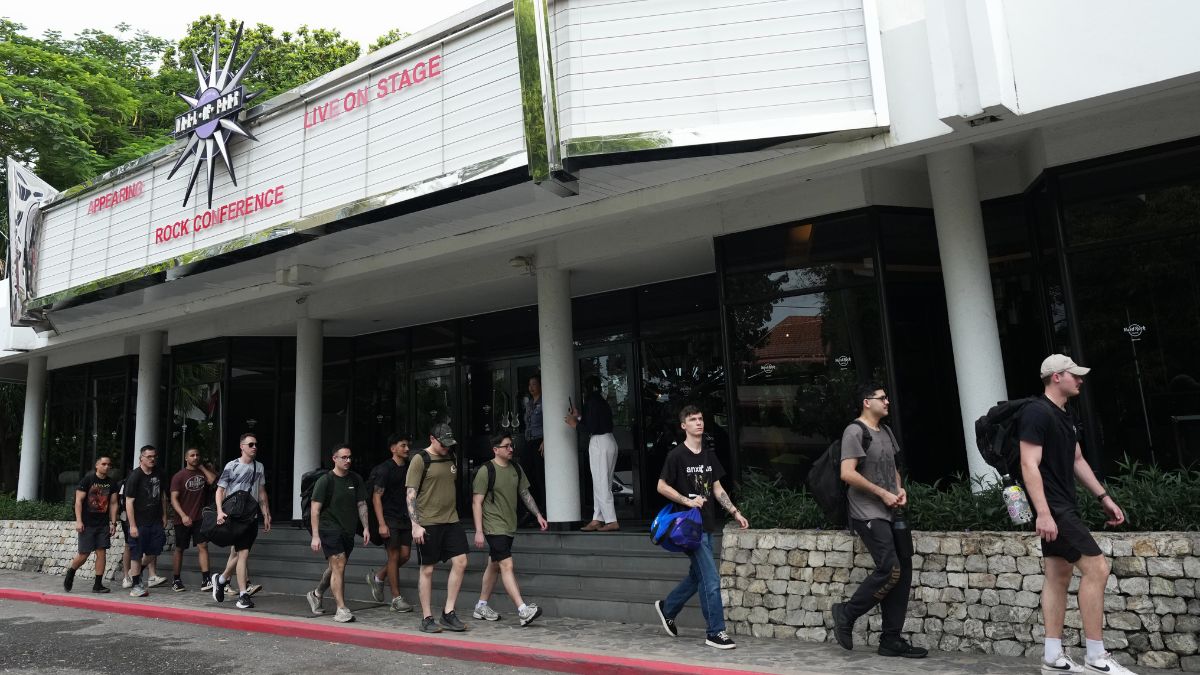
The arrival of five thousand military personnel from the USS Abraham Lincoln into the port of Laem Chabang for shore leave in Pattaya exposes the friction points between localized service economies and rigid municipal enforcement. Following an extended deployment exceeding two hundred days at sea, this large-scale influx triggers immediate economic injections alongside administrative defensive measures. Understanding the dynamics of this port call requires analyzing the structural relationship between municipal revenue optimization, law enforcement resource allocation, and historical patterns of military rest and recreation.
The Economic Multiplier of Extended Deployments
When a nuclear-powered aircraft carrier group pauses operations for rest and recuperation, the primary variable for the host municipality is velocity of capital. Municipal projections estimate individual daily expenditures ranging from one thousand to three thousand Thai baht per service member, creating a potential multi-million-dollar liquidity injection during a traditionally slow seasonal window.
This localized economic surge operates through a distinct expenditure cascade:
- Direct Hospitality Revenue: Funds allocated toward lodging, food and beverage services, and ground transport logistics.
- Secondary Entertainment Spending: Capital absorbed by commercial nightlife sectors, retail outlets, and recreation providers.
- Municipal Tax Yield: Short-term spikes in value-added transaction taxes and local business licensing revenue.
The historical precedent established during the Vietnam era transformed Pattaya from a minor fishing community into an international entertainment hub precisely through this mechanism. The modern port call reactivates these dormant supply chains, forcing local commercial networks to scale instantly to absorb high-density demand.
Regulatory Friction and Enforcement Asymmetry
The simultaneous occurrence of preemptive police raids—resulting in dozens of arrests for alleged solicitation—alongside official mayoral welcomes highlights a structural policy contradiction. While Thai statutory law explicitly prohibits prostitution, the informal economy relies heavily on high-density tourism for survival.
Municipal authorities manage this contradiction through spatial restriction and administrative signaling rather than total eradication. By designating specific nightlife corridors such as Soi 6 as off-limits to visiting crew members after dark, command structures and local police establish operational boundaries. This compartmentalization attempts to satisfy diplomatic accountability while containing legal liabilities.
The second limitation lies in enforcement resource constraints. Police departments face acute capacity bottlenecks when monitoring decentralized solicitation networks. Because informal operators easily bypass static checkpoints by shifting into mobile or digital solicitation channels, traditional street-level sweeps yield symbolic rather than systemic deterrence.
Operational Risk Mitigation for Large-Scale Shore Leave
Managing five thousand personnel emerging from high-stress combat deployments requires coordinated logistical protocols. Military leadership and municipal planners utilize staggered release schedules to prevent infrastructure saturation and minimize public friction.
Logistical control measures implemented during the Pattaya port call include:
- Staggered Transit Windows: Deploying dedicated bus fleets in controlled waves from the terminal at Laem Chabang to regional hubs.
- Behavioral Proscriptions: Enforcing strict boundaries regarding high-risk recreational activities and restricted commercial zones.
- Command Oversight: Maintaining visible shore patrol integration to preempt disciplinary infractions before they escalate into municipal liabilities.
These controls serve as a structural buffer between the intense operational fatigue of the vessel's crew and the sensitive legal environment of the host nation.
Execute command-level reviews of port-call logistics by aligning liberty risk assessments directly with municipal enforcement maps, ensuring personnel distribution targets low-risk commercial zones while bypassing restricted sectors entirely.


