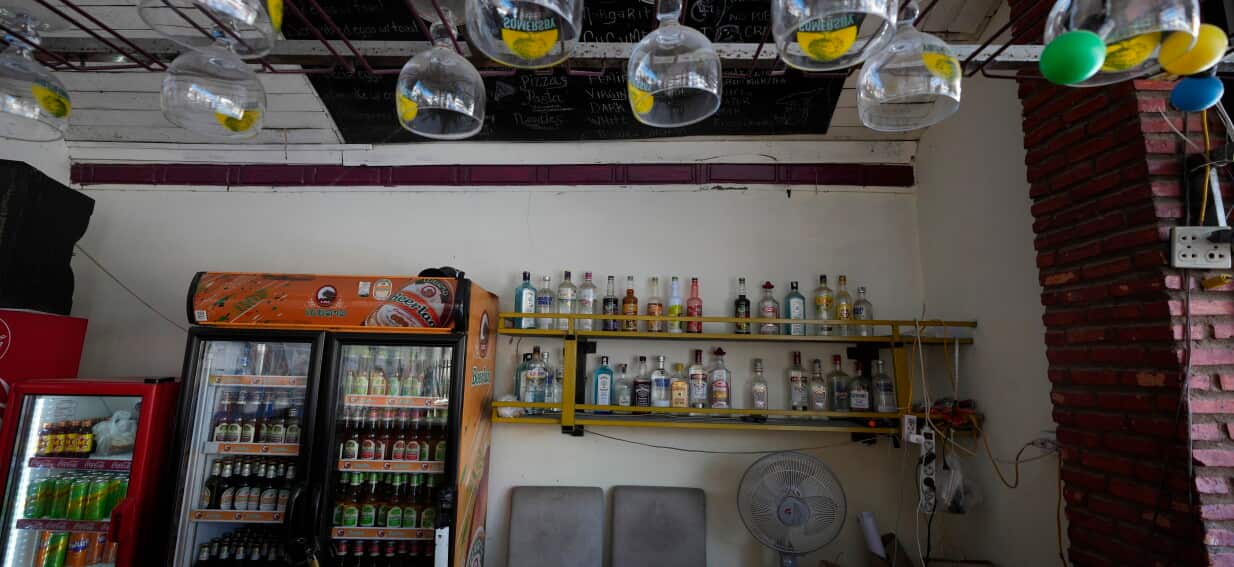
The night begins with a promise of cheap euphoria. In the riverside town of Vang Vieng, a place where jagged limestone karsts cast long shadows over the Nam Song River, the air smells of humidity, woodsmoke, and sweet, burning fuel. For decades, this pocket of Laos has acted as a rite of passage for young backpackers. They arrive with heavy packs and light hearts, looking for a story to tell when they get home.
They cluster in dimly lit hostels and open-air bars, pouring local spirits from bottles bearing vibrant, exotic labels. The liquid inside looks like standard vodka. It smells like it. It burns the throat just the same.
But sometimes, a different chemical hides inside the glass.
Methanol.
It is the simplest alcohol, a common industrial solvent used in antifreeze and paint thinners. To the naked eye, it is indistinguishable from ethanol, the substance that brings a harmless buzz. Yet, inside the human body, methanol undergoes a monstrous transformation. The liver processes it into formaldehyde, which quickly degrades into formic acid. This acid attacks the cellular powerhouses, starving the body of oxygen from the inside out. The optic nerve is the first to fail. Light fades to grey, then to pitch black. If the dose is large enough, organs shut down in rapid succession.
In late 2024, this invisible predator struck a tight-knit community of travelers in Vang Vieng. Six young people—including Australian teenagers Bianca Jones and Holly Morton-Bowles, alongside Danish, British, and American nationals—never made it to their next destination. They went out for a night of celebratory drinks and ended up in intensive care units, their bodies fighting a losing battle against a poison they never knew they drank. Blood tests from Thai hospitals and investigations by foreign embassies confirmed the presence of methanol. A local health facility even discovered lethal levels of the chemical inside bottles of a local spirit brand called Tiger Vodka.
Yet, a bureaucratic wall has quietly dropped over the tragedy.
Laotian authorities announced that they cannot legally or scientifically prove that methanol caused the six deaths. The reason given is a clinical catch-22. Because the grieving families refused to allow local authorities to perform autopsies on the bodies of their children, the state claims it lacks the definitive forensic architecture to tie the deaths to the tainted liquor.
Consider the reality facing a parent flying into a foreign country to collect the body of their child. They are met with unfamiliar legal frameworks, a language barrier, and a crushing weight of grief. The instinct to protect the physical remains of a loved one, to bring them home intact without delay, is a deeply human impulse. But in this instance, that protective instinct collided with a rigid legal system. Without those specific surgical examinations performed on local soil, the official narrative fractures. The state can acknowledge the poison in the bottles, and it can acknowledge the bodies in the morgue, but it refuses to draw the line connecting them.
This forensic impasse has sparked fierce international outrage. The legal proceedings initiated by Laotian prosecutors avoid the language of manslaughter or corporate negligence resulting in death. Instead, the owner of the Tiger distillery faces charges of manufacturing or selling products hazardous to health and operating an illegal commercial venture.
Worse still, the owner and ten employees of the hostel where several victims stayed face charges centered on the destruction of evidence. They allegedly moved a dying American tourist’s body to the hospital, an act that authorities claim disrupted the scene of the investigation. If convicted under these specific statutes, those responsible face a maximum of just four years in prison.
The response from foreign governments has been swift and scalding. Australian Foreign Minister Penny Wong expressed deep frustration and bitter disappointment, noting that the charges fail to reflect the gravity of the tragedy. Travel advisories for the region have been upgraded to reflect a grim dual reality. Travelers are now warned not to just watch their drinks, but to exercise extreme caution regarding a legal system that may not provide transparency or justice.
The tragedy exposes a deeper, systemic vulnerability inherent in global budget tourism. In unregulated markets, the temptation to substitute expensive, heavily taxed ethanol with cheap, industrial methanol is a persistent economic crime. It is a game of Russian roulette played by bootleggers looking to widen their profit margins by pennies per bottle. The local population suffers from this far more frequently than the international headlines suggest, dying in quiet numbers away from the cameras of global news syndicates.
The neon signs of Vang Vieng still flicker against the dark Lao hills. The bars still offer free shots to entice travelers through their doors. But the true cost of those drinks is no longer listed on the menu. It is carried in the quiet spaces left behind by six travelers who went looking for adventure, and it remains written in the unresolved ledger of a justice system that chose a loophole over a definitive verdict.


