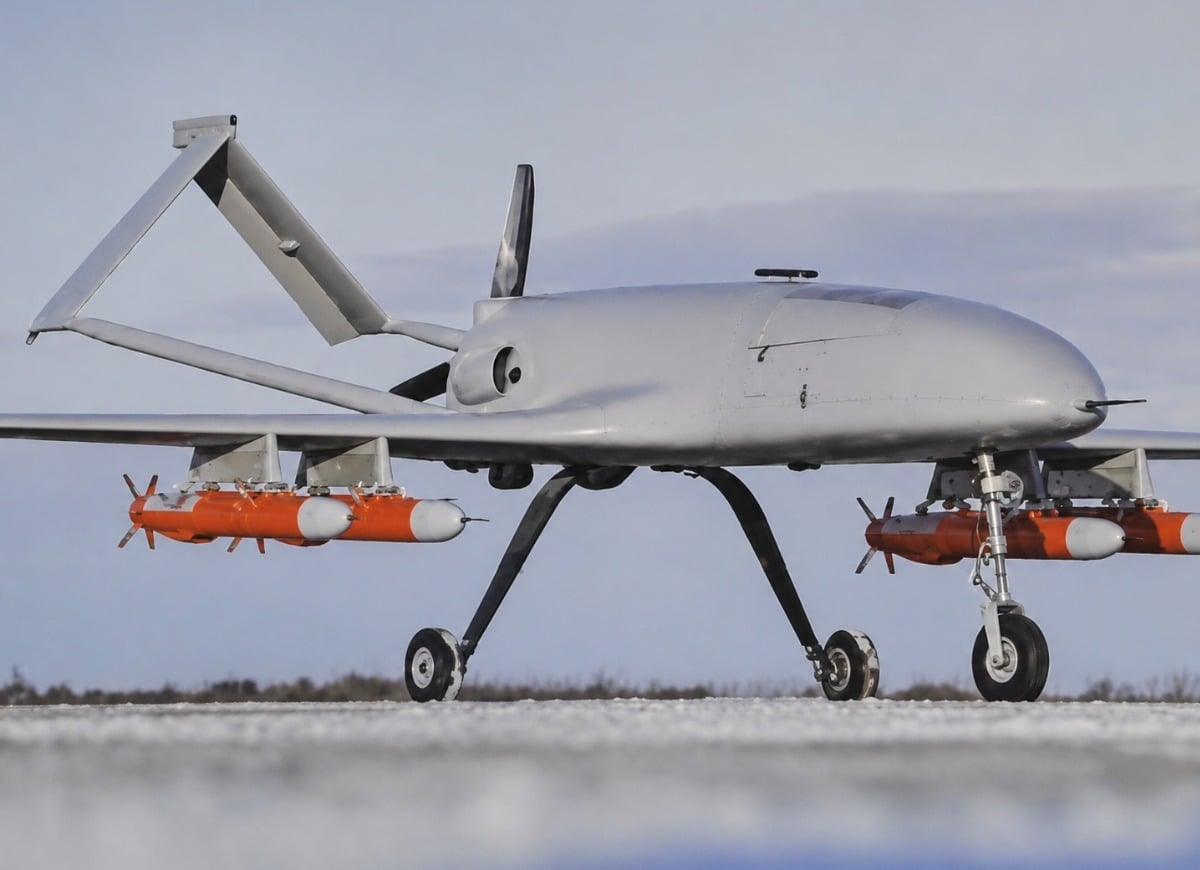
Hovering quadcopters over stagnant gutters makes for fantastic photo opportunities and glowing press releases. It gives local authorities an immediate, high-tech PR win. It tells terrified voters that the government is throwing military-grade hardware at a mosquito-borne crisis.
It is also fundamentally useless at stopping dengue fever.
Sri Lanka’s decision to deploy military drones to hunt Aedes aegypti breeding sites in urban centers during its surging outbreaks hits all the right national headlines. High-tech defense equipment drafted to fight a tiny insect sounds like peak state efficiency. In reality, it is a classic case of misallocating scarce public health funds toward high-visibility gimmicks while ignoring the unglamorous mechanics of real vector control.
High-altitude cameras cannot peer under the roof overhang of an informal settlement or inspect a discarded coconut shell wedged under a dense bush. They cannot scan inside an abandoned tire buried beneath plastic sheeting in a alleyway. Drones give municipal leadership a false sense of spatial awareness while doing virtually nothing to alter the biological realities on the ground.
The Flawed Premise of Aerial Vector Control
The math behind aerial larva hunting simply does not add up. Aedes aegypti is a container-breeding specialist. Unlike Anopheles mosquitoes, which favor wide, sunlit bodies of open water easily flagged by thermal or multispectral imaging, dengue-carrying mosquitoes thrive in hyper-localized micro-habitats.
We are talking about small, shadowy, domestic water catchments:
- The underside of plastic trash caps
- Uncovered indoor water storage barrels
- Clogged domestic rain gutters
- Discarded food containers hiding beneath dense tree canopies
Imaging sensors mounted on a drone flying at 100 feet cannot penetrate structural overhangs or foliage to detect a two-inch layer of stagnant water. I have watched municipal teams blow six-figure budgets on drone imagery only to spend three days manually verifying a false positive—like a reflective metal roof or a backyard wading pool that was actually chlorinated—while missing five major breeding sites sitting underneath nearby canvas tarps.
Imaging hardware excels at mapping macro-landscapes. It fails catastrophically at micro-detection. When you deploy a military unit with drones to fight an outbreak, you are using a sledgehammer to target an organism that lives entirely in the tiny cracks of urban infrastructure.
What People Get Wrong About Mosquito Control
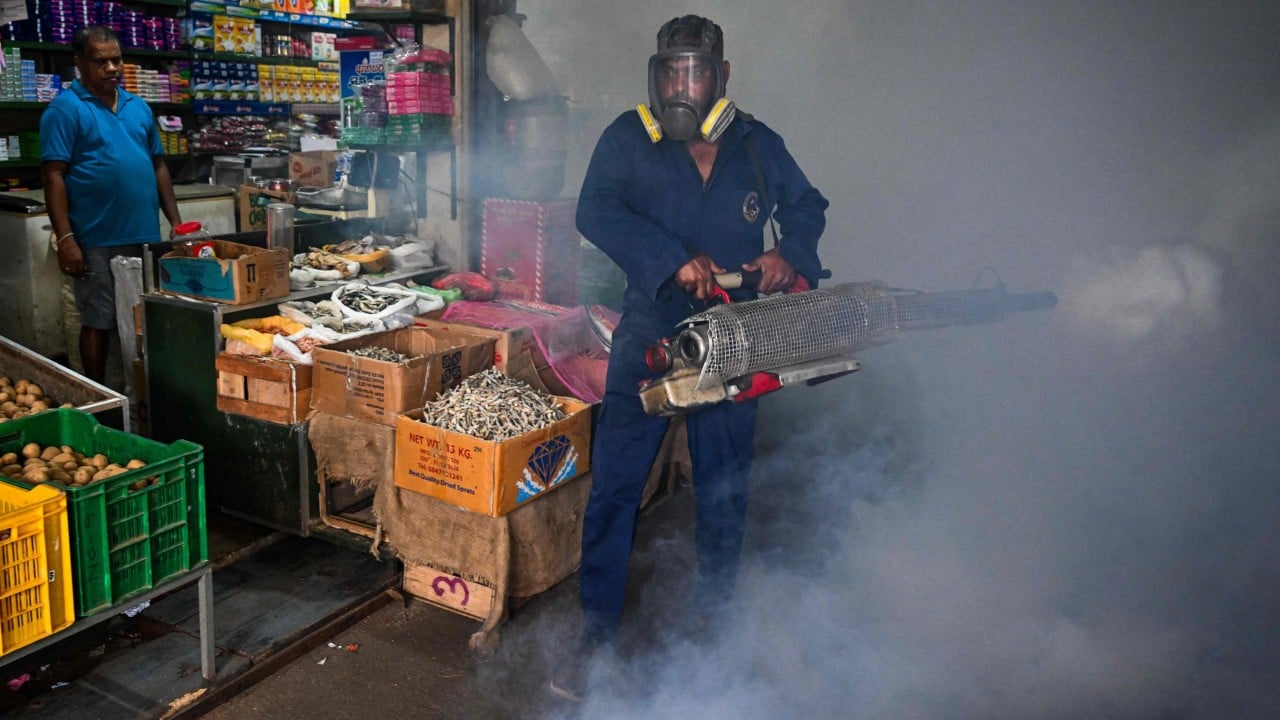
When news breaks of a massive outbreak, public demand for visible intervention spikes. Citizens want to see trucks spraying fog into the streets and drones patrolling the sky. But these interventions confuse activity with impact.
"Why don't we just spray insecticides everywhere with drones?"
Chemical spraying, whether from the ground or dropped from above, targets adult mosquitoes. In the middle of an epidemic, adulticiding sounds logical. The reality? Aedes aegypti rests inside homes, under beds, and behind curtains. Thermal fogs and aerial mists sprayed outdoors rarely enter these indoor micro-environments in lethal concentrations. Furthermore, widespread over-use of pyrethroids speeds up target-site resistance, rendering your most powerful insecticides ineffective when you actually need them inside clinical settings.
"Can't thermal cameras track standing water?"
Only if the water is fully exposed to the sky and large enough to exhibit a distinct thermal signature compared to the surrounding soil or concrete. A indoor water container or a tin can hidden under scrap metal has zero sky exposure. A drone will fly right over it, log the area as "clear," and leave a breeding reservoir completely untouched.
The Unsexy Solution That Actually Works
If high-tech aerial hardware isn't the answer, what is? The uncomfortable truth is that effective vector control relies on labor-intensive, ground-level execution, biological intervention, and structural urban reform.
1. Community-Driven Sanitation, Not Surveillance
You cannot survey your way out of a dengue crisis; you have to clean your way out. The majority of Aedes breeding sites exist within a 100-meter radius of human habitations. The most effective surveillance tool ever invented is a trained community health worker with a flashlight, walking door-to-door, inspecting premises, and teaching residents how to properly cover domestic water storage. It is slow. It requires massive human coordination. It does not look cool on the evening news. But it slashes vector density in ways a drone never will.
2. Biological Warfare: Wolbachia and SIT
Instead of burning capital on aerial imaging, funding should flow into scaled releases of Wolbachia-infected mosquitoes or Sterile Insect Technique (SIT).
When male mosquitoes carrying the Wolbachia bacteria mate with wild females, the eggs fail to hatch. In trial after trial across Asia and Latin America, released Wolbachia mosquitoes have driven local dengue incidence down by over 70%. You do not need to spot every hidden puddle if the wild mosquito population is rendered biologically incapable of reproducing or transmitting the virus in the first place.
3. Basic Infrastructure and Waste Management
Dengue is fundamentally a disease of infrastructure failure. Unreliable piped water forces urban residents to store water in open drums. Inadequate municipal solid waste collection leaves plastic debris scattered across neighborhoods, waiting to catch the next rainfall.
Investing in consistent garbage collection and running water produces infinitely better health outcomes than flying defense assets over trash heaps. It is an infrastructure problem masquerading as a medical crisis.
The Downside of Discarding the Tech Narrative
Skeptics will argue that dismissing new tech is regressive. They will point out that drone mapping can help municipal teams plan broad sanitation routes or reach inaccessible terrain like dense mangrove edges or industrial roofs.
Fair point. Spatial data is useful for macro-level urban planning. If a city uses off-the-shelf mapping tools to identify illegal dumping grounds or unmaintained construction zones, that data has value.
The danger arises when political leaders treat high-tech hardware as a primary containment strategy rather than a peripheral mapping tool. Every dollar spent maintaining an aerial fleet, training military operators for urban surveillance, and processing low-yield imagery is a dollar stolen from sanitation crews, public health nurses, and biological control programs.
Drones look like action. Field workers look like work. Politicians will choose the appearance of action every single time.
Stop looking at the sky for answers to a disease that breeds at your feet. Put down the remote control, pick up a flashlight, and fix the plumbing.