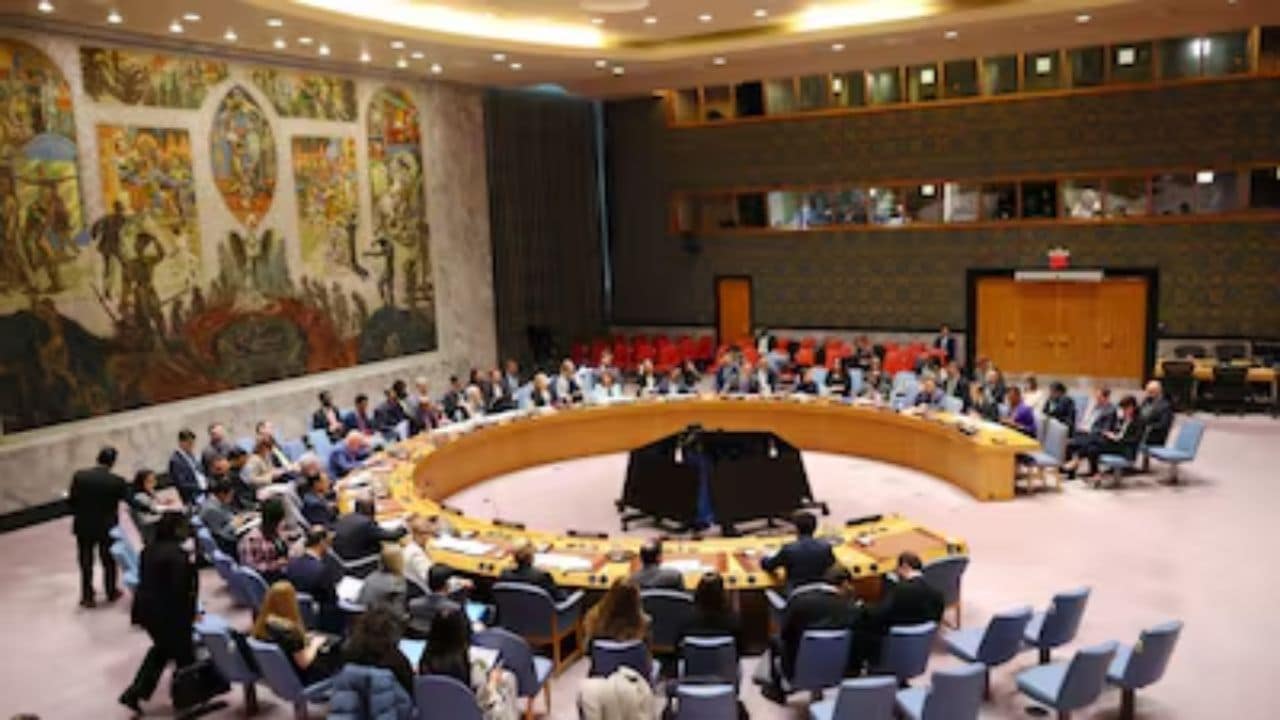
India just sat out another major vote at the United Nations General Assembly. While a massive chunk of the world’s nations lined up to demand an immediate ceasefire and the withdrawal of Russian troops from Ukraine, New Delhi chose the "abstain" button. It isn't the first time. It won't be the last. If you're looking for a simple story of good versus evil, India’s foreign policy is going to frustrate you.
The reality is that India’s decision to stay neutral isn't about being indecisive. It's a calculated, cold-blooded maneuver rooted in decades of history and a very specific vision of a multipolar world. When the UNGA 11th Emergency Special Session passed its latest resolution, the tally was 141 in favor and 7 against. India was among the 32 who stayed on the sidelines. To understand why, you have to look past the headlines and into the messy gears of global energy, defense, and border security. You might also find this connected story useful: Strategic Asymmetry and the Kinetic Deconstruction of Iranian Integrated Air Defense.
The strategic silence that speaks volumes
India’s choice to abstain from the UNGA vote on the Russia-Ukraine war immediate ceasefire resolution shouldn't surprise anyone who has been paying attention since February 2022. Western capitals, from Washington to Brussels, keep pushing for a clear "yes" or "no." They want India to pick a side. India, meanwhile, keeps saying that the UN isn't the place where this gets solved.
New Delhi argues that these resolutions often lack the "process" needed for actual peace. Basically, they think shouting from a podium in New York doesn't stop tanks in Donbas. They’ve consistently called for a return to "dialogue and diplomacy," a phrase that has become the mantra of the Ministry of External Affairs. It’s a safe phrase. It's a boring phrase. But it’s also a shield. It allows India to maintain its relationship with Moscow without technically endorsing the invasion. As extensively documented in detailed reports by Al Jazeera, the effects are widespread.
Why the Kremlin still has a seat at India's table
You can't talk about this without talking about guns and oil. It’s that simple. For decades, Russia has been India’s primary arms dealer. We’re talking about S-400 missile systems, BrahMos missiles, and Sukhoi fighter jets. While India has tried to diversify by buying from France, Israel, and the U.S., the backbone of the Indian military is still built on Russian hardware. You don't dump your main supplier while you have a tense, active border dispute with China and Pakistan.
Then there’s the energy factor. Since the war started and the West slapped sanctions on Russian Siberian light crude, India has ramped up its imports of Russian oil. They’re getting it at a discount. In a country where inflation can topple governments, cheap fuel is a massive domestic win. Prime Minister Narendra Modi’s government has been very blunt about this. They have a responsibility to their own 1.4 billion people first. If that means buying Russian oil while the rest of Europe tries to freeze them out, so be it.
The China factor is the real elephant in the room
India is terrified of a world where Russia and China are best friends. If India turns its back on Vladimir Putin completely, it pushes Moscow straight into the arms of Xi Jinping. That’s a nightmare scenario for New Delhi. By keeping a line open to the Kremlin, India hopes to retain some level of influence, or at least ensure that Russia doesn't become a total proxy for Chinese interests in Asia.
What the West gets wrong about India's neutrality
There’s a common Western critique that India is "abandoning its democratic values" by not condemning Russia. This misses the point of how India sees itself. India doesn't see itself as a junior partner in a Western-led alliance. It sees itself as a "Vishwa Mitra" (a friend to the world) and a leader of the Global South.
Many countries in Africa, Latin America, and Southeast Asia are also skeptical of the West's sudden moral clarity. They remember the interventions in Iraq, Libya, and Afghanistan. They see a double standard. When India abstains, it’s signaling to the rest of the developing world that it won't be bullied into someone else’s Cold War.
The human cost and the "Modi Doctrine"
Don't think India is totally indifferent. They’ve sent tons of humanitarian aid to Ukraine. Medicines, blankets, and essential supplies have flown from Delhi to Kyiv. Modi even told Putin to his face during a summit in Samarkand that "today's era is not an era of war." That was a big deal. It was a public rebuke, but it was done in a way that preserved the "special and privileged strategic partnership."
This is the "Modi Doctrine" in action. It's about being everywhere and nowhere at once. It’s about joining the Quad (with the U.S., Japan, and Australia) to check China, while also staying in BRICS and the SCO to keep Russia close. It’s exhausting to watch, but for India, it’s the only way to survive a shifting global order.
The UN's growing irrelevance in the conflict
India’s skepticism toward UN resolutions also stems from a belief that the UN Security Council is broken. India has been gunning for a permanent seat on the UNSC for years. They argue that as long as the UN reflects the power structure of 1945, its resolutions will lack real-world legitimacy.
When India abstains, they often point out that the resolutions don't address the "root causes" or the security concerns of all parties. It’s a polite way of saying the document is one-sided. From New Delhi’s perspective, the UN is a stage for grandstanding, not a room for real negotiation. They’d rather see a "peace formula" that actually involves both warring parties sitting at a table, something they feel these resolutions don't facilitate.
How this affects you and the global economy
If you think this is just some high-level political theater, think again. India’s stance keeps the global oil market from hitting total chaos. If India stopped buying Russian oil, that supply wouldn't just vanish; it would cause a massive spike in global prices as everyone scrambled for the remaining barrels. By acting as a massive sink for Russian crude, India (and China) essentially provide a pressure valve for global energy costs.
For the average person, India’s neutrality means that the "Great Divide" between the West and the rest is getting wider. We’re moving toward a fragmented world. Supply chains are changing. Alliances are becoming "situational" rather than "permanent." You might see more companies moving manufacturing to India as a "middle ground," but that comes with the baggage of India’s independent foreign policy.
What to watch for next
Keep an eye on the upcoming G20 meetings and bilateral summits. India is going to continue its "multi-alignment" strategy. They won't flip on Russia unless something truly catastrophic happens, like the use of tactical nuclear weapons. Short of that, the abstentions will continue.
If you want to track how this evolves, stop looking at the UN votes and start looking at the trade numbers. Watch the "International North-South Transport Corridor" (INSTC) developments. Watch how much military hardware India buys from the U.S. in the next twelve months. Those are the real metrics of where India’s loyalty lies. The UNGA vote is just the public face of a much deeper, much more complicated game of survival.
Check the official statements from the Indian Ministry of External Affairs (MEA) after each vote. They usually release a "Explanation of Vote" (EOV) that details exactly why they didn't push the button. Reading those will give you the most honest look at their strategy. Also, follow the energy trade data on platforms like Kpler or Vortexa to see if the oil flow from Russia to Indian refiners is slowing down or speeding up. That's the real pulse of the relationship.