Silence.
It arrives in Kyiv not as a peaceful pause, but as a sharp intake of breath before the sirens begin to groan across the Dnipro River. One moment, steam rises from a ceramic mug on a kitchen table, and a child traces a finger through frost on a double-paned window. The next moment, phones buzz with emergency alerts while radar screens hundreds of miles away track streaks of fire cutting through cold upper air.
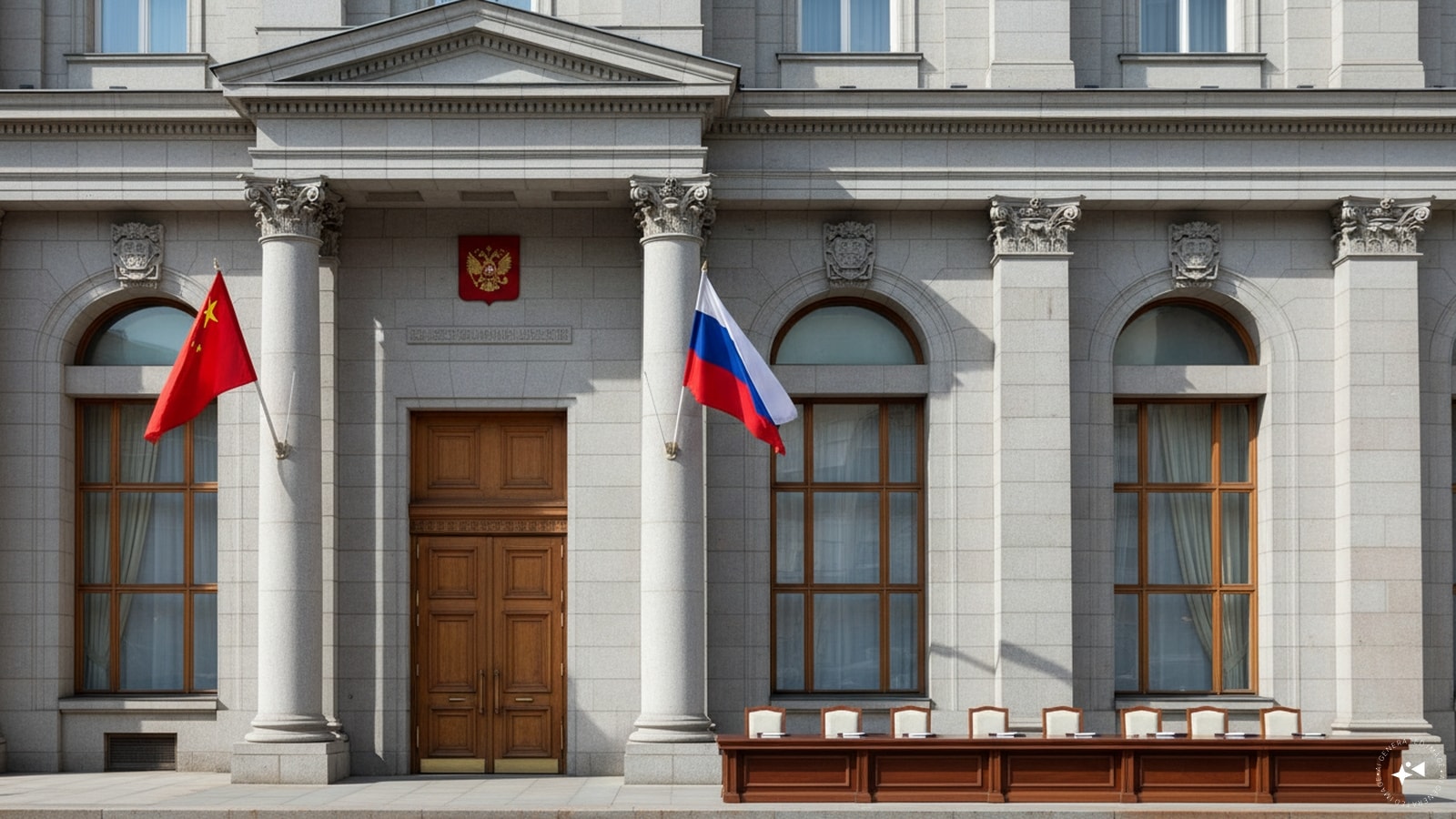
When diplomatic envoys travel to Moscow and missiles strike Ukraine’s capital shortly afterward, wire services tend to file the sequence under two neat boxes. Diplomacy in one column. Strikes in another. A chronological coincidence, perhaps, or an ominous echo. Yet anyone who has stood in a concrete stairwell in Kyiv while air defense batteries bark into the dark knows those columns rarely stay separate.
I cannot pretend to know every cipher passed behind closed doors in Kremlin conference rooms or diplomatic briefings. That uncertainty is real, and pretending otherwise would insult the intelligence of anyone watching a war unfold in real time. Still, watching the pattern repeat—talks, visits, high-level meetings, followed by waves of drones and missiles slamming into residential districts, energy hubs, and streets where people are simply trying to get to work—forces a harder question. What happens in the space between diplomatic theater and physical impact?
Two Clocks Running at Once
To understand why a diplomatic trip to Russia can feel so jarring when missiles hit Kyiv, picture two clocks ticking in different rooms of the same house.
In one room sit diplomats, aides, and negotiators. Their currency is phrasing, leverage, red lines, and optics. A visit to Moscow carries weight before a single word is spoken. Who flew in? Who stayed home? What signal is being sent to allies in Europe, to capitals in Asia, or to domestic voters back home? In that room, time moves in communiqué cycles, leaks, and carefully staged statements.
In the other room—or rather, beneath a blanket of freezing fog along the front lines and high above the rooftops of Ukraine’s capital—time is measured in flight minutes, interceptor stockpiles, and transformer repairs. A ballistic or cruise missile does not wait for a press briefing to finish. A drone operator does not pause because an envoy’s plane is taxiing toward a runway.
Consider what happens next: the two clocks collide in the public mind. Headlines link the envoy’s visit and the strikes on Kyiv because human beings naturally look for cause and effect, especially when lives are on the line. Sometimes the link is direct—a show of force meant to project strength during talks, or a calculated reminder that military pressure continues regardless of diplomatic motion. Sometimes the connection is indirect, rooted in ongoing campaign schedules that grind forward whether diplomats are smiling for cameras or arguing over maps. Either way, for the person sitting on a folding chair in a subway station, the distinction between "coincidence" and "signal" feels academic when plaster dust falls from the ceiling.
Let me offer a hypothetical scenario to make the human cost tangible. Suppose we follow Olena, a fictional Kyiv schoolteacher in her late thirties who lives near a tram line on the city’s right bank. This is a composite portrait rather than a single real person, created to show how macro-level geopolitics lands on ordinary routines.
On a Tuesday morning, Olena checks two feeds before her kettle boils. The first is a political dispatch noting that a U.S. envoy has been meeting officials in Russia. The second is a local channel tracking incoming aerial threats across central Ukraine. For Olena, those two items are not abstract pieces of a chess game. If power substations take another hit, her third-grade classroom will drop below comfortable temperatures by noon. If sirens wail at 7:40 a.m., she has to decide whether to walk her students down to the basement shelter or wait out an alert that might pass overhead—knowing that guessing wrong carries a price no lesson plan can fix.
That is the invisible stake behind every headline pairing diplomacy with bombardment. Analysts debate escalation ladders and negotiating leverage. Families calculate battery life, water jugs, and how fast they can get from a fourth-floor apartment to solid concrete.
The Illusion of Clean Separation
There is a comforting habit in foreign policy commentary: treating talks and strikes as separate tracks that can be run side by side until a breakthrough arrives. History rarely cooperates with neat diagrams.
Throughout modern conflicts, belligerents have frequently paired diplomatic motion with intensified military pressure. The logic is cold and familiar. If you sit across from an adversary—or from an envoy representing a powerful backer—you want to negotiate from a position of perceived momentum. You want the other side to feel the weight of your reach. You want to signal that walking away or holding firm will cost them dearly.
Yet that same pressure often backfires in ways policymakers struggle to price in. Instead of softening resolve, strikes on a capital city frequently harden it. Fear in a subway corridor does not easily turn into a willingness to surrender sovereignty; more often, it turns into bitter defiance and a deep conviction that concessions bought under fire are just a prelude to the next wave.
Let’s use a simple metaphor to see why external observers sometimes misread the mood on the ground. Imagine trying to judge the structural integrity of a bridge by looking only at a blueprint while trucks rumble across the deck. A blueprint shows load ratings, steel grades, and span lengths. It looks tidy. It does not show the hairline vibrations in the rivets or the exhaust soot coating the guardrails. Diplomatic readouts are like blueprints. They capture intentions, positions, and talking points, while leaving out the vibration felt by everyone standing on the span.
And there is another layer of friction: miscalculation. When a major power sends an envoy to engage with Moscow, allies and adversaries alike read the move through their own anxieties. Some worry about behind-the-scenes deals made over Ukraine’s head. Others see an opening to test resolve, probe air defenses, or demonstrate that no diplomatic initiative can halt Russian strikes unless terms shift dramatically. In an environment thick with distrust, a move meant to test the waters can easily coincide with—or feed into—a storm.
Why Capital Cities Carry Heavy Meaning
Why do strikes on Kyiv draw such intense global focus, even amid relentless fighting along hundreds of kilometers of trenches and ruined towns in the east and south?
Part of the answer is practical. Kyiv is a sprawling metropolis of millions, a hub of government, logistics, culture, and daily life. Hitting a capital strains infrastructure that keeps a nation functioning—electricity, heating, communications, transport—and creates immediate international shockwaves because embassies, foreign correspondents, and visiting dignitaries are right there to witness the aftermath.
Another part is psychological. A capital is a symbol of survival. When missiles strike Kyiv shortly after high-profile diplomatic activity involving Russia, the symbolism cuts in multiple directions at once. To Ukrainians, it can look like a blunt answer to talk of peace or pauses: we are still here, and we can still reach your capital. To international observers, it serves as a stark reminder that diplomatic outreach does not automatically buy calm—sometimes it arrives right alongside renewed violence.
Still, we should be careful not to jump past what we actually know. In fast-moving wartime reporting, timing can be dramatic without proving a single master plan. Air strikes require weeks of intelligence gathering, route planning, logistics, and launch preparation. A wave of missiles hitting Kyiv after an envoy’s visit might reflect a deliberate political message timed to the moment, or it might reflect an operational schedule set in motion days earlier that simply intersected with the diplomatic calendar.
Admitting that distinction matters. Good analysis doesn't flatten complex events into melodrama just because the timing makes for a sharp headline. At the same time, ignoring the emotional and strategic weight of that timing misses half the story. When people see talks in Moscow followed by explosions in Kyiv, the sequence shapes trust, expectations, and political pressure in Washington, Brussels, Kyiv, and beyond.
The Weight Left Behind After the All-Clear
When air raid sirens finally fall silent and emergency crews clear debris from a street or courtyard, the story does not reset to zero.
Glass gets swept up. Windows get covered with plastic sheeting or plywood. Crews climb utility poles in freezing wind to restore lines before nightfall. Somewhere else, a family grieves a loss that no diplomatic communique will ever touch, or a child learns to flinch at the sound of a low-flying engine long before a siren goes off.
Look back at Olena, our hypothetical teacher in Kyiv. By late afternoon, the power might flick back on. Her students might laugh over a drawing on the chalkboard, glad to be out of the cold basement. From the outside, life looks resilient—and it is. Resilience is real in Ukraine; people adapt out of necessity because the alternative is paralysis. Yet adaptation is not the same as safety, and endurance should never be mistaken for indifference.
Every time diplomatic visits to Russia coincide with missile strikes on Ukraine’s capital, the contrast becomes harder to ignore. On one side sit statesmen, envoys, and strategists weighing influence and leverage. On the other sit ordinary people holding onto normal routines under a sky that can turn lethal in minutes.
The sirens stop. The smoke clears. The cold stays.