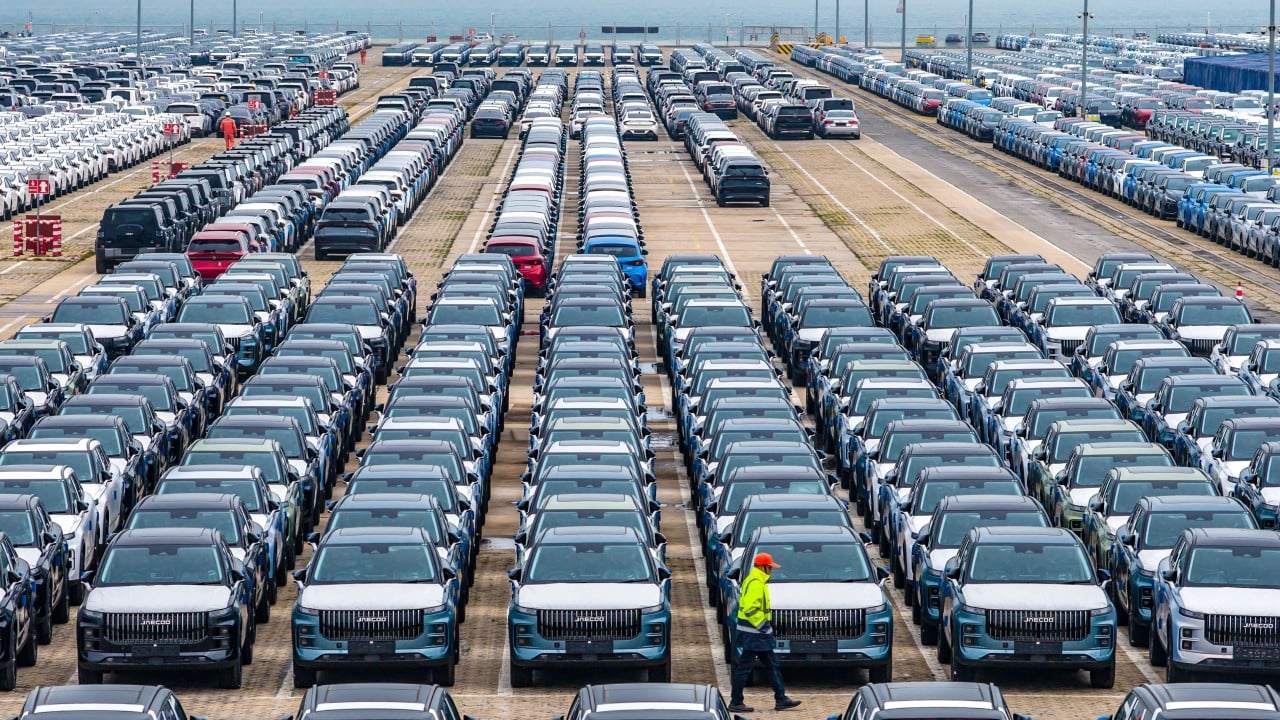
Hyundai and Kia have owned the South Korean driveway for decades. It's a point of national pride. But if you walk through the streets of Seoul today, the vibe is shifting. That quiet hum you hear from the passing bus or the delivery truck probably comes from a battery made in China. For years, the South Korean auto market was a fortress, but the gates are wide open, and Chinese electric vehicles aren't just knocking—they’re moving in.
It’s not just about cheap prices anymore. It’s about a massive gap in the market that local giants ignored for too long. While Korean manufacturers focused on high-end, sleek electric sedans and SUVs, Chinese brands like BYD and Geely spotted the openings in public transit and commercial logistics. Now, they’re moving into the passenger lane, and the math for the average Korean driver is starting to look very different.
The Conquest of the Commercial Sector
Before BYD launched its passenger cars here, Chinese EVs had already conquered the "work" categories. Look at the electric bus market. In 2024, nearly half of all new electric buses registered in South Korea were Chinese. Brands like CRRC and Higer offer a value proposition that’s hard to ignore. They aren't just cheaper; they’re available. While local production lines struggled with backlogs, Chinese firms flooded the market with reliable, tech-heavy buses.
The same thing is happening with "last-mile" delivery. Small electric trucks from Geely and Farizon are everywhere. For a self-employed delivery driver in Incheon, the choice between a 45 million won Korean truck and a 25 million won Chinese alternative is a no-brainer. The tech is good enough, the range fits a day's work, and the savings go straight into their pocket.
BYD is Finally Taking the Passenger Plunge
The real earthquake happened in early 2025. After years of rumors, BYD officially launched its passenger car lineup in South Korea. The ATTO 3 and the Dolphin are the primary weapons. The pricing is aggressive. We're talking about the ATTO 3 starting around 31.5 million won. Once you factor in local subsidies, that price can dip into the low 20 million won range.
Compare that to a Hyundai Ioniq 5 or a Kia EV6. You’re looking at a price difference that can buy you a second small car. For a long time, the narrative was that Chinese cars were "cheap" in a bad way—flimsy, unsafe, or ugly. That’s dead. The ATTO 3 has a rotating touchscreen, a solid interior, and a design that doesn't look like a budget compromise. It’s a legitimate contender that makes the "loyalty tax" for buying domestic feel a lot heavier.
Protectionism vs Consumer Reality
The South Korean government isn't just standing by. They’ve tweaked the subsidy rules to favor "high energy density" batteries—a move clearly designed to hurt Chinese LFP (Lithium Iron Phosphate) batteries. Since LFP batteries are cheaper but less energy-dense than the NCM (Nickel Cobalt Manganese) batteries favored by LG Energy Solution and SK On, Chinese cars get smaller government checks.
Does it work? Kinda. But here’s the problem. Even with lower subsidies, the base price of a Chinese EV is often so much lower that they still win on the final invoice. Korean consumers are savvy. They know that LFP batteries are actually more stable and have longer lifecycles. They’re willing to trade a bit of range for a car that doesn't break the bank.
The Safety Perception Hurdle
One thing that still keeps Chinese brands up at night is the "Incheon Fire" effect. After a high-profile EV fire in an underground parking lot in 2024 involving Chinese-made cells, safety anxiety hit an all-time high. The Korean government now requires manufacturers to disclose where their batteries come from.
BYD and others are fighting back by emphasizing their "Blade Battery" technology, which is marketed as virtually unburnable. They're spending millions on PR to prove that "Made in China" doesn't mean "Risk of Fire." It’s an uphill battle, but as more of these cars hit the road without incident, that fear is fading.
How Hyundai and Kia are Fighting Back
Don't think the local boys are giving up. Hyundai and Kia are pivoting. They’re rushing out "budget" EVs like the Casper Electric and the Kia EV3. These are smaller, more affordable, and specifically designed to keep the first-time EV buyer from wandering into a BYD showroom.
They’re also leaning hard into the service network. One thing a Chinese brand can't easily replicate overnight is a repair shop on every corner. If your Hyundai breaks down in Gwangju, you can get it fixed in an hour. For a BYD? You might be waiting for parts. That "peace of mind" is currently the strongest weapon the domestic brands have left.
The Tech Gap is Closing
Honestly, the "tech lead" Korea used to have is gone. Chinese EVs often have better software integration and more "gadget" features than their Korean counterparts. From built-in karaoke mics to advanced voice assistants that actually work, the interior experience of a Chinese EV often feels more like a smartphone on wheels. Korean brands are playing catch-up on the software side, trying to transform from "car companies" into "mobility tech companies."
What You Should Do If You're Shopping
If you're in the market for an EV in Korea right now, you have more leverage than ever. The competition is driving prices down across the board.
- Check the total cost: Don't just look at the sticker price. Calculate the subsidy difference for the specific model you want.
- Look at the battery tech: If you do mostly city driving, an LFP-powered Chinese EV is probably all you need and will last longer.
- Verify the service network: Make sure there's a certified service center for that Chinese brand within a reasonable distance of your home.
- Wait for the sales: With more Chinese brands like Xpeng and Xiaomi eyeing the market, domestic brands are going to start offering "loyalty discounts" and better financing.
The fortress has fallen. Whether that’s a win for the Korean economy is debatable, but for the Korean consumer, it’s the best thing that’s happened to the car market in decades. Competition is a great equalizer, and right now, the Chinese are the ones forcing everyone to level up.
Go test drive an ATTO 3. Then go drive an EV3. Compare the monthly payments. The answer to which one belongs in your driveway isn't as obvious as it used to be.