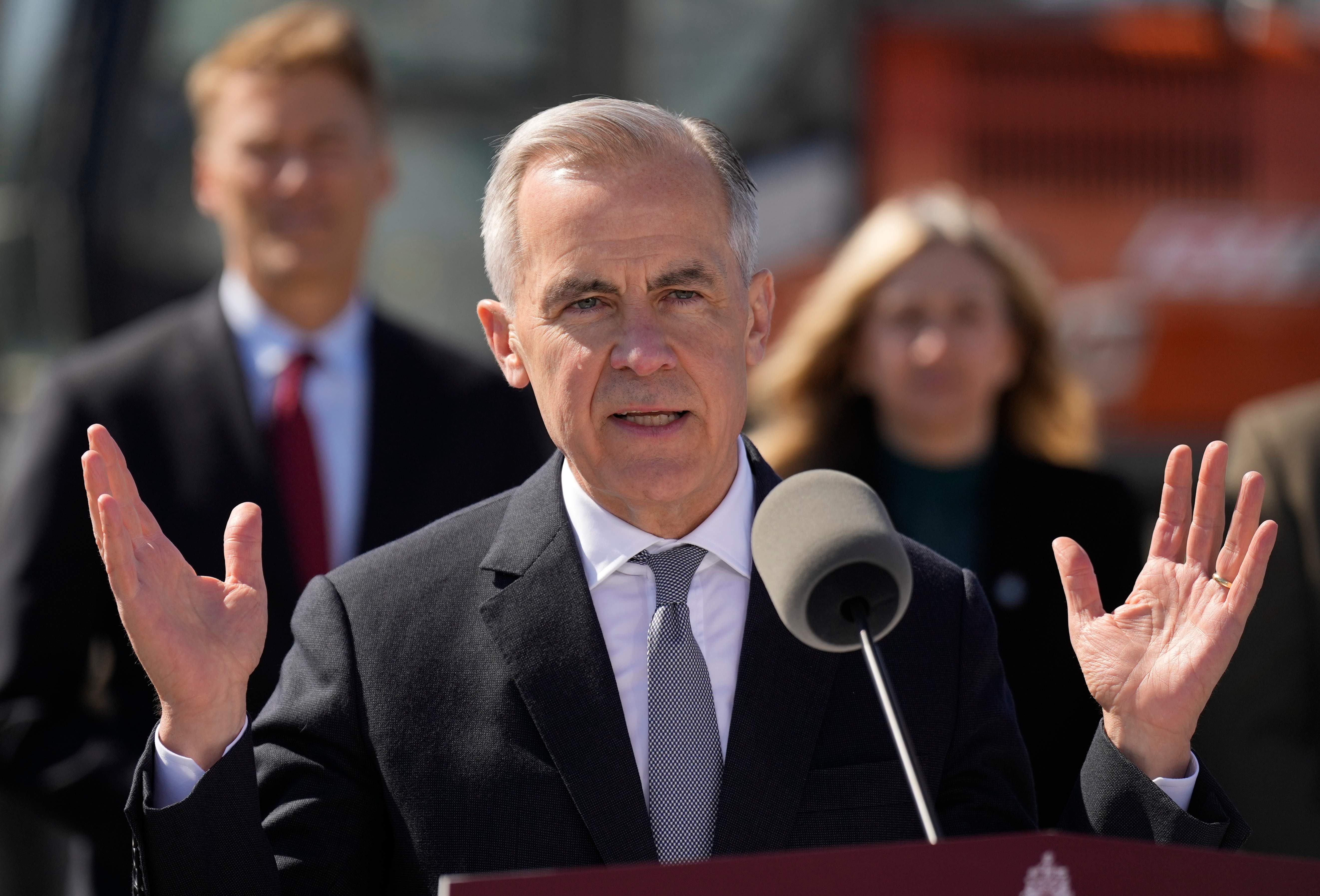
Mark Carney sat in a room that smelled of old wood and high-stakes expectations, the kind of space where the air feels heavy with the weight of national destiny. Outside, the Canadian wind was likely biting, a reminder of the vast, rugged geography that defines the nation. But inside, the talk was about the future—not the one we inherit, but the one we build with cold, hard capital.
He was unveiling a blueprint. It wasn't just a spreadsheet or a dry policy brief. It was a $25 billion declaration of intent. This is the birth of the Canada Growth Fund, a sovereign wealth vehicle designed to move the needle on a scale the private sector has, until now, found too daunting to touch.
Think of a small-town entrepreneur in rural Alberta or a tech founder in a cramped Toronto basement. They see the shift. The world is moving away from the carbon-heavy foundations of the twentieth century toward something cleaner, leaner, and infinitely more complex. These people aren't looking for a handout. They are looking for a partner who doesn't blink when the timeline for a return on investment stretches past the next fiscal quarter.
Canada has always been a nation of builders, but lately, we have become a nation of cautious savers. We sit on vast pension funds that roam the globe looking for stability in European toll roads or Asian real estate. Meanwhile, the soil at home remains thirsty.
The Weight of the Vault
When Carney talks about $25 billion, the number feels abstract. It is a series of zeros on a screen. To make it real, you have to look at what that money is meant to do. It is "catalytic capital."
Imagine a bridge. On one side, you have the laboratory breakthroughs—the carbon capture technology that actually works, the hydrogen fuel cells that could power a fleet of ships. On the other side, you have a thriving, sustainable economy. Between them lies a chasm of risk. Private banks look into that chasm and see a graveyard of good intentions. They stay on the safe side of the bank.
The Canada Growth Fund is meant to be the first stone laid in that bridge. It is designed to take the "first loss" position, to absorb the shocks that make traditional investors retreat. By putting $25 billion of the public’s money on the line, the government is betting that it can draw in three, four, or five times that amount from the private sector. It is a magnet for the trillions of dollars currently sitting on the sidelines, waiting for a signal that it is safe to come back into the game.
The stakes are invisible until they aren't. We see them when a factory closes because it couldn't modernize fast enough. We see them when our brightest engineers move to Silicon Valley because there wasn't enough "patient capital" to keep them in Vancouver. This fund is an attempt to stop the bleeding of talent and potential.
A Man and a Map
Mark Carney is a man who speaks in the measured tones of a central banker but thinks with the urgency of a climate scientist. He has spent years warning that the transition to a net-zero economy is the greatest commercial opportunity of our time. He isn't interested in charity. He is interested in survival.
He knows that Canada is currently a resource powerhouse that is terrifyingly vulnerable to a world that might one day stop wanting those specific resources. We are like a family with a massive inheritance stored in a currency that is slowly being phased out. You don't wait until the currency is worthless to start diversifying. You do it while you still have the leverage.
The strategy Carney unveiled isn't just about throwing money at "green" projects. It’s about "contracts for difference." This is a bit of financial wizardry that acts like an insurance policy for the future price of carbon.
Consider a hypothetical steel plant manager named Elena. She wants to overhaul her facility to use green hydrogen. It will cost hundreds of millions. She knows that if the price of carbon stays high, her investment will pay off. But what if a future government changes the rules? What if the market fluctuates? The risk is too high.
Under Carney’s plan, the Growth Fund could step in and guarantee a price. If the market price of carbon falls below a certain level, the fund pays Elena the difference. If it rises above, she pays the fund. It creates a floor. It creates certainty.
Certainty is the one thing you can’t buy in a supermarket, but it is the only thing that makes a CEO sign a ten-year investment plan.
The Ghost of the National Energy Program
There is a phantom in the room whenever a Canadian government talks about large-scale economic intervention. It is the memory of the 1980s, of top-down mandates that left scars across the Western provinces. There is a fear that "Ottawa knows best" is a recipe for inefficiency and resentment.
Carney is acutely aware of this. He isn't proposing a government department that picks winners and losers based on political optics. The Growth Fund is being set up as an independent entity, managed by professionals whose bonus checks depend on performance, not polling numbers.
But even with independence, the skepticism remains. Why should the taxpayer be the one to shoulder the risk? Why shouldn't the massive pension funds, like the CPP, be the ones to lead?
The answer is uncomfortable: they haven't. Not at the scale required. Our pension funds have a fiduciary duty to maximize returns for retirees, which often means playing it safe in established markets. The Growth Fund is the "wildcard" in the deck. It is the money that is allowed to be bold so that everyone else can eventually afford to be brave.
The Human Scale of Macroeconomics
Discussions about sovereign wealth funds usually happen in boardrooms with glass walls, but the impact lands on kitchen tables.
Think about a town in Northern Ontario that exists because of a single mine. The world still needs minerals—more than ever, actually, for the batteries in our phones and cars. But the world wants those minerals extracted without destroying the local watershed. The transition isn't just an environmental goal; it is a job security program.
If we don't invest the $25 billion now to revolutionize how we extract and process those materials, some other country will. We will find ourselves importing the technology we should have invented, using money we no longer have.
The urgency in Carney’s voice reflects a global race that has already begun. The United States has passed the Inflation Reduction Act, a massive vacuum cleaner of subsidies designed to suck every green tech company on the planet toward American soil. Europe is responding with its own industrial strategies. Canada, small but wealthy, cannot outspend the giants. We have to outthink them. We have to be more surgical.
Twenty-five billion dollars is a lot of money, but in the context of the global energy transition, it is a modest down payment. It is a signal to the world that Canada isn't going to sit this one out, quietly managed into decline.
The Invisible Stakes
What happens if this fails?
If the $25 billion is mismanaged, if it becomes a slush fund for well-connected firms or gets bogged down in bureaucratic molasses, the damage won't just be financial. It will be a blow to the national psyche. It will confirm the darkest suspicions of the cynics who say Canada is a place where big ideas go to die in a committee meeting.
But what if it works?
If it works, we don't just get a few more wind farms. We get a fundamental shift in the Canadian identity. We stop being the "hewers of wood and drawers of water" and become the architects of the carbon-neutral age. We prove that a democracy can move with the speed and decisiveness of a startup.
The real story isn't the $25 billion. It’s the confidence that money is meant to buy.
We are a country that often suffers from a profound sense of "smallness" despite our massive geography. We look south or across the ocean for leadership. Carney is handing us a mirror and asking us to see a leader.
The money is in the vault. The plans are on the table. The wind outside is still cold, but the furnace is being lit. The only question left is whether we have the stomach to keep the fire burning when the inevitable setbacks arrive.
Because they will arrive. Innovation is messy. It is loud. It involves failure. A sovereign wealth fund that never loses a penny is a fund that isn't trying hard enough. To win the future, you have to be willing to lose a few skirmishes in the present.
The $25 billion isn't a gift. It’s a dare.
It is a dare to believe that we can own the tools of our own prosperity. It is a dare to stop being afraid of the chasm and start building the bridge. As the meeting broke up and the officials filed out, the blueprints remained. They are just paper and ink for now. But they represent the slim, golden thread of a chance to remain relevant in a world that is rapidly forgetting the old rules.
The vault is open. The bet is placed.