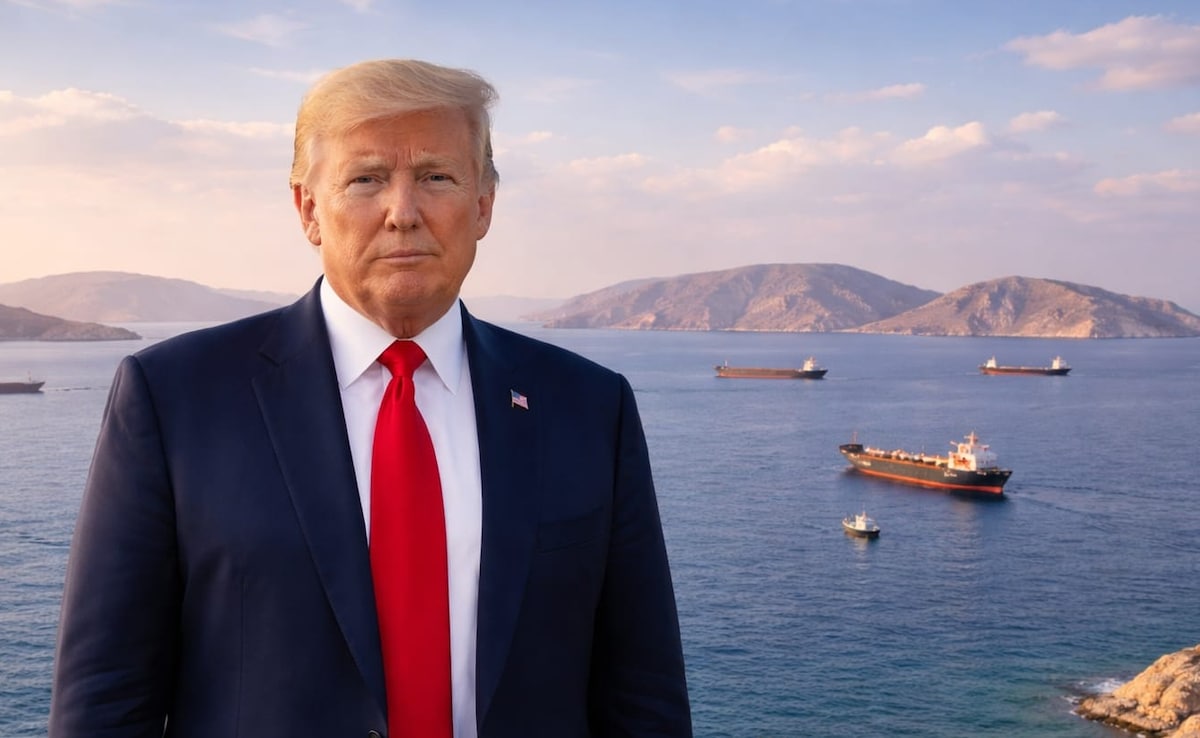
The United States is currently the world’s leading oil producer, churning out a record 13.6 million barrels of crude per day. However, recent claims by the Trump administration that America possesses more oil reserves than the "next two largest oil economies combined" are fundamentally disconnected from the geological reality of proven reserves. While the U.S. is winning the battle of daily output, it is still a middleweight in the global arena of long-term underground wealth.
To understand the gap between political rhetoric and the hard science of energy, one must distinguish between production (what we pump today) and proven reserves (what we can profitably extract tomorrow). According to the latest 2025-2026 data from the Energy Information Administration (EIA) and OPEC, the U.S. holds approximately 46 billion to 84 billion barrels of proven reserves. In contrast, Saudi Arabia sits on 267 billion barrels and Russia maintains roughly 80 billion. If we look at the true heavyweights, Venezuela and Saudi Arabia combined hold more than 570 billion barrels—nearly seven times the most optimistic U.S. estimates. For an alternative perspective, read: this related article.
The Shell Game of Technical Recovery
The discrepancy in these numbers often stems from a clever use of terminology. When political figures talk about "reserves" in a way that dwarfs the Middle East, they are likely conflating proven reserves with undiscovered technically recoverable resources (UTRR).
Proven reserves are a conservative accounting metric. They represent oil that has been discovered and can be extracted under current economic and technological conditions with "reasonable certainty." UTRR, however, is a theoretical estimate of what might be there based on geological modeling, even if we haven't drilled for it yet. Related analysis regarding this has been published by Forbes.
A recent 2026 assessment by the Bureau of Ocean Energy Management (BOEM) identified roughly 65.8 billion barrels of undiscovered oil on the U.S. Outer Continental Shelf. Even if you add every drop of theoretical, undiscovered oil to the existing proven reserves, the total still fails to match the proven, ready-to-drill inventory of Saudi Arabia alone.
The Cost of the Sweet and Light
The administration’s focus on "sweet" and "high-quality" oil is a nod to the American shale revolution. U.S. shale oil—often referred to as Light Sweet Crude—is indeed prized by global refiners because it requires less processing to turn into gasoline and diesel. But this quality comes with a steep logistical and financial price tag.
Shale wells are notorious for their rapid decline rates. Unlike a traditional vertical well in Kuwait that might produce steadily for decades, a horizontal shale well in the Permian Basin often sees its production drop by 60% to 80% within the first year. This creates a "Red Queen’s Race" where American drillers must constantly bore new holes just to keep production flat.
International giants like Saudi Aramco do not face this treadmill. Their lifting costs—the price to get a barrel out of the ground—remain the lowest in the world, often under $10. In the U.S., even with the deregulation push of 2025, break-even prices for most shale plays remain in the $40 to $55 range.
The Logistics of the Tanker Surge
Reports of "massive numbers" of empty tankers heading to U.S. shores to load up on American crude are a signal of a shifting trade balance, but they also highlight a glaring domestic irony. Because most U.S. refineries on the Gulf Coast were built decades ago to handle the "heavy, sour" crude from Venezuela and the Middle East, they cannot easily process the "light, sweet" oil produced in Texas and North Dakota.
Consequently, the U.S. is forced into a bizarre swap. We export our high-quality light crude to Europe and Asia while continuing to import heavier crudes to keep our own refineries running efficiently. The "tanker surge" isn't just a sign of dominance; it is a symptom of a mismatched domestic infrastructure that remains tethered to global markets.
The Islamabad Factor and the Strait of Hormuz
The timing of these energy claims coincides with high-stakes negotiations in Islamabad regarding the security of the Strait of Hormuz. For decades, the U.S. military has acted as the de facto guarantor of this narrow waterway, through which 20% of the world’s oil passes.
By projecting an image of total energy independence and reserve superiority, the U.S. is attempting to gain leverage in these talks. The message to Iran and its regional rivals is clear: "We don't need your oil, but the rest of the world does—and we are ready to supply them."
It is a powerful diplomatic tool. But as a strategy, it relies on the market’s willingness to ignore the fact that U.S. production is currently at or near its maximum physical capacity. Executive orders signed in early 2025 aimed at removing regulatory barriers have streamlined the paperwork, but they cannot magically create more drill rigs, more pipe, or more skilled labor in an industry that is still cautious after the boom-and-bust cycles of the previous decade.
The Geopolitical Mirage
If the U.S. truly had more oil than the next two largest economies combined, the global price of crude would not react so violently to a skirmish in the Middle East. The reality is that the global oil market is a single, interconnected pool.
- Market Sensitivity: Even as a net exporter, U.S. gasoline prices are still dictated by the global Brent benchmark.
- Production Caps: American oil companies are publicly traded entities answerable to shareholders who demand "capital discipline" (dividends and buybacks) over "growth at any cost."
- Infrastructure Bottlenecks: Exporting 4 or 5 million barrels a day is one thing; doubling that would require a decade-long overhaul of pipelines and port facilities that does not currently exist.
The narrative of "Energy Dominance" is an effective political slogan. It rallies the base and intimidates adversaries. But for the analyst looking at the ledger, the numbers don't lie. The United States is an incredible energy success story, a country that transformed itself from a desperate importer into a dominant global supplier through sheer technological ingenuity.
That achievement is significant enough on its own. It doesn't need the inflation of geological myths to be impressive. The real challenge for the coming years isn't just finding more oil—it's managing the transition of an economy that is now more dependent on the global price of a barrel than it has been in half a century.
Stop looking at the number of tankers in the harbor and start looking at the depletion rates in the Permian. That is where the real story of American energy is written.