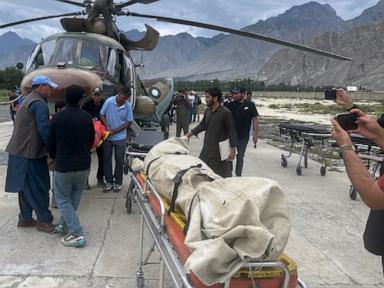
Pakistani military helicopters finally cleared the icy graveyard of Broad Peak, lifting the remaining bodies from the snow-choked slopes after an avalanche erased a ten-member international expedition. Among the dead was the famed British-Nepali mountaineer Nirmal Purja, a figure whose high-profile ascents reshaped modern high-altitude tourism. The operation brought the total recovery count to eight, drawing a grim curtain over one of the deadliest disasters in the history of the Karakoram range. Yet as the coffins arrive at military hospitals in Skardu, the mountaineering community avoids the harder conversation. The tragedy on the world's twelfth-highest mountain was not merely an act of unpredictable nature. It was the predictable collision of commercial expediting, shrinking safety margins, and the dangerous normalization of extreme altitude crowds.
The Mechanics of a Karakoram Catastrophe
Broad Peak rises to 8,051 meters, sharing a glacial basin with the savage titan K2. It is frequently marketed as a more accessible eight-thousander, a promotional half-truth that seduces climbers into underestimating its objective hazards. On the morning of the disaster, a multinational team comprising climbers from Nepal, Oman, the United States, China, Britain, and Pakistan pushed upward past the 7,000-meter mark. GPS coordinates recovered from the site show the group was swept roughly one thousand meters downhill when a massive slab avalanche broke loose.
Gravity at that altitude does not negotiate. When a slope lets go under ten people, survival relies entirely on luck and milliseconds. But veteran observers of the Greater Ranges know that luck is increasingly manufactured out of bad decisions. Modern commercial expeditions operate on tighter weather windows and rigid client schedules. When commercial pressure dictates a summit push despite marginal conditions, probability tilts heavily toward catastrophe. The mountain simply collected the debt.
The Myth of Absolute Control in High-Altitude Tourism
For years, commercial mountaineering has marketed high-end peaks as managed experiences. Celebrated figures like Purja popularized a style of climbing that emphasized speed, heavy fixed-rope reliance, and extensive logistical support. This shift democratized the death zone, allowing clients with substantial financial resources and variable technical competence to stand on summits that once demanded decades of apprenticeship.
However, nature remains indifferent to marketing campaigns. Fixed ropes and large support teams create a false sense of security. Climbers crowd onto narrow ridges and hazardous snowfields, transforming remote wilderness into high-altitude bottlenecks. When an avalanche sweeps down a couloir, a crowded rope line ceases to be a safety network and becomes a death trap. The presence of elite guides and military rescue infrastructure creates a moral hazard, encouraging individuals to take risks they would never contemplate in a truly autonomous environment.
The Limits of the Rescuers
When disaster strikes the upper reaches of the Karakoram, the burden falls disproportionately on local institutions and indigenous high-altitude workers. The Pakistan Army Aviation fleet executed high-risk technical flights to retrieve the fallen, navigating thin air, erratic winds, and vertical relief that pushes rotary-wing aircraft to their absolute engineering limits. Ground teams led by local mountaineers like Sarbaz Khan risked their lives navigating unstable terrain and secondary avalanche threats to reach bodies trapped deep in the snowpack.
These rescue operations carry a profound human cost that rarely makes it into promotional documentaries. Indigenous porters and guides absorb the highest statistical risk for wages that pale in comparison to the profits generated by international expedition companies. As commercial traffic on peaks like Broad Peak and K2 intensifies, the frequency of these rescue missions places an unsustainable strain on regional military and civil resources.
Reckoning With the Future of Extreme Mountaineering
The recovery operation in Skardu concludes the immediate physical phase of this tragedy, but the structural crisis in high-altitude mountaineering remains unaddressed. Regulatory bodies in Pakistan and Nepal face immense economic pressure to keep permits flowing, as climbing tourism remains a vital source of foreign currency and local employment. Yet without stricter self-regulation by expedition operators and a cultural shift away from ego-driven, speed-record mentalities, more teams will walk into obvious traps.
The mountains do not care about social media followings, summit tallies, or commercial deadlines. Until the climbing industry accepts that certain risks cannot be engineered away by corporate logistics, the snows of the Karakoram will continue to demand a heavy toll.