Blaming a Japanese telecom operator for a cross-border wildfire is lazy theater. It makes a great headline. It makes an even better diplomatic talking point. And it gets the mechanics of infrastructure liability completely backward.
When state-backed outlets point fingers at KDDI over a wildfire near the Mongolia-China border, the lazy consensus writes a familiar script: foreign telecom hardware or corporate negligence sparked a blaze, sparking a diplomatic spat between Beijing and Tokyo. That framing treats a complex industrial and environmental failure like a Whodunit with a single villain.
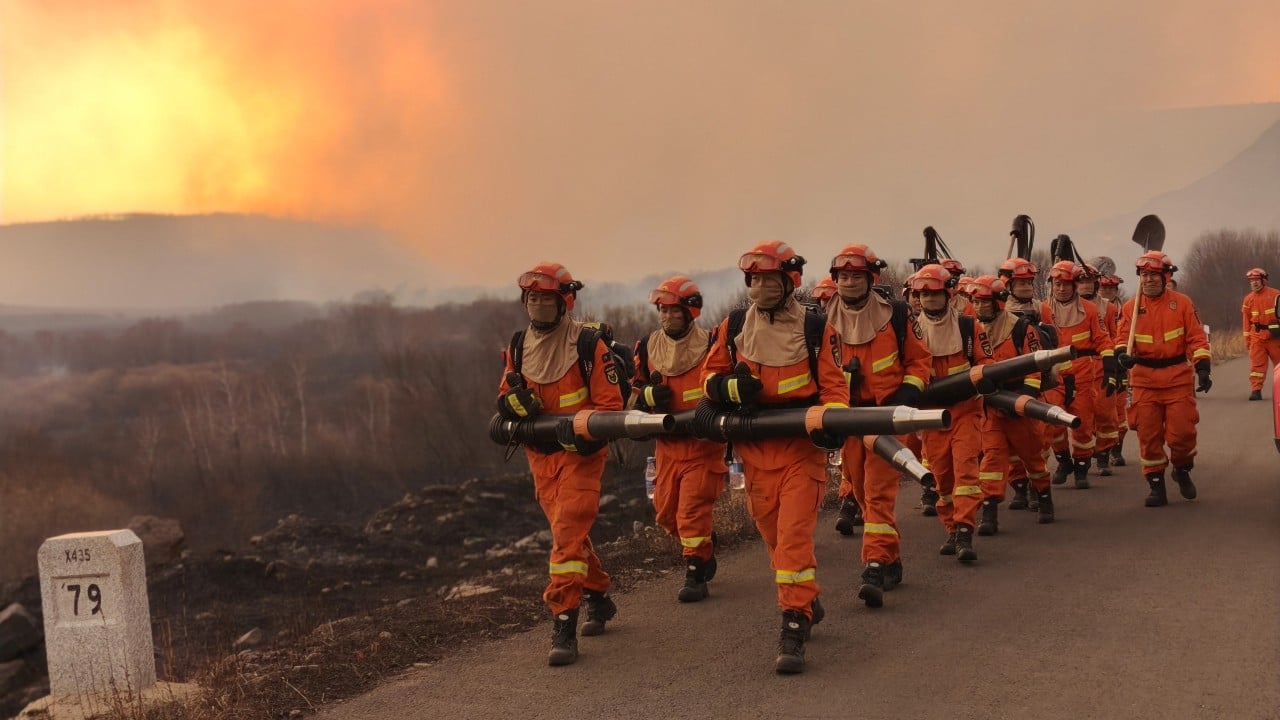
In reality, wildfires along arid steppes and borderlands rarely come down to one villain holding a match. They come down to dry vegetation, wind shear, seasonal fuel loads, and aging or poorly maintained physical assets operating across vast, under-monitored terrain. A telecom tower or relay facility might sit near an ignition zone. That does not automatically make a telecom carrier the architect of an ecological disaster.
The Wrong Question Everyone Keeps Asking
Most coverage asks whether KDDI is at fault. Wrong question.
The right question is why high-risk borderland infrastructure still lacks independent, real-time hazard telemetry and clear cross-border incident protocols before flames spread.
When pundits obsess over corporate blame, they ignore how telecom networks actually work in remote areas. Carriers deploy base stations, microwave links, fiber nodes, and backup power units—often diesel generators or battery banks—in places with sparse population density and harsh weather. Electrical faults, overheating equipment, or nearby agricultural and forestry activity can intersect with dry grass in seconds. Yet blaming a telecom company by default skips the hard work of separating ignition proximity from proven causation.
How "People Also Ask" Gets Tripped Up by Bad Premises
Readers typing standard questions into search engines usually run straight into flawed assumptions:
- "Did KDDI cause the Mongolia wildfire?" Causation in wildland fires requires forensic investigation, meteorological data, fuel analysis, and verified ignition points. A headline linking a company name to a fire is not an engineering verdict.
- "Why would state media target a Japanese company?" State media operates inside geopolitical incentives. Highlighting foreign corporate exposure in sensitive border regions signals leverage, domestic messaging, or regulatory pressure—regardless of whether the technical root cause is settled.
- "Can telecom companies be held liable for borderland wildfires?" Liability depends on jurisdiction, local statutes, contractual obligations, and documented negligence. Cross-border incidents add diplomatic friction that often outpaces forensic clarity.
Battle Scars From Cross-Border Infrastructure Crises
I have watched organizations burn millions of dollars reacting to blame cycles instead of fixing blind spots. When a crisis hits a remote corridor, executives rush to issue defensive statements, hire crisis PR firms, and pour cash into legal posturing—while their field sensors, maintenance logs, and local response ties remain stuck in 2015.
One telecom or energy operator I advised years ago learned this the hard way after a severe weather event knocked out remote links near a volatile region. Leadership spent months fighting narrative battles in the press. Meanwhile, the real operational failure was simpler: maintenance crews had outdated brush-clearing schedules around backup generator sites, and telemetry alerts lacked automated thermal thresholds.
Fixing the story felt urgent to the C-suite. Fixing the physical perimeter kept the lights and signal on.
Precision Over Panic: What Actually Drives Risk
Let's be exact about the terms people throw around casually in these stories.
Infrastructure exposure means an asset sits in a zone with high environmental volatility—dry brush, high winds, extreme temperature swings, or rough terrain. Exposure is a map coordinate, not a verdict of guilt.
Root-cause attribution means establishing, through physical evidence and verifiable records, what actually started an event and how it propagated. Jumping from "equipment was nearby" to "equipment caused it" is a logical shortcut that fails under scrutiny.
Geopolitical signaling happens when a state-aligned narrative frames a commercial operator as a symbol of broader national rivalry. That dynamic can turn a local safety or maintenance issue into an international incident overnight.
Think about what happens if you confuse those three buckets. You end up sanctioning or shaming the wrong layer of the stack while leaving real hazards untouched.
Imagine a scenario where a remote relay station sits beside wind-whipped grassland during a drought. A local controlled burn escapes containment, wind carries embers across a boundary, and a nearby tower suffers heat damage. If observers stop at the tower's corporate owner, they miss the escaped burn and the wind corridor. If they stop at diplomacy, they miss how to stop the next fire before it crosses a border.
What Heavy Hitters in Risk and Disaster Science Emphasize
Serious researchers and risk institutions—such as the National Interagency Fire Center, the International Telecommunication Union, and major reinsurers like Swiss Re—consistently point to a sobering truth: compound risk beats single-point blame every time.
In wildland fire science and critical infrastructure resilience, disasters rarely hinge on a single isolated mistake. They emerge when environmental dryness, wind dynamics, human land use, and physical infrastructure overlap without early detection or rapid local containment. When cross-border jurisdictions are involved, delays in data sharing and joint emergency response multiply the damage long after the initial spark.
That insight is not glamorous. It does not generate viral outrage. It does not fit neatly onto a placard. Yet it explains why repeating "company X vs. country Y" rarely prevents the next emergency.
Where My Contrarian View Can Backfire
Taking a contrarian stance has real downsides, and pretending otherwise is dishonest.
First, pushing back against a blame narrative can look like downplaying real harm. If communities, ecosystems, or workers suffered losses, cool analytical framing can sound detached if you do not keep the focus on accountability and prevention.
Second, skepticism toward initial media reports can swing too far in the other direction. Sometimes a corporate operator did cut corners on maintenance, ignore safety warnings, or operate unpermitted gear. Nuance should never become a shield for genuine negligence.
Third, focusing on systemic risk and telemetry upgrades can sound abstract when people want clear answers right now. Readers want to know who messed up today, not a five-year resilience roadmap.
Actionable Moves That Actually Reduce Risk
If you run infrastructure, cover international affairs, or assess geopolitical and operational risk, stop chasing outrage and do the unglamorous work:
- Audit physical perimeters before political storms hit. Inspect backup power units, cabling, and remote sites in dry or high-wind corridors. Clear fuel loads, check thermal sensors, and verify maintenance logs with timestamped proof.
- Separate narrative heat from forensic facts. Track official investigations, satellite thermal anomalies, and meteorological records separately from commentary. Never treat an accusation as a closed engineering file.
- Build cross-border data and response triggers. Standardize how incident alerts, environmental telemetry, and emergency contacts move across jurisdictions before smoke is in the air. Speed in the first hour matters more than speeches in week three.
- Price geopolitical spillovers into operational plans. If an asset operates in a politically sensitive border zone, assume routine operational hiccups can draw heightened scrutiny. Keep compliance, safety records, and incident timelines spotless.
Stop treating a cross-border wildfire headline like a simple morality play. Fix the sensors, clear the brush, verify the facts, and prepare for the next spark before it catches wind.