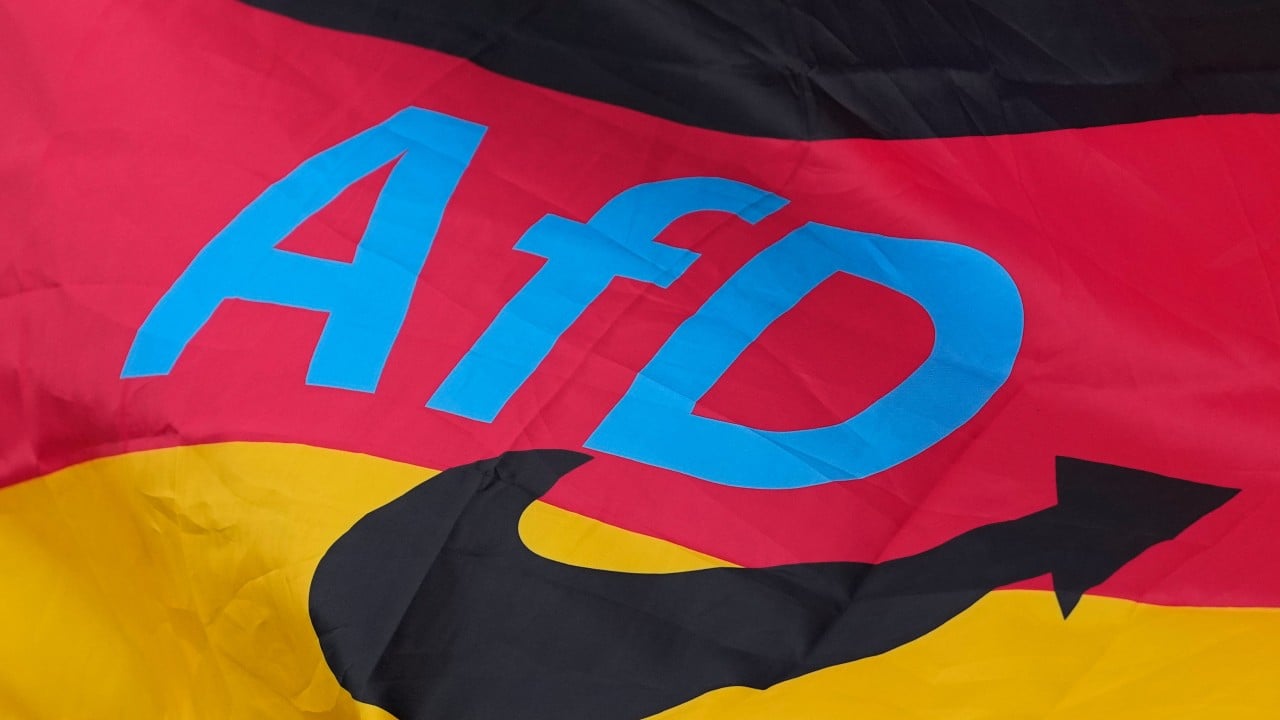
Every mainstream journalist parachuting into Saxony or Thuringia brings the exact same tired script. They stare at the grey prefab housing blocks, talk to a retired welder, and nod sagely. The diagnosis is always identical. Forty years of totalitarian dictatorship crushed civil society, atomized the population, and left a vacuum filled by neo-fascism. It is a neat, comforting narrative. It absolves West Germany of any responsibility, reduces millions of voters to brainwashed victims of their own history, and completely misses reality.
The lazy consensus is that East Germany votes for the Alternative for Germany because people there never learned how to be proper democrats. That theory is intellectually lazy and empirically bankrupt.
I have spent the better part of a decade talking to municipal leaders, local business owners, and disaffected voters across the former GDR. I watched mainstream parties treat eastern federal states as an economic colony, governed by a political class that imported its playbooks directly from Frankfurt and Düsseldorf. The rise of the AfD is not a ghost story about the Stasi or residual socialist brain-rot. It is a rational, calculated middle finger to a political establishment that broke every promise it made in 1990.
The Myth of the Traumatized Voter
Let us dismantle the psychological crutch first. The core argument from political pundits is that historical trauma creates authoritarians. People who grew up under the SED regime allegedly crave a strongman.
Data blows this explanation apart. If totalitarian socialization were the primary driver, the highest support for the AfD would skew entirely toward the oldest demographics, those who spent their formative decades under state socialism. Instead, the strongest surge for the party comes from younger working-age men who were either toddlers when the Berlin Wall fell or born entirely after reunification.
These voters have no personal memory of state socialism. They grew up on western television, western school curricula, and a united capitalist market. Their grievances are entirely contemporary. They live in regions where bank branches have vanished, local post offices are closed, bus lines run twice a day, and the local hospital was consolidated out of existence to save money on a spreadsheet in Berlin.
When you strip away the sociology textbooks, the eastern vote is an anti-establishment protest born of post-reunification betrayal. The West promised blooming landscapes in 1990. Instead, it delivered deindustrialization, low-wage labor pools, and an ownership class where ninety percent of executive positions are held by West Germans.
The Institutional Gaslighting Machine
To understand why the AfD thrives, you have to look at the total collapse of institutional trust. For thirty years, eastern Germans were told that their lived experiences did not matter. When factories were shuttered and sold off for scrap during the privatization spree of the Treuhand agency, locals were told it was the price of modernization. When wages stagnated at twenty to thirty percent below western levels for identical work, they were told to be patient.
That is not democracy; that is structural gaslighting.
Mainstream politicians treat the AfD's rise as a moral failing of the electorate rather than a diagnostic failure of governance. When voters express legitimate anger over energy policies that deindustrialize their towns or demographic shifts that strain municipal infrastructure, the establishment labels them backward or extremist.
This creates a self-fulfilling prophecy. If you tell a voter they are a Nazi long enough simply because they want a functioning local economy and controlled borders, eventually, they stop caring about the label. The AfD did not radicalize eastern Germany. The mainstream parties radicalized it by refusing to listen until ballots started hitting twenty-five, thirty, and thirty-five percent.
The Economic Reality No One Mentions
Let us talk about wealth. The median wealth in western households dwarfs that of eastern households. Inheritances drive modern western capitalism, and eastern families had nothing to inherit because their property and savings were wiped out or devalued during monetary union in 1990.
Imagine a scenario where your entire regional economy is bought out by outside investors, your local elites are replaced by imports from Munich, and your cultural identity is routinely mocked in national media as provincial or retrograde. How long do you stay loyal to the system?
The AfD understood this resentment and weaponized it brilliantly. They did not win by offering sophisticated macroeconomic policies. They won by simply showing up in villages that hadn't seen a Christian Democrat or Social Democrat politician in a decade. They listened to complaints about wind turbines ruining horizons and public swimming pools closing down.
The traditional parties rely on moral panic to keep voters in line. Every election cycle features hand-wringing about democracy being under threat. Meanwhile, eastern infrastructure crumbles, and public services evaporate. Voters figured out that moral panic does not pave roads or keep local doctors from retiring.
The Dangerous Downside of the Contrarian Cure
Admitting that the AfD is a symptom of systemic failure rather than a sudden outbreak of mass psychosis comes with a heavy price. It means the establishment cannot simply wait the problem out or banish it with a constitutional court ruling.
The downside of my perspective is sobering: treating the AfD vote as rational protest ignores the genuine ethno-nationalist and authoritarian elements within the party itself. Figures like Björn Höcke do not just want better economic policies; they want a fundamental restructuring of the German state along ethnic lines. By explaining the voters, we must not excuse the architects.
Yet, treating every protest voter as a card-carrying fascist guarantees the party's permanent growth. The harder the political class tries to isolate, defund, and cancel the opposition, the more authentic the AfD looks to a population that has survived two major ideological monopolies in a single century.
Stop Trying to Educate the Voters
The prevailing prescription from political analysts is more political education, more workshops on democratic values, and more media literacy campaigns targeted at the east. It is patronizing nonsense.
Eastern Germans do not need a civics lecture from Berlin elites. They understand how power works better than the pundits do. They know that when a system stops serving its citizens, citizens stop respecting the system.
Until the mainstream parties abandon their moral superiority, decentralize economic power, and start treating the east as an equal partner rather than a problem demographic to be managed, the AfD will remain the default destination for anyone tired of being ignored. The ballot box is not a classroom. It is a weapon. And right now, it is the only one the east has left.



