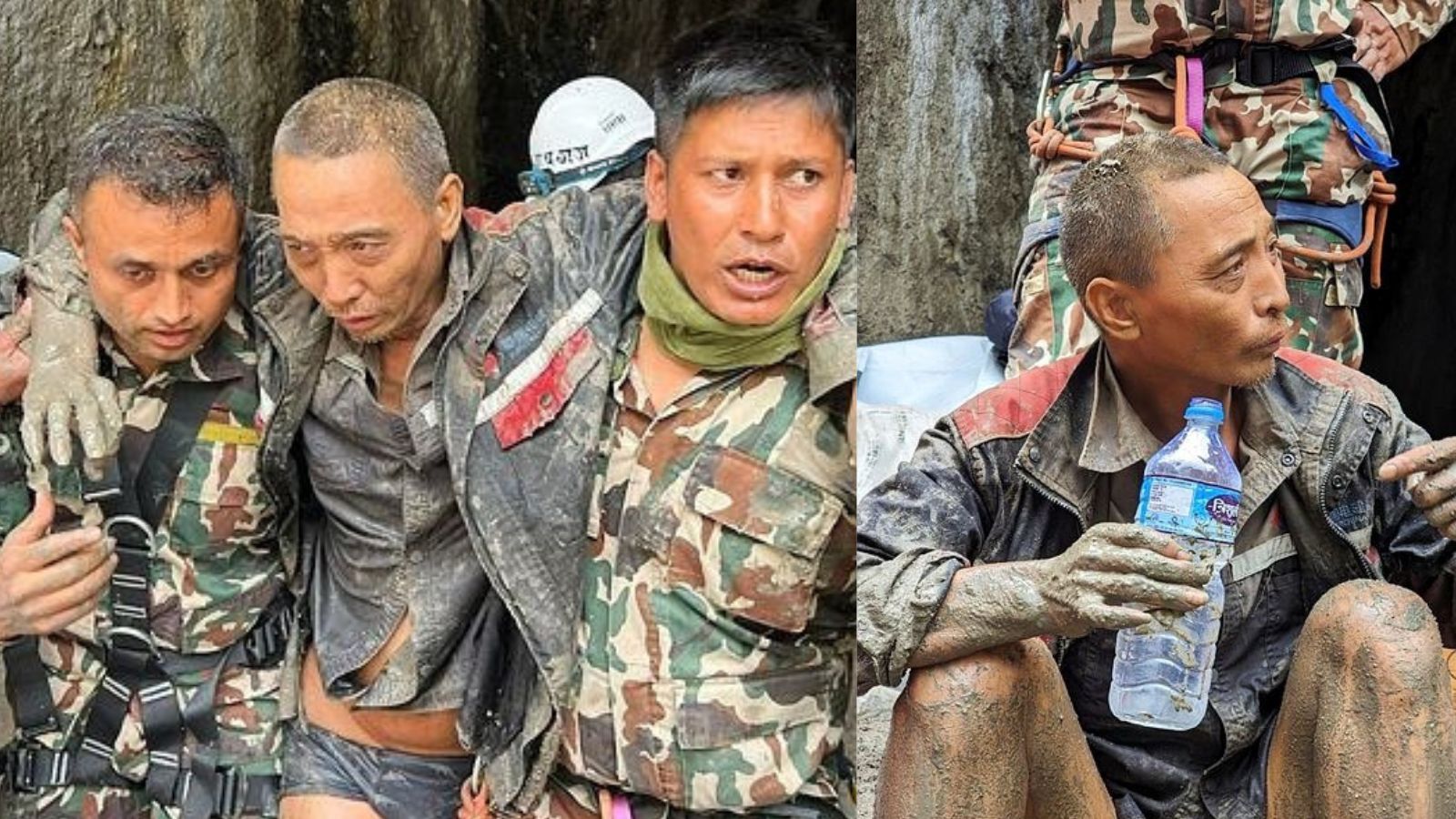
Ten days after a wall of mud and glacial melt swallowed the Trishuli valley, emergency teams pulled survivors from pitch-black subterranean tombs. Miracles make for comforting headlines. Yet the extraction of workers from the deep tunnels of Nepal's wrecked hydropower projects is less a divine intervention than an agonizing testament to structural engineering, military grit, and sheer statistical defiance.
When the flash floods hit on August 26, triggered by a massive rock and glacial collapse near the China-Nepal border, they did not merely wash over the country. They erased geography. Entire valley floors transformed into flat, grey deserts of silt, burying infrastructure so completely that the entrances to massive commercial tunnels vanished from the face of the earth.
Arnold Dix, president of the International Tunnelling and Underground Space Association and an adviser on the ground, noted that responders faced an unprecedented crisis. They did not just have to clear a blockage. They had to figure out where the tunnel entrances were located.
Topographic maps became historical fiction. Satellite data captured only a scarred wasteland. Search teams resorted to triangulating surface clues like bent power poles, historical video clips, and old construction blueprints just to locate the mouth of the subterranean mazes where dozens of workers were suspected to be trapped.
Once found, the real nightmare began. The tunnels of projects like Upper Trishuli 3A and the Upper Trishuli-1 site were choked with hundreds of tons of dense sludge and boulders larger than delivery trucks. Heavy excavators clawed at the debris while engineers weighed a terrifying gamble: using controlled explosives to shatter rock jams without collapsing the fragile, water-logged vaults onto the very people they were trying to save.
Inside those vaults, time lost its shape. Sanjay Sah, a 30-year-old mechanical foreman, stayed behind in the control room to warn his colleagues rather than running for his own life when the initial roar echoed through the facility. He ended up trapped 170 meters underground. To keep panic at bay during nine days of absolute darkness, Sah recited mantras, occasionally trading shouts with three or four other voices echoing through the wet void.
When joint teams from the Nepal Army and international specialists finally breached the inner chambers, they found men caked in slimy mud, battling extreme jaundice, dehydration, and profound shock. Kabir Maharjan, a project supervisor found alongside Sah, could barely speak or recognize his own wife when pulled into the daylight, his body battered by days of oxygen deprivation and damp cold. A day later, a Chinese national identified as Luhaitao was pulled from 225 meters inside the Upper Trishuli-1 audit tunnel, proving that pockets of survival extended across multiple devastated sites.
These rare triumphs contrast sharply with the grim arithmetic outside the tunnels. With morgues overflowing across the region, authorities have already buried more than a thousand bodies in mass graves after securing DNA samples for future identification, while thousands remain missing. The survival of a few dozen workers in air pockets deep beneath the debris offers an emotional anchor for grieving families, but it also exposes the terrifying vulnerability of industrial expansion in fragile Himalayan ecosystems.
As heavy machinery continues to clear the remaining blocked shafts, the search shifts from immediate rescue to the slow recovery of those who remained at their posts when the mountain came down.